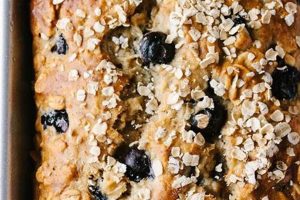
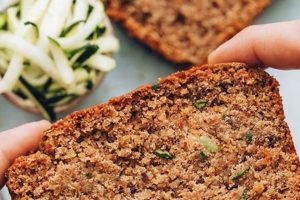
A baked good blending the sweetness of ripe bananas with the moistness contributed by applesauce, this recipe offers a plant-based alternative to traditional baking. It excludes all animal products, relying on ingredients like flaxseed meal or commercial egg replacers for binding, and plant-based oils or nut butters for fat. The result is a loaf characterized by its soft texture, fruity flavor, and absence of common allergens found in conventional recipes.
The importance of such a recipe lies in its ability to cater to diverse dietary needs and preferences. Individuals adhering to vegan diets, or those with egg and dairy sensitivities, can enjoy a familiar comfort food without compromising their ethical or health considerations. Furthermore, utilizing applesauce can reduce the need for added fats, potentially offering a slightly healthier profile compared to traditional banana bread. Its origin likely stems from the increasing popularity of plant-based diets and the creative adaptation of classic recipes to meet these demands.
The following sections will delve into specific ingredient substitutions, baking techniques, nutritional considerations, and variations of this recipe. Furthermore, aspects of storage and shelf life, as well as potential pairings and serving suggestions, will be discussed. This analysis aims to provide a complete understanding of creating a successful and delicious version of this increasingly sought-after baked item.
Tips for Optimal Results
Achieving a superior outcome in the preparation of this specific baked good requires attention to detail and an understanding of ingredient interactions. The following tips aim to enhance the final product’s texture, flavor, and overall appeal.
Tip 1: Banana Ripeness is Paramount: Overripe bananas, characterized by extensive browning and a soft texture, contribute significantly to both the sweetness and moisture content. Utilize bananas that are well past their prime for the best results.
Tip 2: Applesauce Selection Matters: Unsweetened applesauce is recommended to control the overall sugar level. The type of applesauce, whether smooth or chunky, can subtly alter the texture of the final loaf; consider preference accordingly.
Tip 3: Flour Measurement Accuracy: Proper flour measurement is crucial for a balanced texture. Employ a kitchen scale for the most accurate measurement. If measuring by volume, spoon the flour into the measuring cup and level it off with a straight edge to avoid packing.
Tip 4: Binding Agent Adjustment: Flaxseed meal, when mixed with water, serves as a binding agent to replace eggs. Ensure the flaxseed meal “egg” has sufficient time to thicken before incorporating it into the batter. Observe the batter consistency and adjust liquid slightly if necessary.
Tip 5: Careful Mixing Technique: Avoid overmixing the batter, as this can lead to a dense and tough final product. Mix until the ingredients are just combined, leaving some streaks of flour. The leavening agents will work more effectively with minimal disturbance.
Tip 6: Oven Temperature Monitoring: Oven temperature variations can impact baking time and texture. Utilize an oven thermometer to ensure accurate temperature. Adjust baking time accordingly, checking for doneness with a toothpick test.
Tip 7: Cooling Procedure: Allow the baked loaf to cool in the pan for approximately 10-15 minutes before transferring it to a wire rack to cool completely. This prevents the loaf from crumbling and allows the internal structure to set properly.
Adhering to these guidelines will contribute to a superior flavor profile, optimal texture, and an overall more satisfying baking experience. Careful ingredient selection and precise execution of technique are critical to success.
The following section will address common troubleshooting issues that may arise during the baking process and provide potential solutions.
1. Texture

The final texture of the baked good is a direct consequence of ingredient interaction and baking technique. In the context of a plant-based recipe, the absence of eggs and dairy necessitates a careful selection of substitutes to replicate the desired crumb structure. Applesauce, utilized for moisture and subtle sweetness, also influences the overall density. Too much applesauce can result in a gummy texture, while insufficient applesauce may yield a dry loaf. Similarly, the type of flour, whether all-purpose or a blend of gluten-free alternatives, plays a pivotal role. Gluten provides structure, and its absence requires careful consideration of binding agents and flour ratios to prevent the baked item from becoming overly crumbly or dense. The manipulation of these factors is essential to achieving the desired soft and tender texture that is characteristic of well-made banana bread.
Furthermore, mixing technique directly affects texture. Overmixing develops gluten, leading to a tough loaf. Minimizing mixing, combining the wet and dry ingredients just until moistened, is critical. The incorporation of air during mixing, while important for leavening, must be balanced to avoid large air pockets that can disrupt the crumb structure. The bananas themselves contribute to the final texture. Well-mashed bananas integrate seamlessly, resulting in a uniform texture, while larger chunks can provide pockets of concentrated flavor and moisture, creating a more varied sensory experience. The ratio of bananas to other ingredients must be carefully considered to maintain textural balance.
In summary, achieving the ideal texture in a plant-based loaf requires a holistic understanding of ingredient properties and their interactions. Careful control of moisture levels, gluten development, and mixing techniques is paramount. The selection of appropriate substitutes for traditional binding agents and the strategic use of ingredients like applesauce and ripe bananas are all critical determinants of the final product’s texture. Mastering these elements allows for the creation of a plant-based loaf that rivals its traditional counterpart in both taste and textural appeal.
2. Moisture
Maintaining optimal moisture levels is a critical determinant of quality in a plant-based baked good, directly influencing texture, taste, and shelf life. In the specific instance of a vegan banana and applesauce-enhanced loaf, moisture management requires careful attention due to the absence of eggs and dairy, traditional sources of binding and liquid.
- Banana Ripeness and Hydration
Overripe bananas contribute significant moisture. Their cellular structure breaks down, releasing intracellular fluids that hydrate the dry ingredients. Insufficiently ripe bananas will result in a drier end product. Additionally, the mass of bananas used directly relates to moisture content. A larger quantity will increase overall hydration, requiring adjustments to other liquid components to maintain textural balance.
- Applesauce as a Humectant
Applesauce acts as a humectant, attracting and retaining moisture within the baked structure. The type of applesauce, whether sweetened or unsweetened, smooth or chunky, influences the moisture profile. Unsweetened varieties provide hydration without excessive sugar, while the degree of processing affects water-binding capacity. Commercial applesauce formulations may contain added ingredients that further enhance or inhibit moisture retention.
- Oil and Fat Alternatives
Oils and fat substitutes contribute to perceived moisture by coating flour particles and inhibiting gluten development. This results in a more tender crumb. Plant-based oils like coconut or canola, or nut butters, function similarly to traditional butter in this capacity. The selection and quantity of these alternatives must be balanced to prevent an excessively oily or dense outcome. Incorrect proportions will impact moisture distribution and overall texture.
- Dry Ingredient Absorption
The composition of the dry ingredients affects the absorption and distribution of moisture. Different flours, such as all-purpose, whole wheat, or gluten-free blends, exhibit varying water absorption capacities. Gluten-free flours often require more liquid to achieve a similar consistency to all-purpose flour. Furthermore, ingredients like flaxseed meal, often used as an egg replacement, absorb considerable moisture and must be properly hydrated before incorporation to prevent a dry result.
The interplay between banana ripeness, applesauce type, oil/fat alternatives, and dry ingredient composition dictates the final moisture level of the banana and applesauce loaf. Precise measurement and careful consideration of these factors are essential for achieving a moist, tender, and palatable final product. Without proper attention to moisture balance, the resulting loaf may be dry, crumbly, or gummy, negatively impacting overall quality.
3. Sweetness
Sweetness plays a crucial role in the overall palatability and success of a vegan banana and applesauce loaf. Due to the absence of traditional sweeteners like honey or refined sugar in some vegan recipes, and the reduced reliance on eggs and dairy for richness, careful attention must be paid to alternative sources of sweetness to achieve a balanced and satisfying flavor profile.
- Banana Ripeness as a Primary Sweetener
The natural sugars present in bananas, primarily glucose, fructose, and sucrose, become more concentrated as the fruit ripens. Overripe bananas, characterized by their soft texture and speckled peel, provide a significant portion of the sweetness. Utilizing bananas at this stage reduces the need for added sweeteners, contributing to a potentially healthier final product and enhancing the natural flavor. The degree of ripeness directly correlates with the level of sweetness imparted to the baked item. However, overripe bananas also contribute to a more pronounced banana flavor, which may not be desirable in all variations of the recipe.
- Applesauce as a Subtler Sweetener and Moisture Source
Applesauce provides a secondary source of sweetness, alongside moisture and binding properties. The type of applesauce selected significantly impacts the final sweetness level. Unsweetened applesauce offers a milder sweetness compared to sweetened varieties, allowing for greater control over the overall sugar content. Furthermore, the natural sugars in applesauce, primarily fructose, contribute a different flavor profile compared to the sucrose from added sugars. The combination of banana and applesauce provides a complex sweetness that can be preferable to the singular sweetness of refined sugar.
- Alternative Sweeteners and Their Impact
When additional sweetness is required, various alternative sweeteners may be employed. Maple syrup, agave nectar, and coconut sugar are common vegan options, each possessing a distinct flavor profile and sweetness intensity. The choice of sweetener influences not only the overall sweetness but also the moisture content and texture of the loaf. Liquid sweeteners, such as maple syrup, add moisture, while granulated sweeteners, such as coconut sugar, may require additional liquid to maintain a consistent batter. The glycemic index of the chosen sweetener should also be considered, particularly for individuals managing blood sugar levels.
- Balancing Sweetness with Other Flavors
The perception of sweetness is influenced by the presence of other flavors. Spices, such as cinnamon, nutmeg, and cloves, can enhance the perceived sweetness and add complexity. A pinch of salt can also balance the sweetness and prevent it from becoming cloying. Furthermore, the addition of nuts or seeds provides textural contrast and a subtle savory element that complements the sweetness. Careful consideration of these flavor pairings is essential for creating a well-rounded and harmonious final product.
The nuanced control of sweetness through banana ripeness, applesauce selection, alternative sweetener choices, and flavor balancing is paramount in crafting a delicious and satisfying vegan banana and applesauce loaf. The absence of traditional ingredients necessitates a more deliberate approach to sweetness management, resulting in a potentially more flavorful and healthful baked item. The interplay of these factors creates a unique sensory experience that distinguishes this plant-based adaptation from its conventional counterpart.
4. Substitutions
The formulation of a plant-based banana loaf relies heavily on strategic substitutions to replicate the structure, texture, and flavor profiles typically achieved with animal-derived ingredients. The success of such a recipe hinges on a thorough understanding of the functional properties of both the ingredients being replaced and the chosen alternatives.
- Egg Replacements: Binding and Leavening
Eggs contribute crucial binding and leavening properties to traditional baked goods. In their absence, flaxseed meal mixed with water, commercially available egg replacers, or even mashed avocado can serve as substitutes. Flaxseed meal, when hydrated, forms a viscous gel that mimics the binding action of eggs, holding the ingredients together. Commercial egg replacers often contain a blend of starches and gums that provide similar functionalities. Mashed avocado, while less common, contributes both binding and moisture. The selection of the appropriate egg substitute depends on the desired texture and overall flavor profile. Excessive use of certain substitutes can lead to a dense or gummy result; careful measurement is therefore critical.
- Dairy Alternatives: Moisture and Fat Content
Dairy products, such as milk and butter, contribute moisture, fat, and richness. Plant-based milks, like almond, soy, or oat milk, can effectively replace dairy milk in terms of moisture. The choice of plant-based milk impacts the overall flavor; unsweetened varieties are generally preferred to avoid excessive sweetness. Plant-based butter alternatives, often made from oils like coconut or palm oil, can replicate the fat content of butter. However, these alternatives may have different melting points and water contents, requiring adjustments to the recipe. Nut butters, such as almond or cashew butter, can also provide fat and flavor, but their strong flavors should be considered.
- Sugar Substitutions: Impact on Sweetness and Texture
Refined sugar, a common ingredient, can be replaced with alternatives like maple syrup, agave nectar, or coconut sugar. These substitutes not only provide sweetness but also contribute to the overall moisture content and texture. Liquid sweeteners, like maple syrup and agave nectar, can result in a moister loaf, while granulated sweeteners, like coconut sugar, may require additional liquid to maintain a consistent batter. The flavor profile of the chosen sweetener should also be considered, as it can significantly influence the final taste. Artificial sweeteners are generally avoided due to their lack of bulk and potential impact on texture.
- Gluten-Free Flour Blends: Addressing Texture and Structure
For individuals with gluten sensitivities, traditional wheat flour must be substituted with gluten-free alternatives. These blends typically combine various flours, such as rice flour, tapioca starch, and potato starch, to mimic the functional properties of wheat flour. Xanthan gum is often added to gluten-free flour blends to provide binding and elasticity. The ratio of different flours and the amount of xanthan gum must be carefully balanced to achieve a desirable texture. Some commercially available gluten-free flour blends are specifically formulated for baking and provide more consistent results. Experimentation may be required to find the optimal blend for a particular recipe.
These substitutions are not merely replacements; they represent adjustments to the fundamental chemical and physical properties of the ingredients. A nuanced understanding of these properties allows for the creation of a plant-based banana loaf that approximates, and in some cases, surpasses the quality of its traditional counterpart. Ongoing experimentation and adaptation are crucial for optimizing the recipe to individual preferences and dietary requirements.
5. Binding

The structural integrity of baked goods relies heavily on the process of binding, which ensures that ingredients cohere to form a cohesive whole. In the context of a plant-based banana and applesauce loaf, the absence of eggs, a traditional binding agent, necessitates careful consideration of alternative methods to achieve the desired texture and prevent the loaf from crumbling. Effective binding is, therefore, a critical determinant of success in this particular application.
- Flaxseed Meal and Chia Seeds: Hydrocolloid Action
Flaxseed meal and chia seeds, when combined with water, form a gel-like substance due to their high soluble fiber content. This gel acts as a hydrocolloid, binding the other ingredients together in much the same way that eggs do. The ratio of flaxseed meal or chia seeds to water is critical; too little liquid will result in insufficient binding, while too much can lead to a gummy texture. These ingredients not only provide binding but also contribute to the loaf’s moisture content and nutritional value, offering a source of omega-3 fatty acids and fiber.
- Starches and Gums: Structural Support
Starches, such as tapioca starch or cornstarch, and gums, such as xanthan gum or guar gum, are often incorporated into plant-based baking recipes to provide structural support. These ingredients help to create a network that traps air bubbles and prevents the loaf from collapsing during baking. Xanthan gum, in particular, is effective at improving the elasticity and cohesiveness of the batter. The amount of starch and gum used must be carefully controlled, as excessive quantities can lead to a dense or rubbery texture. The specific type of starch or gum used can also impact the final result, with some being better suited for certain applications than others.
- Fruit Purees: Natural Adhesion
The applesauce and mashed bananas themselves contribute to binding, albeit to a lesser extent than dedicated binding agents. The pectin present in applesauce and the natural sugars and fibers in bananas provide some degree of adhesion, helping to hold the ingredients together. Overripe bananas, in particular, release more sugars and moisture, enhancing their binding properties. However, relying solely on fruit purees for binding is generally insufficient, and they are typically used in conjunction with other binding agents to achieve the desired result.
- Nut Butters: Fat-Based Binding
Nut butters, such as almond or peanut butter, can contribute to the binding process through their fat content. The fats help to coat the flour particles, preventing them from absorbing too much liquid and developing excessive gluten (if using wheat flour). This results in a more tender and cohesive crumb. However, nut butters can also contribute a distinct flavor, which must be considered when formulating the recipe. The amount of nut butter used should be carefully controlled to avoid an overly dense or greasy loaf.
The choice of binding agent, or combination of agents, in a plant-based banana and applesauce loaf is a critical decision that directly impacts the final texture, structure, and overall quality of the baked item. Careful consideration of the functional properties of each potential binding agent, as well as their flavor contributions, is essential for achieving a successful and delicious outcome. Experimentation and adaptation are often necessary to optimize the binding process for individual preferences and dietary requirements.
6. Browning

Achieving optimal browning in a plant-based banana and applesauce loaf presents unique challenges due to the absence of animal products and the altered sugar profiles often employed. The Maillard reaction, the primary chemical process responsible for browning, requires both reducing sugars and amino acids. The absence or reduced presence of these compounds in vegan recipes necessitates adjustments to promote the desired color and flavor development.
- Sugar Content and Caramelization
The type and amount of sugar significantly impact browning. Refined sugars caramelize readily, contributing to a rich brown color. Plant-based sweeteners, such as maple syrup or coconut sugar, may have different caramelization properties and require higher temperatures or longer baking times to achieve a similar effect. The natural sugars in bananas and applesauce also contribute, but their concentration may be insufficient for optimal browning, necessitating supplementary sugar additions.
- Maillard Reaction Enhancement
The Maillard reaction is accelerated by alkaline conditions. A small addition of baking soda can raise the pH of the batter, promoting browning. However, excessive baking soda can impart an undesirable soapy taste. Careful monitoring and precise measurement are crucial. The presence of reducing sugars and amino acids is also essential for the Maillard reaction. Certain plant-based ingredients, like nut butters or protein-rich flours, can contribute amino acids.
- Oven Temperature and Baking Time
Sufficient oven temperature is critical for promoting browning. A slightly higher baking temperature, within safe limits, can accelerate the Maillard reaction and caramelization. However, excessively high temperatures can lead to burning or uneven baking. Adjusting the baking time can also influence browning, but prolonged baking can result in a dry loaf. Careful monitoring and adjustments based on individual oven characteristics are necessary.
- Fat Content and Crust Formation
Fat contributes to crust formation and browning by promoting heat transfer and surface crispness. Plant-based oils, such as coconut or canola oil, can effectively replace butter in this role. Nut butters also contribute fat and can enhance browning through their protein and sugar content. The distribution of fat within the batter is also important; adequate surface fat promotes even browning.
Effective management of sugar content, Maillard reaction enhancement, oven temperature, and fat content are all crucial for achieving the desired golden-brown color and rich flavor in plant-based banana and applesauce bread. Adapting baking techniques to account for the unique properties of vegan ingredients is essential for a visually appealing and palatable final product. Experimentation and careful observation are encouraged to optimize browning based on specific ingredient choices and oven characteristics.
Frequently Asked Questions
This section addresses common inquiries regarding the preparation and characteristics of a plant-based banana loaf enhanced with applesauce.
Question 1: Does the absence of eggs compromise the structural integrity of the vegan banana bread applesauce?
The omission of eggs necessitates the use of alternative binding agents, such as flaxseed meal or chia seeds mixed with water. These ingredients create a gel-like substance that effectively replicates the binding properties of eggs, ensuring the loaf maintains its structure and prevents excessive crumbling. The precise ratio of binding agent to liquid is critical for optimal results.
Question 2: How does applesauce contribute to the final product?
Applesauce serves multiple purposes. It adds moisture, contributing to a tender crumb. It provides a subtle sweetness, reducing the need for excessive added sugars. Furthermore, the pectin in applesauce offers a degree of binding, complementing other binding agents employed in the recipe. Unsweetened applesauce is generally preferred to control sugar content.
Question 3: What are the ideal banana ripeness indicators for achieving optimal flavor and texture?
Overripe bananas, characterized by a speckled peel and soft texture, are optimal. As bananas ripen, their starches convert to sugars, intensifying sweetness and enhancing moisture content. The use of underripe bananas will result in a less flavorful and potentially drier loaf. Bananas that are excessively overripe, bordering on fermentation, may impart an undesirable taste.
Question 4: Can gluten-free flour blends be successfully substituted in vegan banana bread applesauce recipes?
Yes, gluten-free flour blends can be substituted, but adjustments may be necessary. Gluten-free flours often require more liquid and the addition of xanthan gum to mimic the binding properties of gluten. Experimentation with different flour blends may be required to achieve the desired texture and prevent excessive dryness or gumminess.
Question 5: What is the recommended storage procedure to prolong freshness?
Once cooled, the banana loaf should be stored in an airtight container at room temperature for up to three days. Alternatively, it can be refrigerated for up to a week. For longer storage, freezing is recommended. The loaf should be tightly wrapped in plastic wrap and then aluminum foil before freezing to prevent freezer burn. Thawing should occur at room temperature.
Question 6: Does the use of alternative sweeteners significantly alter the flavor profile?
The choice of alternative sweetener does influence the flavor profile. Maple syrup imparts a distinct maple flavor, while coconut sugar offers a subtle caramel-like note. Agave nectar is relatively neutral in flavor. The selection of sweetener should align with the desired taste characteristics of the final product. Unsweetened applesauce is also prefered to have lower sugar intake, or controlling the added sweeteners.
In summary, successful preparation hinges on understanding the interplay of ingredient substitutions, ripeness levels, and storage techniques. Careful attention to these factors will yield a satisfying plant-based baked item.
The subsequent section will explore potential recipe variations and customization options.
Conclusion
This exploration of vegan banana bread applesauce has illuminated the critical aspects of its creation, from ingredient substitutions to textural considerations and flavor balancing. The preceding sections detailed the importance of binding agents, the impact of banana ripeness, the nuances of sugar selection, and the strategies for achieving optimal browning. Emphasis was placed on understanding the functional properties of each ingredient and how their interactions influence the final product.
Mastery of these principles allows for the consistent production of a high-quality, plant-based baked item. Further experimentation with variations, such as the addition of nuts, spices, or chocolate, can personalize the recipe and cater to individual preferences. The ongoing refinement of baking techniques and ingredient selections will continue to elevate the status of vegan banana bread applesauce as a viable and delicious alternative to traditional baked goods. Baking vegan requires more focus on recipe and ingredients.
![Easy Vegan Spelt Banana Bread Recipe [Healthy & Delicious] | Discover Delicious Vegan Food, Beauty Swaps, and Zero-Waste Tips for a Greener Life](https://thisvegangirl.com/wp-content/uploads/2026/03/th-42-300x200.jpg "Easy Vegan Spelt Banana Bread Recipe [Healthy & Delicious] Discover Delicious Vegan Food, Beauty Swaps, and Zero-Waste Tips for a Greener Life")