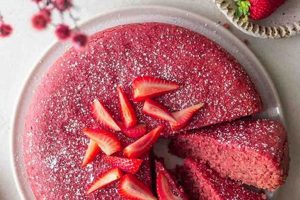
A delicate, sponge-like biscuit, traditionally known as a ladyfinger, is reimagined to accommodate dietary restrictions. The conventional recipe, containing eggs and wheat flour, is modified to exclude animal products and gluten. The result is a baked good suitable for individuals adhering to both vegan and gluten-free diets, often utilizing plant-based egg replacements and alternative flours like rice flour or tapioca starch to achieve a similar texture and structure.
The significance of such a product lies in its inclusivity. It allows a wider range of individuals to enjoy desserts and recipes that traditionally incorporate this component, like tiramisu or trifles. Furthermore, it addresses the growing demand for specialty food items driven by health considerations, ethical choices, and lifestyle preferences. The historical context reveals a continuous evolution of baking techniques to meet changing consumer needs and dietary awareness.
This article will delve into the specific ingredients commonly used in the creation of these modified ladyfingers, explore the challenges and solutions in achieving the desired texture and flavor, and discuss potential applications in various desserts and culinary creations. Furthermore, it will address sourcing considerations and commercially available options.
Tips for Baking Success
Achieving optimal results when baking a specific type of sponge biscuit necessitates careful attention to detail and ingredient selection. The following guidelines provide practical advice for maximizing the quality and consistency of the final product.
Tip 1: Ingredient Measurement Accuracy: Precise measurement of all ingredients, particularly the alternative flours and binding agents, is crucial. A digital kitchen scale provides superior accuracy compared to volume measurements, minimizing inconsistencies between batches.
Tip 2: Egg Replacement Selection: Various plant-based egg replacers exist. Consider the desired outcome (binding, leavening, or moisture) when selecting. Flaxseed meal, aquafaba, or commercially available egg replacement powders each contribute unique properties to the batter.
Tip 3: Flour Blend Optimization: Gluten provides structure in traditional baking. Substituting gluten-free flours requires careful blending. Combinations of rice flour, tapioca starch, potato starch, and other gluten-free flours may be necessary to replicate the desired texture. Experimentation is encouraged to find the optimal blend for individual preferences.
Tip 4: Mixing Technique: Overmixing can lead to a dense, undesirable texture. Mix ingredients until just combined. Avoid vigorous stirring after adding the liquid components. A gentle hand ensures a light and airy result.
Tip 5: Baking Temperature and Time: Accurate oven temperature is essential. Utilize an oven thermometer to verify calibration. Adjust baking time as needed, monitoring for a light golden-brown color and a firm, springy texture. Undertaking this at a lower temperature for a longer duration will help prevent burning, since gluten-free recipes tend to burn faster.
Tip 6: Cooling Process: Allow the baked items to cool completely on a wire rack before handling or assembling into desserts. This prevents structural damage and ensures optimal texture development. Cool completely before use.
Adhering to these tips contributes to a consistent and high-quality product. Careful ingredient selection, precise measurement, and mindful baking techniques are paramount to achieving satisfactory outcomes.
The subsequent sections will explore common issues encountered during the baking process and offer troubleshooting strategies for addressing potential challenges.
1. Ingredient substitutions

Ingredient substitutions are foundational to the creation of vegan gluten-free ladyfingers, representing a critical departure from conventional recipes that rely on eggs and wheat flour. These substitutions are not merely replacements, but rather strategic modifications that aim to emulate the texture, structure, and flavor profile of the original product while adhering to both vegan and gluten-free dietary requirements.
- Egg Replacements and Binding Agents
Traditional ladyfingers utilize eggs for binding, leavening, and adding moisture. In the vegan adaptation, eggs are replaced with ingredients such as flaxseed meal mixed with water (“flax eggs”), aquafaba (the liquid from cooked chickpeas), or commercially available vegan egg replacers. Each alternative possesses unique properties that affect the final product’s texture and rise. For example, flax eggs provide binding and moisture, while aquafaba can be whipped to create a meringue-like structure, mimicking the airiness of egg whites. The choice of egg replacement is a crucial determinant of the end result.
- Gluten-Free Flour Blends
Wheat flour, the traditional base of ladyfingers, contains gluten, which provides elasticity and structure to the dough. Gluten-free baking necessitates the use of flour blends composed of ingredients such as rice flour, tapioca starch, potato starch, almond flour, and sorghum flour. These flours lack gluten and, therefore, require strategic combinations to replicate the binding and structural properties of wheat flour. Each flour contributes unique characteristics: rice flour provides a neutral base, tapioca starch offers chewiness, and almond flour adds moisture and flavor. The ratio of these flours significantly impacts the ladyfingers’ final texture and overall quality.
- Sugar Alternatives and Sweeteners
Sugar contributes to the ladyfingers’ sweetness, moisture retention, and browning. Refined sugar, while acceptable for some, may be replaced with vegan-friendly and/or lower glycemic alternatives. Options include maple syrup, agave nectar, coconut sugar, or erythritol. Each of these replacements impacts both the flavor and the moisture content of the batter and final product. Maple syrup, for instance, adds a distinct flavor profile and increases moisture, potentially requiring adjustments to other liquid ingredients.
- Fat Replacements and Texturizers
While traditional ladyfingers have a very low-fat content, a tiny amount may be added in some modern recipe adaptations. This may come from dairy, so vegans will want to ensure it comes from plant-based sources. Adding a small amount of coconut oil or even applesauce can help to provide a richer texture and more rounded mouthfeel. These alternatives impact not only the texture of the ladyfingers but also their overall shelf life and ability to retain moisture.
Ingredient substitutions form the foundation of vegan gluten-free ladyfingers, with the interplay between egg replacements, flour blends, sugar alternatives, and fat replacers dictating the success of the final product. Careful consideration of each ingredient’s unique properties and their impact on the overall recipe is essential for achieving a desirable outcome that mirrors the characteristics of conventional ladyfingers while meeting specific dietary requirements. Experimentation with different combinations and ratios is often necessary to refine the recipe and tailor it to individual preferences.
2. Texture replication

Texture replication stands as a central challenge in the production of vegan gluten-free ladyfingers. The absence of gluten and eggs, critical components in traditional recipes, necessitates innovative approaches to achieve a similar delicate, sponge-like consistency. This involves understanding the role of each ingredient in contributing to the original texture and finding suitable replacements that can mimic those properties effectively.
- Starch Selection and Modification
Starches are crucial for providing structure and binding in the absence of gluten. Different starches, such as tapioca, potato, and cornstarch, offer varying degrees of viscosity and gelatinization properties. Modified starches, treated to enhance their functional properties, can further improve the texture by providing increased stability and preventing excessive crumbling. Selection of the appropriate starch or starch blend directly impacts the final product’s chewiness, lightness, and overall mouthfeel. The proper use of each starch type must be considered carefully for a viable outcome.
- Gum and Hydrocolloid Incorporation
Gums, such as xanthan gum and guar gum, are often added to gluten-free baked goods to improve texture and prevent dryness. These hydrocolloids bind water, creating a gel-like structure that mimics the elasticity of gluten. The correct amount of gum is essential; too little can result in a crumbly product, while too much can lead to a gummy or dense texture. Careful calibration and precise measurement are required to achieve the desired balance and replicate the springy nature of traditional ladyfingers.
- Air Incorporation Techniques
The light and airy texture of ladyfingers relies on the incorporation of air into the batter. In conventional recipes, eggs play a vital role in this process. Vegan adaptations may utilize techniques such as whipping aquafaba or employing chemical leavening agents like baking powder and baking soda to create air bubbles. The effectiveness of these methods depends on proper mixing techniques and the stability of the air bubbles during baking. Understanding how different ingredients interact to trap and retain air is crucial for achieving the characteristic sponge-like texture.
- Moisture Management and Humectants
Maintaining proper moisture levels is essential for preventing dryness and achieving a tender texture. Gluten-free flours tend to absorb more moisture than wheat flour, necessitating the addition of humectants, such as glycerin or invert sugar, to retain moisture. The ratio of dry to wet ingredients must be carefully balanced to prevent a dry, crumbly product or a dense, gummy texture. Effective moisture management contributes significantly to the overall palatability and texture replication of vegan gluten-free ladyfingers.
Achieving successful texture replication in vegan gluten-free ladyfingers requires a comprehensive understanding of ingredient interactions and the application of specialized techniques. Starch selection, gum incorporation, air incorporation, and moisture management are critical components that must be carefully optimized to mimic the delicate, sponge-like texture of the traditional version. This multi-faceted approach ultimately determines the success of the final product in satisfying consumer expectations and culinary applications.
3. Structural Integrity

Structural integrity, the ability of a baked good to maintain its shape and resist crumbling or collapsing, presents a significant challenge in the context of vegan gluten-free ladyfingers. The absence of gluten, which provides elasticity and structure in traditional baking, and eggs, which contribute to binding and leavening, necessitates strategic modifications to ensure the final product holds its form and maintains a desirable texture.
- Flour Blend Composition and Ratios
The type and proportion of gluten-free flours directly influence the structural stability. High-starch flours (e.g., tapioca starch, potato starch) can create a delicate, airy texture, but may lack the strength to support the ladyfinger’s structure. Incorporating flours with higher protein content (e.g., almond flour, sorghum flour) can improve the overall integrity. The optimal balance between these flours is critical to preventing excessive crumbling or collapsing during baking and handling.
- Binding Agents and Stabilizers
Vegan baking relies on binding agents such as flaxseed meal, chia seeds, or commercial egg replacers to provide structure and cohesion. These ingredients act as substitutes for egg proteins, which typically coagulate during baking and contribute to the ladyfinger’s framework. Furthermore, gums like xanthan gum or guar gum can be added to improve the batter’s viscosity and prevent separation. Proper hydration and dispersion of these binding agents are essential for effective stabilization and maintaining structural integrity.
- Mixing Techniques and Dough Handling
Overmixing or undermixing can compromise the structural stability of ladyfingers. Overmixing can develop excessive air, leading to collapse during baking, while undermixing may result in insufficient gluten-free flour hydration, causing a weak structure. Gentle folding and careful handling of the dough are necessary to minimize disruption and preserve the integrity of air bubbles, thereby preventing the final product from becoming dense or fragile.
- Baking Conditions and Cooling Procedures
Oven temperature and baking time play a significant role in the structural outcome. Baking at excessively high temperatures can cause rapid expansion and subsequent collapse, while insufficient baking can leave the center undercooked and unstable. Allowing the baked ladyfingers to cool completely on a wire rack is crucial for preventing moisture accumulation and maintaining their shape. Rapid temperature changes can also lead to cracking or warping.
Successfully achieving structural integrity in vegan gluten-free ladyfingers requires a holistic approach that addresses flour composition, binding agent selection, mixing techniques, and baking conditions. The interplay between these factors determines the final product’s ability to withstand handling and maintain its shape, ultimately impacting its usability in desserts like tiramisu or trifles.
4. Flavor balance

Flavor balance is a critical consideration in the development of satisfactory modified baked goods. The absence of gluten and animal products in these recipes necessitates careful attention to the interplay of flavors to compensate for lost components and create a harmonious taste profile.
- Sweetness Modulation
The type and quantity of sweetener used significantly influence the overall flavor perception. Refined sugar alternatives such as maple syrup, agave, or coconut sugar contribute distinct flavor nuances alongside their sweetness. Excessive sweetness can mask other subtle flavors, while insufficient sweetness may result in a bland or unappetizing product. The selection and calibration of sweeteners are, therefore, paramount to achieving a balanced flavor profile. The addition of subtle flavor extracts like vanilla or almond can also influence the final outcome.
- Alternative Flour Flavor Compensation
Gluten-free flours often possess unique flavor characteristics that differ from traditional wheat flour. Rice flour tends to be neutral, while others, such as almond flour or buckwheat flour, have more pronounced flavors. These inherent flavors can either complement or clash with other ingredients. Strategic blending of flours is often employed to minimize undesirable flavors and create a more neutral base. This is extremely important when using alternatives like sorghum or teff, which can be overpowering.
- Fat Incorporation for Mouthfeel
Fat contributes to the richness and mouthfeel of baked goods, impacting flavor perception. Vegan recipes often utilize plant-based fats like coconut oil or vegan butter alternatives. These fats not only provide moisture and tenderness but also introduce distinct flavor profiles. The choice of fat should complement the other ingredients and contribute to the overall flavor balance, rather than overwhelming the palate. This is especially important if coconut oil is the only fat being used.
- Acidic Components for Brightness
A touch of acidity can enhance the overall flavor balance by counteracting excessive sweetness or richness. Ingredients like lemon juice or apple cider vinegar can be incorporated to provide a subtle tang that brightens the flavor profile and prevents it from becoming monotonous. The amount of acidic component must be carefully controlled to avoid overpowering other flavors or affecting the texture of the ladyfingers.
Achieving optimal flavor balance in vegan gluten-free ladyfingers necessitates a thorough understanding of how different ingredients interact and influence the overall taste experience. By carefully considering the sweetness, flour flavors, fat content, and acidity, a well-rounded and appealing product can be created. Success is achieved by working in conjunction with texture and structure.
5. Baking optimization

Baking optimization, in the context of creating specialized baked goods, refers to the systematic refinement of the baking process to achieve consistent and desirable results. For vegan gluten-free ladyfingers, this is particularly crucial due to the inherent challenges posed by the absence of gluten and animal products. The following considerations are paramount.
- Temperature Calibration and Control
Maintaining precise oven temperature is vital for ensuring even baking and proper structural development. Fluctuations in temperature can lead to uneven rising, cracking, or collapsing of the ladyfingers. Utilizing an oven thermometer to verify accuracy and adjusting baking times accordingly can mitigate these risks. Careful monitoring ensures the ladyfingers are cooked through without becoming overly dry or burnt. In general, vegan gluten free baking needs to be done at a lower temperature for a longer duration.
- Mixing Time and Technique Standardization
Overmixing or undermixing the batter can significantly impact the texture and structure. Overmixing develops excessive air, leading to collapse, while undermixing results in inadequate flour hydration and a weak structure. Standardizing mixing times and techniques, such as gentle folding versus vigorous whisking, ensures consistency across batches. This is often the downfall of many home bakers.
- Humidity and Environmental Adjustments
Ambient humidity can affect the moisture content of the batter and the baking time required. In humid environments, adjustments to the liquid ingredients may be necessary to prevent a sticky or dense texture. Conversely, in dry environments, additional moisture may be needed to prevent the ladyfingers from becoming overly dry. Understanding and adapting to these environmental factors is crucial for optimizing baking outcomes. If needed, using a countertop dehydrator can help extract moisture to improve the product.
- Cooling Protocols and Handling Procedures
The cooling process significantly impacts the final texture and structural integrity. Allowing the baked ladyfingers to cool completely on a wire rack prevents moisture accumulation and maintains their shape. Proper handling during and after baking minimizes the risk of cracking or crumbling. Implementing standardized cooling protocols ensures consistent results and extends the shelf life of the product.
In conclusion, baking optimization is an iterative process that requires careful attention to detail and a thorough understanding of the interplay between ingredients, equipment, and environmental factors. By systematically refining each stage of the baking process, it is possible to consistently produce high-quality vegan gluten-free ladyfingers that meet desired texture, flavor, and structural criteria.
6. Dietary suitability

Dietary suitability, in the context of modified food products, addresses the alignment of a food’s composition with specific dietary restrictions and preferences. In the instance of sponge biscuits, dietary suitability hinges on the product’s ability to meet the needs of individuals adhering to vegan and gluten-free lifestyles. The exclusion of animal products and gluten is not merely a recipe alteration but a fundamental requirement for individuals with ethical or health-related constraints. The impact of disregarding dietary suitability is significant, precluding entire segments of the population from enjoying these baked goods.
The importance of dietary suitability for these specific baked items stems from the rising prevalence of veganism and gluten intolerance. Increasing numbers of individuals are adopting vegan diets for ethical, environmental, or health reasons, while others must avoid gluten due to celiac disease or non-celiac gluten sensitivity. Consequently, the demand for readily available and palatable vegan gluten-free alternatives has grown. Commercially available examples include specialized bakeries offering dedicated vegan gluten-free selections and mainstream food manufacturers introducing such products to cater to this market segment. These products enable individuals with specific dietary needs to participate fully in social and culinary experiences that would otherwise be inaccessible.
In summary, dietary suitability constitutes an essential component of modified baked goods, significantly expanding accessibility and inclusivity within the culinary landscape. By addressing ethical concerns and health requirements, these modified foods allow a wider range of individuals to enjoy traditionally restricted products, contributing to improved quality of life and dietary adherence. Challenges remain in perfecting the taste and texture, but the pursuit of dietary suitability remains a central driver in the evolution of food technology and culinary innovation.
7. Culinary versatility
The culinary versatility of vegan gluten-free ladyfingers stems from their unique ability to adapt to various dessert applications, mirroring the function of their traditional counterparts while accommodating dietary restrictions. This characteristic is paramount because it allows individuals adhering to vegan and gluten-free diets to partake in a wider range of culinary experiences. The absence of this adaptability would severely limit the scope of desserts accessible to these populations.
A prime example of this versatility lies in the creation of vegan and gluten-free tiramisu. The ladyfingers serve as the foundational layer, absorbing coffee and liquor flavors while providing a structural base for the mascarpone cream alternative and cocoa powder dusting. Without suitable ladyfingers, constructing an authentic tiramisu becomes problematic. Similarly, in trifles, these ladyfingers can be layered with fruit, custard, and jelly, contributing to the dessert’s textural complexity. Their capacity to soak up flavors and maintain a discernible form makes them adaptable to both cold and baked dessert preparations. Beyond these classic applications, they can be incorporated into charlottes, used as a base for individual dessert cups, or even crumbled as a topping for ice cream or parfaits.
In summation, the practical significance of the culinary versatility demonstrated by vegan gluten-free ladyfingers resides in their capacity to overcome dietary limitations. Their adaptability enables the creation of diverse and flavorful desserts, expanding the culinary possibilities for those restricted by dietary requirements. While challenges persist in replicating the precise texture and flavor of traditional ladyfingers, the continuous refinement of recipes and techniques underscores the ongoing commitment to maximizing their culinary potential and providing inclusive dessert options.
Frequently Asked Questions
The following section addresses common inquiries regarding the composition, usage, and sourcing of specialized sponge biscuits, formulated without animal products or gluten.
Question 1: What ingredients typically replace eggs in these types of ladyfingers?
Vegan formulations frequently employ flaxseed meal mixed with water (often referred to as “flax eggs”), aquafaba (the liquid derived from cooked chickpeas), or commercially available vegan egg replacement products. These substitutions aim to replicate the binding and leavening properties of avian eggs.
Question 2: What flours are commonly used in place of wheat flour?
Gluten-free baking typically necessitates the combination of various flours to mimic the attributes of wheat. Common constituents include rice flour, tapioca starch, potato starch, almond flour, and sorghum flour. The specific ratio depends on the desired texture and flavor profile.
Question 3: How does the texture of these ladyfingers compare to traditional versions?
Due to the absence of gluten and eggs, recreating the precise texture of traditional ladyfingers presents a challenge. While skilled bakers can achieve a sponge-like consistency, slight differences in tenderness and resilience may be noticeable.
Question 4: Are all commercially available ladyfingers of this type also sugar-free?
No. The absence of animal products and gluten does not necessarily imply the absence of sugar. Some formulations may utilize traditional refined sugar, while others incorporate alternative sweeteners like maple syrup, agave, or sugar alcohols. Review the ingredient list to ensure compliance with specific dietary requirements.
Question 5: In what desserts can these products be used?
These specialized items are suitable for any recipe that calls for standard ladyfingers, particularly tiramisu and trifles. Their absorbent qualities and structural integrity make them versatile for a wide range of applications.
Question 6: Where can consumers purchase vegan gluten-free ladyfingers?
These are available at specialized bakeries, health food stores, and online retailers. Mainstream grocery stores may also carry them, but selection may vary. Review ingredient lists carefully to confirm dietary compliance.
These FAQs provide a concise overview of key considerations when utilizing specialized ladyfingers formulated without animal products or gluten. Careful attention to ingredients and application is paramount for achieving desired culinary results.
The subsequent section will explore potential challenges encountered during the baking process.
Conclusion
The preceding analysis has elucidated the multifaceted nature of crafting vegan gluten free ladyfingers. Successfully replicating this traditionally delicate baked good necessitates a comprehensive understanding of ingredient interactions, baking techniques, and dietary constraints. The delicate balance between structural integrity, flavor profile, and textural attributes requires meticulous attention to detail.
The evolution of culinary arts is driven by the need to accommodate diverse dietary needs and ethical considerations. Vegan gluten free ladyfingers represent a notable advancement in this trajectory. Further research and innovation in ingredient science and baking methodologies will undoubtedly refine these recipes, expanding the culinary landscape for individuals with specific dietary requirements. The pursuit of quality and accessibility remains paramount in ensuring that dietary restrictions do not preclude the enjoyment of culinary traditions.