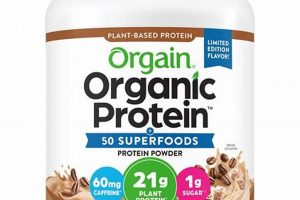
The creation of plant-based protein supplements within a domestic setting constitutes a method for individuals seeking dietary alternatives aligned with vegan principles. This involves combining ingredients such as seeds, nuts, and legumes, then processing them to achieve a powdered consistency suitable for addition to beverages or recipes. An example includes blending pumpkin seeds, chia seeds, and brown rice into a fine powder to supplement daily protein intake.
The increasing adoption of this practice stems from several factors. These include enhanced control over ingredient sourcing, the avoidance of artificial additives often found in commercially produced supplements, and the potential for cost savings. Historically, reliance on whole food sources for protein was prevalent; the shift toward concentrated protein supplements represents an evolution in dietary practices, particularly among those adhering to specific dietary restrictions or athletic training regimens.
Subsequently, this article will explore the various components suitable for crafting these supplements, offer guidance on achieving optimal texture and flavor profiles, and address considerations regarding storage and shelf life. Furthermore, it will examine the nutritional composition of diverse ingredient combinations and provide comparative analyses against commercially available vegan protein options.
Production Guidance
The following outlines essential practices for maximizing the quality and nutritional value of customized, plant-based protein supplements created within a home environment.
Tip 1: Ingredient Selection: Prioritize whole, unprocessed components. Optimal choices include brown rice, quinoa, hemp seeds, chia seeds, pumpkin seeds, sunflower seeds, almonds, and walnuts. Select ingredients based on their amino acid profiles and nutritional density to ensure a well-rounded supplement.
Tip 2: Grinding Technique: Utilize a high-speed blender or a dedicated spice grinder for achieving a uniformly fine powder. Insufficient grinding results in a gritty texture, which negatively impacts palatability and mixability.
Tip 3: Combination Ratios: Experiment with different ratios of ingredients to optimize both flavor and nutritional composition. A balanced blend might consist of 40% legumes, 30% seeds, and 30% grains for a comprehensive amino acid profile.
Tip 4: Flavor Enhancement: Natural flavorings can improve the overall sensory experience. Consider incorporating ingredients such as unsweetened cocoa powder, vanilla bean powder, or ground cinnamon in small quantities. Ensure that any added flavorings are free of artificial additives or sweeteners.
Tip 5: Texture Refinement: Sieving the ground mixture through a fine-mesh strainer eliminates larger particles, further enhancing the smoothness of the powder. This step is especially beneficial for incorporating the supplement into beverages.
Tip 6: Storage Protocol: Store the finished product in an airtight container in a cool, dark, and dry location. Proper storage minimizes oxidation and preserves freshness, extending the shelf life of the supplement.
Tip 7: Shelf Life Awareness: Due to the absence of artificial preservatives, a homemade blend will have a shorter shelf life compared to commercially manufactured alternatives. Consume the supplement within 2-3 months for optimal quality and nutrient retention.
Adhering to these guidelines will facilitate the creation of a nutritionally robust and palatable plant-based protein supplement. Careful attention to detail throughout the production process is crucial for maximizing the benefits of a self-made product.
Subsequent sections will delve into specific recipe formulations and address common challenges encountered during the creation of customized protein supplements.
1. Ingredient Sourcing

The creation of a homemade protein supplement, formulated according to vegan principles, is fundamentally dependent on the origin and quality of its constituent ingredients. Ingredient sourcing directly impacts the nutritional profile, purity, and overall efficacy of the final product. A compromised source risks introducing contaminants, diminishing the intended nutritional benefits, and potentially negating the advantages of a homemade approach.
For instance, legumes sourced from regions with poor soil health may exhibit reduced mineral content, directly affecting the supplement’s micronutrient density. Similarly, seeds contaminated with pesticides during cultivation undermine the intention of creating a clean and natural product. Therefore, prioritizing reputable suppliers, verifying certifications (such as organic or non-GMO), and, where feasible, opting for locally sourced ingredients represent critical considerations. Consider the example of acquiring hemp seeds from a source known for rigorous quality control versus an unregulated market; the former ensures a consistent protein content and minimizes the risk of contaminants.
Ultimately, the deliberate selection of high-quality ingredients from verifiable sources is paramount to realizing the intended benefits of a homemade, plant-based protein supplement. This diligent approach mitigates potential risks associated with compromised inputs and ensures a product that aligns with the principles of both veganism and optimal nutrition.
2. Amino Acid Profile

The amino acid profile is a critical determinant of the nutritional value of plant-based protein supplements crafted within a domestic setting. Plant-based proteins, unlike many animal-derived proteins, frequently exhibit incomplete amino acid profiles, meaning they lack sufficient quantities of one or more of the nine essential amino acids. These essential amino acids cannot be synthesized by the human body and must be obtained through dietary sources. Therefore, the careful combination of various plant-based ingredients is imperative to ensure a complete and balanced amino acid composition in homemade protein powders. For example, brown rice protein is low in lysine, while legumes like peas are rich in lysine but lower in methionine. Combining these two ingredients compensates for their individual deficiencies, resulting in a more complete protein source.
A comprehensive understanding of amino acid complementarity is essential for formulators. Failure to address amino acid imbalances can diminish the efficiency of protein utilization within the body, hindering muscle protein synthesis and other vital physiological processes. The strategic selection and blending of ingredients, such as quinoa, chia seeds, hemp seeds, and various legumes, allows for the creation of protein supplements that meet the body’s amino acid requirements. For instance, incorporating chia seeds, which contain all nine essential amino acids, can enhance the overall amino acid profile of a protein powder primarily based on rice or pea protein.
In conclusion, the amino acid profile is a non-negotiable consideration in homemade protein supplement formulation. The achievement of a complete and balanced profile requires meticulous planning, informed ingredient selection, and a clear understanding of amino acid complementarity. Neglecting this aspect undermines the nutritional efficacy of the supplement and potentially limits its intended benefits. Prioritizing amino acid balance is thus paramount to the successful creation of effective vegan protein supplements.
3. Grinding Consistency

Grinding consistency represents a pivotal factor influencing the overall quality, palatability, and utility of plant-based protein supplements created in a domestic environment. The degree to which ingredients are pulverized directly affects texture, solubility, and, consequently, the consumer’s experience with the final product. Suboptimal grinding yields a less desirable outcome, potentially compromising the intended nutritional benefits and hindering consumption.
- Texture and Palatability
Achieving a uniform, fine powder is paramount for a pleasant mouthfeel. Coarsely ground particles result in a gritty texture, which can significantly deter consumption and limit the supplement’s versatility in recipes. A fine consistency facilitates smoother integration into beverages and food, enhancing overall palatability. For instance, a smoothie made with finely ground hemp seeds will be significantly more palatable than one made with coarsely ground seeds.
- Solubility and Mixability
The fineness of the grind directly correlates with solubility in liquids. A finer powder disperses more readily in water, milk alternatives, or other beverages, minimizing clumping and ensuring a homogenous mixture. Poor solubility can lead to sedimentation, resulting in an uneven distribution of nutrients and an unappealing drinking experience. Imagine comparing two protein shakes: one with a fine powder that blends seamlessly, and another with a coarse powder that settles at the bottom.
- Nutrient Bioavailability
While not the primary factor, grinding consistency can indirectly impact nutrient bioavailability. Finer particles possess a larger surface area, potentially enhancing the digestive enzymes’ access to nutrients within the plant cells. However, this effect is less pronounced compared to other factors such as cooking or enzymatic pre-treatment. Nevertheless, optimizing grinding consistency contributes to maximizing the potential for nutrient absorption.
- Equipment Considerations
The ability to achieve the desired grinding consistency depends heavily on the equipment employed. High-speed blenders, dedicated spice grinders, and food processors equipped with appropriate blades are essential. Investing in suitable equipment and mastering grinding techniques is crucial for consistent results. Attempting to grind hard seeds or nuts with inadequate equipment can lead to inconsistent particle sizes and damage to the appliance.
In conclusion, grinding consistency stands as a fundamental consideration in the production of homemade, plant-based protein supplements. Achieving an optimal texture through appropriate equipment and techniques is essential for palatability, solubility, and potentially, nutrient bioavailability, contributing significantly to the overall success and consumer satisfaction with the product.
4. Flavor Optimization

Flavor optimization within the context of homemade, plant-based protein supplements represents a critical determinant of adherence to dietary regimens and long-term product usability. The inherent taste profiles of constituent ingredients, such as legumes, seeds, and grains, often present challenges due to earthy, bitter, or otherwise unpalatable notes. Addressing these taste-related obstacles is not merely a matter of sensory appeal; it directly impacts the consumer’s willingness to incorporate the supplement into daily nutrition. The cause-and-effect relationship is clear: an unpalatable supplement, regardless of its nutritional merits, will likely be abandoned, negating its intended health benefits. For instance, a protein powder primarily composed of pea protein may possess a strong, vegetal flavor that many find unappealing. Without flavor modification, its use may be limited.
Achieving flavor optimization in homemade vegan protein powders necessitates a multifaceted approach. Strategic ingredient selection plays a key role; incorporating components with naturally palatable flavors, such as vanilla bean powder, unsweetened cocoa powder, or freeze-dried fruits, can mask less desirable notes. Furthermore, the addition of natural sweeteners, such as stevia or monk fruit extract, can enhance overall taste without compromising the supplement’s nutritional integrity. It is essential to exercise caution when incorporating flavoring agents, ensuring that they align with the vegan ethos and do not introduce artificial additives or excessive caloric content. An example would be the careful addition of cinnamon to a blend containing brown rice protein to mitigate its sometimes bland taste. Successful optimization requires a balanced strategy, considering both taste masking and flavor enhancement.
In summary, flavor optimization constitutes an indispensable aspect of creating effective homemade plant-based protein supplements. It directly influences user adherence and, consequently, the realization of intended nutritional benefits. The challenges posed by the inherent flavors of plant-based ingredients can be mitigated through strategic ingredient selection, careful flavoring agent incorporation, and an awareness of vegan-compatible sweeteners. Prioritizing flavor optimization is therefore paramount to ensuring the long-term usability and success of any homemade vegan protein powder formulation. Future research could focus on identifying novel, natural flavor combinations that further enhance palatability without compromising nutritional value.
5. Storage Conditions
The preservation of homemade, plant-based protein supplements hinges critically on storage conditions. Improper storage directly compromises the nutritional integrity, sensory qualities, and safety of the product. The absence of artificial preservatives in homemade formulations renders them particularly susceptible to degradation triggered by environmental factors, necessitating stringent adherence to recommended storage protocols. The interaction of moisture, heat, light, and oxygen with the supplement can initiate oxidation, enzymatic activity, and microbial growth, each contributing to a decline in quality and potential health risks. For instance, storing a blend containing flaxseed meal in a warm, humid environment accelerates rancidity due to the oxidation of its unsaturated fatty acids, diminishing its nutritional value and rendering it unpalatable. Therefore, understanding and controlling these environmental variables is paramount for extending shelf life and maintaining product quality.
Practical application of this understanding translates into several key actions. First, employing airtight containers constructed from opaque materials minimizes exposure to both air and light. Vacuum sealing represents an even more effective strategy for limiting oxygen exposure. Second, maintaining a consistently cool and dry storage environment inhibits microbial proliferation and enzymatic degradation. Ideally, storage temperatures should remain below 20C (68F), with humidity levels kept low. Refrigeration or freezing can further extend shelf life, particularly for blends containing ingredients prone to spoilage, such as nuts or seeds with high oil content. Finally, meticulous record-keeping, including the production date and a “use by” date, assists in tracking product age and ensuring timely consumption before significant degradation occurs. Failure to adhere to these best practices can result in a product that is not only less nutritious but also potentially harmful due to the presence of molds or bacteria.
In conclusion, storage conditions are inextricably linked to the quality and safety of homemade vegan protein powder. Control over environmental factors, particularly moisture, heat, light, and oxygen, is essential for preserving nutritional value and preventing spoilage. Employing appropriate containers, maintaining optimal storage temperatures, and tracking product age are key strategies for extending shelf life and ensuring a safe and nutritious supplement. The challenge lies in consistently adhering to these protocols, requiring diligence and attention to detail throughout the storage period. Addressing this aspect represents a critical component of successfully incorporating homemade protein supplements into a sustainable vegan dietary regimen.
6. Nutrient Retention

The premise of creating plant-based protein supplements within a home environment, adhering to vegan principles, directly correlates with the preservation of inherent nutrients. Nutrient retention signifies the proportion of vitamins, minerals, antioxidants, and other beneficial compounds that remain intact throughout the production and storage processes. Homemade formulations, in contrast to commercially processed alternatives, afford greater control over these processes, thereby potentially optimizing nutrient retention. A direct cause-and-effect relationship exists between the handling of ingredients and the resultant nutritional value of the supplement. Example: Excessive heat during grinding can degrade heat-sensitive vitamins, such as certain B vitamins, thereby diminishing the overall nutritional profile. The understanding of this relationship is of practical significance, allowing individuals to implement techniques that minimize nutrient loss.
The specific choices made during preparation impact nutrient retention significantly. Utilizing low-heat grinding methods, employing proper storage containers, and minimizing the duration of storage represent key strategies. Ingredients selected for their high nutrient density are only valuable if their nutritional content is maintained. For example, incorporating flax seeds for their omega-3 fatty acid content necessitates protecting them from oxidation, a process accelerated by exposure to light and air. Failure to implement appropriate storage strategies renders the inclusion of such ingredients largely ineffective. Further, the type of equipment used can influence nutrient retention; blenders that generate excessive heat can denature proteins and degrade vitamins, making the choice of equipment a critical consideration.
In summary, nutrient retention is not merely a desirable attribute but rather a foundational component of effective homemade vegan protein supplements. Its optimization demands a comprehensive understanding of the impact of processing and storage on nutrient stability. Challenges arise in accurately assessing the precise extent of nutrient loss without sophisticated laboratory analysis, requiring a reliance on established best practices and informed decision-making. The objective remains to maximize the bioavailability of essential nutrients, thereby ensuring that the supplement fulfills its intended purpose of supporting overall health and well-being, rather than simply providing a source of protein. Emphasis is on creating a nutrient-dense product rather than just protein source.
7. Cost Effectiveness

The economic viability of creating plant-based protein supplements within a domestic setting constitutes a primary motivator for many individuals adhering to vegan dietary principles. The practice offers the potential for significant cost savings when compared to purchasing commercially produced vegan protein powders, which often carry premium price tags due to marketing, processing, and distribution expenses.
- Ingredient Cost Variability
The economic advantage of homemade vegan protein powder hinges largely on strategic ingredient sourcing. Bulk purchasing of staple ingredients, such as brown rice, legumes, and seeds, from wholesale suppliers or directly from farms can substantially reduce costs. Fluctuations in market prices and seasonal availability influence the overall cost of production. Example: Purchasing dried beans in bulk is considerably cheaper than buying pre-cooked or canned beans. Sourcing ingredients strategically is critical to achieving cost-effectiveness.
- Avoidance of Processing and Marketing Markups
Commercial protein powders incur significant costs associated with processing, flavoring, packaging, and marketing. Creating a homemade alternative eliminates these expenses, resulting in a direct cost reduction. The absence of artificial sweeteners, flavors, and fillers, often found in commercial products, further contributes to savings. Example: The cost of packaging and labeling a commercial protein powder can represent a substantial portion of its retail price, expenses avoided entirely with a homemade solution.
- Control Over Ingredient Quality and Quantity
Producing protein powder at home allows for complete control over ingredient selection, enabling the prioritization of affordable yet nutritionally valuable options. The ability to adjust ingredient ratios and avoid unnecessary additions allows for cost optimization. Example: Substituting expensive nuts for more cost-effective seeds, while maintaining a balanced amino acid profile, represents a method for reducing production costs without compromising nutritional quality. Customization is key to affordability.
- Long-Term Cost Savings and Investment
While the initial investment in equipment, such as a high-speed blender or spice grinder, may represent an upfront cost, the long-term savings derived from producing protein powder at home can significantly outweigh this investment. Over time, the cumulative cost of purchasing commercial protein powders far exceeds the cost of homemade production. Example: The initial investment in a quality blender may be recouped within a few months through the savings realized by avoiding the purchase of commercial protein supplements.
In summary, the economic benefits of crafting plant-based protein supplements within a domestic environment are considerable, stemming from strategic ingredient sourcing, avoidance of commercial markups, control over ingredient quality and quantity, and long-term cost savings. While the initial investment in equipment should be considered, the potential for significant financial savings, coupled with the added benefits of ingredient control and nutritional customization, renders the practice economically advantageous for many individuals pursuing vegan dietary practices. The ongoing cost effectiveness relies upon consistent purchasing strategies and efficient utilization of resources.
Frequently Asked Questions about Homemade Vegan Protein Powder
The following addresses common inquiries regarding the creation and utilization of plant-based protein supplements within a domestic setting. The intention is to provide clear and concise answers based on established nutritional principles and best practices.
Question 1: What constitutes a “complete” protein when crafting a homemade vegan protein powder?
A complete protein source contains all nine essential amino acids in adequate proportions to meet human physiological needs. Since single plant-based sources often lack one or more essential amino acids, combining different ingredients, such as legumes with grains or seeds, is crucial to achieve a complete amino acid profile.
Question 2: How can the shelf life of a homemade vegan protein powder be maximized?
Shelf life is primarily extended through proper storage. The powder should be stored in an airtight container, preferably made of opaque material, in a cool, dark, and dry location. Refrigeration or freezing can further extend the shelf life, especially for ingredients high in oils, such as nuts and seeds.
Question 3: Is it possible to accurately determine the protein content of a homemade blend without laboratory testing?
While precise protein content determination necessitates laboratory analysis, estimations can be derived by consulting nutritional databases for the specific protein content of individual ingredients. Calculating the proportional contribution of each ingredient provides a reasonable approximation of the overall protein content.
Question 4: Are there specific ingredients that should be avoided when creating a homemade vegan protein powder?
Ingredients known to cause allergic reactions or digestive distress should be avoided. These may include certain legumes, nuts, or seeds. Additionally, ingredients with known toxicities, such as raw kidney beans (which contain phytohaemagglutinin), must be properly processed to eliminate toxins before consumption.
Question 5: How does the cost of homemade vegan protein powder compare to commercially available options?
In most cases, creating protein powder at home proves more cost-effective than purchasing commercial alternatives. Bulk purchasing of staple ingredients from wholesale suppliers can significantly reduce expenses, as can avoiding the costs associated with processing, marketing, and packaging.
Question 6: Does homemade vegan protein powder require any specific preparation techniques to enhance digestibility?
Sprouting or soaking legumes and grains before grinding can improve digestibility by reducing the levels of phytic acid, an anti-nutrient that can inhibit mineral absorption. Additionally, incorporating digestive enzymes, such as bromelain or papain, can further enhance protein digestion.
The information presented underscores the importance of informed decision-making when creating plant-based protein supplements at home. Careful attention to ingredient selection, storage conditions, and preparation techniques is essential for maximizing nutritional benefits and ensuring product safety.
The next section will provide sample recipes for the successful combination of “homemade protein powder vegan”.
Conclusion
This exploration has detailed the multifaceted aspects of creating “homemade protein powder vegan.” It has underscored the importance of ingredient sourcing, amino acid profiling, grinding consistency, flavor optimization, storage conditions, nutrient retention, and cost-effectiveness. These elements are not isolated considerations but rather interdependent factors that collectively determine the quality and efficacy of the final product. A disregard for any one of these aspects can significantly diminish the nutritional value and overall utility of the protein supplement.
The creation of a homemade, plant-based protein supplement represents a commitment to both dietary principles and informed nutrition. It necessitates a deliberate and conscientious approach, demanding careful planning and execution. The ultimate success of this endeavor hinges on the understanding and application of the principles outlined herein, empowering individuals to make informed choices regarding their nutritional intake and fostering a sustainable approach to plant-based protein supplementation. The path forward requires continued research into optimal ingredient combinations and processing techniques, ensuring that “homemade protein powder vegan” remains a viable and effective dietary strategy.