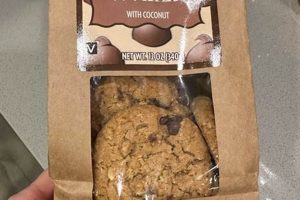
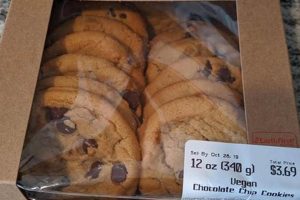
These baked goods represent a confluence of dietary adaptations. The absence of gluten caters to individuals with celiac disease or gluten sensitivity, while the exclusion of animal products aligns with vegan dietary principles. A typical example would be a cookie crafted with a blend of rice flour, tapioca starch, and a binding agent like xanthan gum to replace gluten, alongside plant-based butter alternatives and egg substitutes such as applesauce or flaxseed meal.
The significance of these treats lies in their inclusivity. They allow individuals with specific dietary restrictions to partake in traditional celebrations and enjoy familiar flavors without compromising their health or ethical choices. Historically, the development of such recipes reflects a growing awareness of food allergies, intolerances, and ethical considerations related to animal welfare within the broader food industry.
The following sections will delve into the specific ingredients and techniques employed in creating these specialized cookies, offering guidance on achieving optimal texture, flavor, and visual appeal. Further discussion will address common challenges encountered during the baking process and provide practical solutions for consistently successful results.
Baking Suggestions
Achieving optimal results when preparing specialized confectionery requires meticulous attention to detail and a thorough understanding of ingredient properties. These suggestions aim to provide guidance for successful execution.
Tip 1: Ingredient Selection: Precise measurement is paramount. Employ a kitchen scale for accurate quantification of flours, starches, and binding agents. Variations in component ratios can significantly impact the final product’s texture and structure.
Tip 2: Flour Blending: Combine gluten-free flours strategically. A blend of rice flour, tapioca starch, and potato starch often yields a superior texture compared to using a single flour. Xanthan gum or psyllium husk is crucial for mimicking gluten’s binding properties.
Tip 3: Fat Substitution: Plant-based butter alternatives should possess a high fat content, typically around 80%. Coconut oil can also be employed; however, its distinct flavor profile should be considered in relation to the desired final taste.
Tip 4: Egg Replacement: Applesauce, mashed banana, or flaxseed meal mixed with water (1 tablespoon flaxseed meal + 3 tablespoons water per egg) serve as effective egg substitutes. Each imparts a slightly different characteristic; select based on desired moisture and binding.
Tip 5: Dough Handling: Gluten-free doughs tend to be more delicate than conventional doughs. Chilling the dough prior to rolling and cutting is highly recommended to improve workability and prevent spreading during baking.
Tip 6: Baking Temperature: A slightly lower baking temperature (approximately 325F or 160C) can help prevent excessive browning and ensure even cooking. Monitor the cookies closely during the final stages of baking.
Tip 7: Cooling Process: Allow the baked cookies to cool completely on the baking sheet before transferring them to a wire rack. This minimizes the risk of breakage, as they are more fragile when warm.
Adhering to these guidelines promotes enhanced texture, stability, and overall palatability in the finished product. Careful execution of each step is essential for achieving consistent, high-quality outcomes.
The subsequent section will explore advanced techniques for decorating these specialized treats, further enhancing their visual appeal and presentation.
1. Flour Blends

The selection and combination of flours represent a critical determinant in the quality and structural integrity of gluten-free and vegan sugar cookies. The absence of gluten, a protein complex responsible for elasticity in traditional baked goods, necessitates the strategic use of alternative flours to mimic its binding and textural properties. The composition of the flour blend directly impacts the final product’s crumb, mouthfeel, and overall palatability.
- Starch Component
Starches, such as tapioca starch, potato starch, or cornstarch, contribute to the tenderness and lightness of the cookie. They dilute the density of other flours and promote a delicate crumb structure. However, an excess of starch can result in a gummy or overly soft texture. The optimal ratio of starch to flour is crucial for achieving a desirable balance.
- Base Flour Component
Base flours, including rice flour (brown or white), oat flour, or sorghum flour, provide the primary structural framework of the cookie. These flours contribute to the overall volume and density. The choice of base flour influences the flavor profile; for example, brown rice flour imparts a slightly nutty taste. The particle size and water absorption capacity of the base flour are important considerations.
- Binding Agent
Due to the absence of gluten, a binding agent is required to provide cohesion and prevent the cookie from crumbling. Xanthan gum and psyllium husk are common choices. Xanthan gum, a polysaccharide, contributes to viscosity and elasticity. Psyllium husk, a soluble fiber, absorbs water and creates a gel-like structure. The appropriate quantity of binding agent is essential; excessive amounts can lead to a tough or chewy texture.
- Flavor Considerations
The combination of flours can significantly impact the flavor of the finished cookie. For example, using a blend with a high proportion of sorghum flour may impart a slightly tangy or earthy flavor. Conversely, using a combination of white rice flour and tapioca starch results in a more neutral flavor profile, allowing other ingredients, such as vanilla or almond extract, to stand out. Thoughtful selection of flours is essential to complement the overall flavor concept.
The interplay between these facets determines the ultimate success of the gluten-free and vegan sugar cookie. Formulating an appropriate flour blend requires a balance of structural support, tenderness, binding capacity, and flavor considerations to create a product that is both texturally pleasing and palatable. Experimentation with different flour combinations is often necessary to achieve the desired result.
2. Fat Substitution

Fat substitution is a critical element in the formulation of confectionery designed for both gluten-free and vegan diets. Traditional sugar cookie recipes rely on butter for its contribution to flavor, tenderness, and structure. Replacing butter, a dairy-derived fat, with plant-based alternatives necessitates careful consideration of its functional properties to achieve a comparable result in the final product. The choice of fat substitute directly impacts the cookie’s texture, spread, and overall mouthfeel. Inadequate fat selection can lead to dryness, crumbliness, or an undesirable greasy consistency. For example, using a low-fat vegan butter substitute may result in a dry and brittle cookie lacking the characteristic richness associated with traditional sugar cookies.
Common fat substitutes in these applications include vegan butter alternatives, coconut oil, and vegetable shortening. Vegan butter alternatives, often composed of plant-based oils such as palm, soy, or olive oil, are engineered to mimic the physical properties of dairy butter, including melting point and emulsification capabilities. Coconut oil, solid at room temperature, provides a distinct flavor profile and contributes to a slightly chewier texture. Vegetable shortening, a hydrogenated vegetable oil, offers a neutral flavor and can contribute to a tender crumb, but its use is sometimes debated due to health concerns associated with trans fats. The selection process involves evaluating each substitute’s impact on taste, texture, and structural integrity. Recipes frequently adjust other ingredients, such as the amount of liquid or binding agents, to compensate for the altered fat content and water absorption characteristics.
In conclusion, successful creation of gluten-free and vegan sugar cookies depends significantly on appropriate fat substitution. Understanding the functional properties of various plant-based fats, their impact on texture and flavor, and necessary adjustments to the recipe are essential for producing a palatable and structurally sound product. While challenges exist in replicating the precise qualities of butter, informed selection and strategic recipe modification allow for the creation of acceptable alternatives. The broader implications involve expanding the accessibility of traditionally indulgent treats to individuals with dietary restrictions and ethical preferences.
3. Egg Replacers

The functionality of eggs within conventional baking formulations is multifaceted, encompassing binding, leavening, moisture provision, and enrichment of flavor and color. In gluten-free and vegan sugar cookies, the omission of eggs necessitates the strategic incorporation of substitutes that can mimic one or more of these properties. The selection of an appropriate egg replacer is not arbitrary; it directly influences the final texture, structure, and taste profile of the baked good. For instance, flaxseed meal mixed with water creates a viscous gel that functions primarily as a binder and moisture provider, mimicking the binding ability of eggs but contributing little to leavening. Conversely, commercial egg replacers often contain a blend of ingredients designed to emulate a broader range of egg functionalities.
Several viable egg replacers exist, each presenting unique characteristics. Applesauce, a common choice, introduces moisture and subtle sweetness, but its density can affect the cookie’s overall texture. Mashed banana offers a similar function but imparts a distinct flavor that may not be desirable in all applications. Aquafaba, the liquid drained from cooked chickpeas, possesses foaming and binding properties, making it suitable for achieving a lighter texture. The choice of replacer should be carefully considered in relation to the desired outcome and the other ingredients in the recipe. For example, if a recipe already contains a high proportion of moisture-rich ingredients, a binding agent like flaxseed meal may be more appropriate than applesauce to prevent the cookies from becoming overly soft.
In summation, the strategic implementation of egg replacers is paramount to the successful creation of gluten-free and vegan sugar cookies. The selection must consider the diverse functionalities that eggs provide in traditional baking, the individual properties of each replacer, and the interplay with other recipe components. While no single substitute perfectly replicates the complex role of eggs, a thoughtful and informed approach enables the production of palatable and structurally sound cookies that adhere to both gluten-free and vegan dietary requirements. Ongoing research into novel plant-based ingredients offers the potential for even more effective egg replacement solutions in the future.
4. Dough Consistency

Dough consistency represents a critical control point in the production of specialized confectionery items. Within the context of gluten-free and vegan sugar cookies, achieving the correct dough consistency is paramount to ensuring a palatable and structurally sound final product. The unique properties of gluten-free flours and vegan ingredient substitutions introduce distinct challenges compared to traditional baking methods. Deviation from the optimal consistency can result in cookies that are either overly dry and crumbly or excessively soft and prone to spreading during baking. The following points highlight the facets of dough consistency and its connection to successful formulation.
- Hydration Levels
Gluten-free flours often exhibit different water absorption characteristics compared to wheat flour. Some gluten-free flours may require more hydration to achieve a workable dough, while others may become overly sticky with excessive moisture. Vegan egg replacers, such as applesauce or flaxseed meal, also contribute to the overall hydration level of the dough. Maintaining a precise balance is essential to prevent the dough from becoming either too dry and crumbly or too wet and unmanageable. For example, a dough with insufficient hydration may crack during rolling, while an overly hydrated dough will spread excessively in the oven, resulting in thin, misshapen cookies.
- Fat Distribution
The type and distribution of fat within the dough significantly impact its consistency. Vegan butter alternatives or coconut oil, commonly used in place of dairy butter, have different melting points and emulsification properties. Insufficient or uneven distribution of fat can lead to a tough or greasy texture. Chilling the dough is often recommended to solidify the fat and improve workability. This process allows the fat to evenly coat the flour particles, inhibiting gluten development (in traditional baking) and contributing to a more tender crumb in gluten-free applications. Proper fat distribution is visually observable in the homogenous appearance of the dough and its ability to hold its shape when handled.
- Binding Agents
Xanthan gum or psyllium husk serves as binding agents in gluten-free baking, mimicking the cohesive properties of gluten. The quantity and dispersion of these agents directly influence the dough’s elasticity and structural integrity. Insufficient binding results in a fragile dough that crumbles easily, while excessive binding leads to a tough or rubbery texture. Thorough incorporation of the binding agent is essential to ensure uniform distribution throughout the dough. This is typically achieved by mixing the binding agent with the dry ingredients before adding any liquid components. Visual cues of proper binding include a smooth, pliable dough that holds its shape without being sticky or excessively firm.
- Temperature Control
Temperature plays a vital role in maintaining the desired dough consistency. As previously mentioned, chilling the dough is often necessary to solidify fats and improve workability. In warmer environments, the fats may soften too quickly, leading to a sticky and difficult-to-handle dough. Conversely, excessively cold dough can be too stiff and prone to cracking. Maintaining a consistent and appropriate temperature throughout the mixing, rolling, and cutting processes is crucial. In practice, this may involve chilling the dough multiple times during preparation and working in a cool environment to minimize temperature fluctuations.
In summary, the optimal dough consistency for gluten-free and vegan sugar cookies represents a delicate balance of hydration, fat distribution, binding agents, and temperature control. Mastering these facets requires careful attention to ingredient properties, precise measurement, and consistent execution of techniques. A well-formulated dough will exhibit a smooth, pliable texture that holds its shape during rolling and cutting, resulting in cookies with a desirable crumb and structural integrity.
5. Baking Temperature

Optimal baking temperature is a crucial parameter in the production of gluten-free and vegan sugar cookies, significantly impacting the final product’s texture, color, and structural integrity. Deviations from the recommended temperature range can lead to undesirable outcomes, such as excessive browning, uneven cooking, or a compromised crumb structure. Given the absence of gluten and the substitution of animal-derived ingredients, precise temperature control is essential to ensure successful results.
- Starch Gelatinization
Gluten-free flour blends rely heavily on starches for structure and binding. Baking temperature directly influences the gelatinization process of these starches. Insufficient temperature results in incomplete gelatinization, leading to a grainy or crumbly texture. Conversely, excessive temperature can cause over-gelatinization, resulting in a gummy or dense texture. The ideal baking temperature promotes optimal starch gelatinization, creating a cohesive and tender crumb. For example, a temperature too low may result in the cookie spreading too much without setting properly, whereas too high a temperature may cause the edges to burn before the center is cooked through.
- Moisture Evaporation
The rate of moisture evaporation during baking is directly correlated with temperature. Rapid evaporation at high temperatures can lead to a dry and brittle cookie, while slow evaporation at low temperatures can result in a soft and underbaked cookie. Maintaining a moderate baking temperature allows for controlled moisture evaporation, contributing to a balanced texture. For instance, too rapid evaporation can cause cracking on the surface of the cookie, while insufficient evaporation can make the cookie excessively soft and difficult to handle.
- Fat Melting Point
Vegan butter alternatives and other plant-based fats have varying melting points compared to dairy butter. Baking temperature must be adjusted to account for these differences. Too high a temperature can cause the fat to melt too quickly, leading to excessive spreading and a thin, greasy cookie. Conversely, too low a temperature may prevent the fat from melting sufficiently, resulting in a dry and dense cookie. Careful temperature selection ensures that the fat melts at an appropriate rate, contributing to a tender and evenly textured final product.
- Browning Reaction (Maillard Reaction)
The Maillard reaction, a chemical reaction between amino acids and reducing sugars, contributes to the browning and flavor development in baked goods. Baking temperature plays a critical role in controlling the Maillard reaction. Excessive temperature can lead to over-browning and a burnt flavor, while insufficient temperature may result in a pale and flavorless cookie. The optimal baking temperature promotes a balanced Maillard reaction, resulting in a golden-brown color and a desirable flavor profile. For instance, careful monitoring of the cookie’s color is essential, as gluten-free flours often brown more quickly than wheat flour.
These facets highlight the crucial role of baking temperature in achieving optimal results with gluten-free and vegan sugar cookies. Temperature affects the starch gelatinization, moisture evaporation, fat melting point, and Maillard reaction, all of which contribute to the cookie’s final texture, color, and flavor. Understanding these interconnections is essential for bakers seeking to create high-quality gluten-free and vegan treats. By precisely controlling baking temperature, bakers can overcome the challenges posed by alternative ingredients and consistently produce delicious and visually appealing cookies.
6. Decoration Suitability

Decoration suitability is an integral factor in the overall appeal and marketability of gluten-free and vegan sugar cookies. The aesthetic presentation of these cookies often serves as a key differentiator, particularly within a market segment that frequently confronts perceived limitations in taste and texture. Therefore, the selected decorations must not only adhere to both gluten-free and vegan standards but also maintain their structural integrity and visual appeal when applied to a potentially more delicate or fragile cookie base. For instance, employing royal icing made with aquafaba (chickpea brine) instead of egg whites necessitates careful calibration to ensure it achieves the desired consistency and sets properly without compromising the underlying cookie. The success of a decorated gluten-free and vegan sugar cookie often hinges on the compatibility between the cookie’s composition and the decorative elements applied.
The application of decorative elements to these cookies presents unique challenges. Gluten-free cookies can exhibit a different surface texture compared to traditional wheat-based cookies, potentially affecting the adhesion of icings, sprinkles, or other embellishments. Furthermore, vegan icings, which often rely on plant-based fats and stabilizers, may behave differently than traditional buttercreams or glazes in terms of drying time, color stability, and resistance to smudging. As a practical example, natural food colorings derived from fruits or vegetables may fade or bleed when exposed to light or temperature variations, requiring careful consideration of the storage and display conditions. Consequently, successful decoration requires a thorough understanding of the properties of both the cookie itself and the decorative materials employed.
In summary, decoration suitability significantly contributes to the perceived value and consumer appeal of gluten-free and vegan sugar cookies. While adhering to specific dietary restrictions, attention to icing consistency, adhesion properties, and color stability is paramount. Addressing the challenges posed by alternative ingredients requires careful selection and expert application of decorative elements. The connection between decoration suitability and these specialized cookies extends beyond mere aesthetics, influencing consumer perception and market success.
Frequently Asked Questions
The subsequent section addresses common inquiries regarding the formulation, preparation, and consumption of sugar cookies adhering to both gluten-free and vegan dietary restrictions. These responses aim to provide clarity and dispel potential misconceptions.
Question 1: Are gluten-free and vegan sugar cookies inherently less palatable than traditional sugar cookies?
The palatability of these cookies is contingent upon recipe formulation and execution. Suboptimal ingredient selection or improper techniques may yield a less desirable outcome. However, with careful consideration of flour blends, fat substitutes, and binding agents, a product comparable to traditional sugar cookies can be achieved.
Question 2: What are the primary challenges in creating gluten-free and vegan sugar cookies?
The principal challenges include replicating the structural properties of gluten, achieving appropriate moisture levels, and managing the impact of ingredient substitutions on flavor and texture. Maintaining the delicate balance between these factors requires meticulous attention to detail.
Question 3: Can gluten-free and vegan sugar cookies be decorated effectively?
Effective decoration is possible with appropriate materials and techniques. Vegan royal icing, plant-based food colorings, and edible glitters are viable options. However, the potential fragility of gluten-free cookies may necessitate careful handling during the decoration process.
Question 4: What is the shelf life of gluten-free and vegan sugar cookies?
The shelf life is generally comparable to that of traditional sugar cookies, provided they are stored properly in an airtight container. However, specific ingredient combinations may influence the duration of optimal freshness. Monitoring for changes in texture or flavor is recommended.
Question 5: Are all gluten-free flours inherently vegan?
The vast majority of gluten-free flours are plant-based and thus suitable for vegan diets. However, it is prudent to verify the source and processing methods to ensure complete adherence to vegan principles.
Question 6: Can substitutions be made within a gluten-free and vegan sugar cookie recipe?
Substitutions are possible, but caution is advised. Altering ingredient ratios or substituting unfamiliar components can significantly impact the final product. A thorough understanding of the function of each ingredient is essential before attempting modifications.
In summary, the successful creation of gluten-free and vegan sugar cookies requires careful attention to detail, informed ingredient selection, and a pragmatic understanding of the challenges involved. While these cookies may present unique complexities, they offer a viable alternative for individuals with specific dietary needs and preferences.
The subsequent section provides concluding remarks and offers resources for further exploration.
Gluten-Free and Vegan Sugar Cookies
This exploration has delineated the multifaceted considerations inherent in the formulation and execution of confectionery compliant with both gluten-free and vegan dietary restrictions. The strategic selection of flour blends, the functional substitution of fats and eggs, meticulous dough consistency management, precise baking temperature control, and the appropriateness of decorative elements have been examined. These factors collectively influence the structural integrity, textural attributes, flavor profile, and aesthetic appeal of the final product.
The pursuit of palatable and visually compelling gluten-free and vegan sugar cookies underscores a broader trend towards dietary inclusivity and ethical consumption. Further refinement of ingredient technologies and baking techniques holds the potential to diminish the sensory disparities between these specialized products and their conventional counterparts, thereby expanding access and broadening appeal within the evolving culinary landscape.