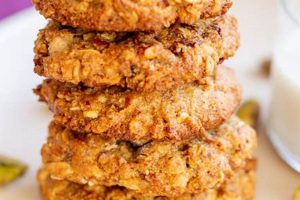
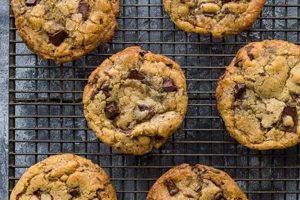
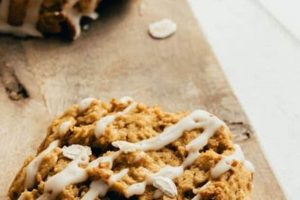
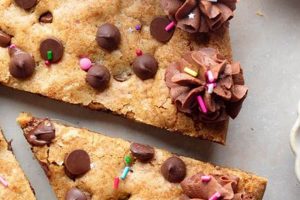
These baked goods represent a specific category of confectionery, characterized by the absence of gluten, a protein composite found in wheat and other grains, and all animal-derived ingredients. They are typically crafted using alternative flours like rice flour, almond flour, or tapioca starch, combined with plant-based substitutes for butter and eggs, such as vegan margarine or applesauce. The final product aims to replicate the texture and sweetness of traditional sugar cookies while adhering to dietary restrictions.
The growing demand for these items reflects increasing awareness of dietary sensitivities and ethical considerations regarding animal products. Individuals with celiac disease, gluten intolerance, or those following a vegan lifestyle benefit from these treats. Historically, creating palatable versions presented challenges due to the unique properties of gluten and animal products in baking. However, advancements in ingredient technology and baking techniques have led to significant improvements in taste and texture.
This article will delve into the formulation of these baked goods, exploring ingredient selection, baking methodologies, and potential challenges in achieving desired qualities. It will also address the nutritional aspects and consider market trends influencing their availability and consumer acceptance.
Tips for Superior Gluten-Free Vegan Sugar Cookie Production
Achieving optimal results in gluten-free vegan sugar cookie baking requires careful attention to ingredient selection and process execution. The following tips are intended to enhance the quality and consistency of the final product.
Tip 1: Precise Flour Blending: Incorporate a blend of gluten-free flours, such as rice flour, tapioca starch, and almond flour, to mimic the protein structure absent in traditional wheat flour. Specific ratios depend on desired texture; experimenting with blends is crucial.
Tip 2: Cold Fat is Critical: Maintain a cold temperature for the vegan butter substitute. Chilling solidifies the fat, inhibiting excessive spread during baking and contributing to a crispier edge.
Tip 3: Binding Agent Optimization: Introduce a binding agent like flaxseed meal mixed with water (flax egg) or applesauce. These substitutes replicate the emulsifying and binding properties of eggs, preventing crumbling.
Tip 4: Dough Chilling is Mandatory: Refrigerate the dough for a minimum of one hour prior to rolling and cutting. This process allows the fats to solidify and the starches to hydrate, improving workability and reducing spreading during baking.
Tip 5: Parchment Paper Imperative: Utilize parchment paper on baking sheets to prevent sticking and ensure even heat distribution. Avoid direct contact between the cookies and the baking sheet.
Tip 6: Controlled Baking Temperature: Maintain a consistent oven temperature, ideally around 325-350F (160-175C), and monitor closely to prevent over-browning. Adjust baking time based on oven performance.
Tip 7: Gradual Cooling: Allow the baked cookies to cool on the baking sheet for a few minutes before transferring them to a wire rack. This prevents breakage, as they are often more fragile when warm.
These guidelines, when implemented conscientiously, contribute significantly to the production of palatable and visually appealing items. Adherence ensures superior texture and structural integrity.
The subsequent sections will explore specific recipes and advanced techniques for maximizing the potential of gluten-free vegan sugar cookie formulations.
1. Flour Blend Selection

Flour blend selection is a critical determinant of the final texture and structure of gluten-free vegan sugar cookies. Unlike traditional wheat flour, which provides gluten for elasticity and binding, gluten-free alternatives lack this protein. Consequently, a single gluten-free flour often fails to replicate the desired characteristics. A blend is therefore necessary to mimic the properties of wheat flour, achieving the appropriate balance between chewiness, tenderness, and structural integrity. For instance, rice flour provides a neutral base and contributes to crispness, while tapioca starch imparts chewiness. Almond flour adds moisture and a slightly nutty flavor, but its high fat content can affect spread. Selecting an inappropriate blend can result in cookies that are either too crumbly, too dense, or excessively flat.
The specific proportions within the blend are equally important. A blend that is overly reliant on a single component, such as rice flour, may produce a dry, gritty cookie. Conversely, an overabundance of tapioca starch can result in a gummy texture. Experimentation is often required to find the optimal ratio for a particular recipe and desired outcome. Commercially available gluten-free flour blends can offer convenience, but their generic formulations may not always be suitable for achieving the specific texture profile sought in a sugar cookie. In such instances, creating a custom blend tailored to the recipes demands can yield superior results.
In summary, flour blend selection directly impacts the textural and structural integrity of gluten-free vegan sugar cookies. Careful consideration of individual flour properties and their synergistic interactions is essential for replicating the qualities of traditional sugar cookies. While challenges remain in achieving a perfect substitute, a well-formulated flour blend represents a foundational element for success in this specific application. A thorough understanding will result in a stable gluten-free vegan cookie with pleasing texture and flavor.
2. Fat Substitute Quality

The quality of the fat substitute significantly influences the texture, flavor, and overall success of gluten-free vegan sugar cookies. Traditional sugar cookie recipes rely on butter for richness, tenderness, and structure. Replacing butter with a vegan alternative requires careful consideration, as different substitutes possess varying fat contents, melting points, and flavor profiles, each impacting the end product in distinct ways.
- Fat Content and Texture
Vegan butter alternatives exhibit differing fat percentages compared to dairy butter. Higher fat content generally results in a tenderer cookie with a richer mouthfeel, while lower fat content may lead to a drier, more crumbly texture. For instance, some coconut oil-based vegan butters have a high saturated fat content, mimicking butter’s richness. Conversely, substitutes using water and emulsifiers to mimic butter’s texture may not deliver the same level of tenderness.
- Melting Point and Spread
The melting point of the chosen fat substitute directly affects cookie spread during baking. Fats with lower melting points, such as coconut oil in its liquid state, tend to result in flatter, crispier cookies. Conversely, higher melting point fats, like refined coconut oil or certain vegan butter sticks, can help maintain the cookie’s shape, resulting in a thicker, chewier texture. Controlling spread is especially critical in gluten-free baking, where the absence of gluten necessitates precise management of ingredients to achieve desired structure.
- Flavor Profile and Compatibility
Different fat substitutes impart distinct flavors that must be considered in relation to the overall flavor profile of the sugar cookie. For example, unrefined coconut oil possesses a noticeable coconut flavor that may complement or detract from the desired taste. Neutral-flavored vegan butter alternatives, often derived from vegetable oils, provide a cleaner canvas for other flavorings, such as vanilla or almond extract. A mismatch between the fat substitute’s flavor and the intended profile can compromise the final product’s appeal.
- Emulsification and Binding
Traditional butter’s emulsification properties aid in binding ingredients. Vegan substitutes may lack these natural emulsifiers. The addition of ingredients like soy lecithin or apple sauce can help promote binding, leading to improved texture and a more stable cookie structure. Without effective emulsification, the dough may separate, and the resulting cookies can be fragile and prone to crumbling.
Therefore, selection of an appropriate fat substitute is a crucial element in the development of gluten-free vegan sugar cookies. An informed choice, considering fat content, melting point, flavor profile, and emulsification properties, is vital for achieving the desired texture, flavor, and structural integrity in the finished product. Strategic fat replacement results in a product that delivers quality despite the ingredient restrictions.
3. Binding Agent Effectiveness

In the formulation of gluten-free vegan sugar cookies, the effectiveness of the binding agent is paramount to achieving acceptable texture and structure. Gluten, a protein complex present in wheat flour, provides crucial elasticity and cohesiveness to conventional baked goods. Its absence necessitates the inclusion of alternative binding agents to prevent the cookies from becoming overly crumbly or disintegrating. These agents, typically plant-derived, aim to mimic gluten’s capacity to hold the ingredients together during mixing, baking, and cooling.
Common examples of binding agents used in these applications include flaxseed meal mixed with water (“flax egg”), chia seeds similarly prepared, applesauce, and commercially available egg replacers. The effectiveness of each varies based on its composition and interaction with other ingredients. For instance, flaxseed and chia seeds contain mucilage, a soluble fiber that forms a gel-like consistency when hydrated, providing a degree of binding. Applesauce contributes moisture and natural sugars, which can also aid in cohesion but may impact the overall sweetness and texture. A poorly chosen or inadequately prepared binding agent can result in cookies that spread excessively, crumble easily, or possess an undesirable texture. A practical understanding of binding agents is thus essential for successful gluten-free vegan baking. The stability and structure of the cookies are directly proportional to the efficacy of the binding agent used.
Achieving optimal binding presents a challenge, particularly due to the complex interplay of ingredients in gluten-free vegan recipes. Overcoming this relies on a solid comprehension of their function and chemical properties. Effective binding not only ensures structural integrity but also contributes to a more palatable mouthfeel and improved aesthetic appeal. Therefore, mastering the art of binding in gluten-free vegan sugar cookies is indispensable for producing a high-quality product, highlighting its importance within the broader context of specialized baking practices.
4. Dough Chilling Duration
Dough chilling duration is a critical control point in the production of gluten-free vegan sugar cookies, directly impacting the final product’s texture, spread, and overall structural integrity. Unlike doughs containing gluten, which benefit from resting to develop protein networks, gluten-free doughs rely heavily on other factors for structure. Insufficient chilling can lead to excessive spreading during baking, resulting in thin, flat cookies with compromised texture. This occurs because the fats within the vegan butter substitute soften prematurely, causing the dough to lose its shape before the starches in the gluten-free flour have a chance to set. The duration of chilling allows the fats to resolidify, slowing the spread, and enabling starches to absorb moisture more evenly, preventing a grainy texture. For example, dough chilled for only 30 minutes may spread considerably, while the same dough chilled for two hours will maintain a more defined shape.
The optimal chilling duration depends on several variables, including the specific flour blend used, the type of vegan butter substitute, and the ambient temperature. Recipes incorporating higher proportions of almond flour may require shorter chilling times due to almond flour’s natural fat content. Conversely, doughs made with tapioca starch, which absorbs moisture slowly, may benefit from longer chilling to ensure adequate hydration. The selection of vegan butter also affects chilling needs; those with a higher melting point necessitate less chilling than those with a lower melting point. Practical application involves experimenting to determine the appropriate chilling window for a given formulation. Consistent environmental control is advantageous to ensure that the chilling process is predictable and replicable. Precise understanding of how the recipe responds to changing chilling times will increase the quality of this product.
In summary, dough chilling duration serves as a crucial parameter influencing the quality and consistency of these specialized cookies. By controlling the temperature and time, the baker can affect the spread and texture of the cookies. Although there is a relationship to ingredients and ambient temperature, it is one of the most important quality factors. Optimizing this aspect demands careful observation and adjustment to achieve desired results. Attention to this detail results in improved flavor, texture, and consumer acceptance. Successfully balancing chilling duration with other recipe variables remains a fundamental challenge in gluten-free vegan baking.
5. Baking Temperature Control

Baking temperature control is a critical factor influencing the outcome of gluten-free vegan sugar cookies. Unlike conventional sugar cookies that rely on gluten for structural integrity, these cookies lack this protein. Consequently, baking temperature becomes a primary means of manipulating the final texture and appearance. Insufficient baking temperature results in undercooked cookies that spread excessively, while excessive temperature leads to burnt edges and a dry, crumbly interior. Accurate temperature control enables the starches present in gluten-free flours, such as rice flour or tapioca starch, to gelatinize properly, providing a desirable chewiness. Moreover, precise temperature ensures the even distribution of heat, promoting uniform browning and preventing the cookies from sticking to the baking sheet. Consider, for instance, a scenario where the oven temperature fluctuates significantly; such variations invariably lead to inconsistent results, with some cookies being perfectly baked while others are either undercooked or overcooked. The effect of baking temperatures on dough spreading is also relevant, since a gentle setting helps retain a cookie’s shape.
The practical application of consistent baking temperature is facilitated through the use of an oven thermometer, serving as a gauge of interior heat irrespective of the ovens dial setting. A difference as slight as 10F (5.5C) can markedly impact the texture of the cookies. Careful monitoring during baking also allows for adjustments as needed, like rotating the baking sheet to correct uneven heat distribution. For instance, if cookies towards the back of the oven are browning more quickly, rotating the sheet equalizes heat exposure. Furthermore, the choice of baking sheet material affects temperature distribution; lighter-colored sheets reflect heat, while darker ones absorb more. Each element interacts synergistically to affect a cookie’s stability and overall product appeal. These strategies offer practical approaches for mitigating potential issues related to inadequate or inconsistent baking conditions.
In summary, effective temperature control is indispensable for achieving consistent results when baking these specialized treats. The consequences of failing to maintain the correct temperature include undesirable changes in texture, color, and structural integrity. By actively managing baking temperature through precise measurement, strategic adjustments, and the selection of appropriate equipment, a baker can enhance the quality, stability, and appeal of this specific confection. The process directly impacts product appeal, and improves the likelihood of successful production.
6. Cooling Process Rigor

The rigor of the cooling process plays a pivotal role in the final texture and structural stability of gluten-free vegan sugar cookies. Unlike traditional cookies, these baked goods lack gluten, a protein complex that contributes significantly to the structural integrity of conventional cookies. As such, meticulous attention to cooling procedures is essential to ensure the cookies achieve a desirable consistency and avoid crumbling or breakage. Controlled cooling helps in the setting of the delicate structure, compensating for the absence of gluten.
- Stabilization of Starch Structure
During baking, starches within the gluten-free flour gelatinize, forming a network that provides structure. The cooling process allows this starch structure to solidify and stabilize. Rapid cooling can disrupt this process, leading to a brittle texture and increased susceptibility to breakage. Conversely, gradual cooling promotes a more cohesive and stable network. For example, immediately transferring hot cookies to a wire rack subjects them to abrupt temperature changes, which can shock the starch matrix and compromise its integrity. Allowing cookies to cool on the baking sheet for a specified time before transferring them minimizes this risk.
- Moisture Redistribution
The distribution of moisture within the cookie is another critical factor affected by the cooling process. During baking, moisture migrates from the interior to the surface. Controlled cooling allows this moisture to redistribute more evenly, preventing a dry exterior and a soggy interior. Rapid cooling can trap moisture unevenly, resulting in localized areas of excessive dryness or dampness. Consider the impact of placing hot cookies directly into an airtight container; this traps moisture, leading to a soft, potentially gummy texture. Conversely, allowing cookies to cool uncovered on a wire rack facilitates even moisture evaporation, resulting in a crisper texture.
- Fat Solidification
The type and behavior of fats used in gluten-free vegan sugar cookies significantly influence texture. Vegan butter substitutes, such as coconut oil or plant-based butter blends, have different melting points and solidification properties compared to dairy butter. The cooling process allows these fats to solidify, contributing to the cookie’s firmness and shape. Rapid cooling can result in uneven fat solidification, leading to a greasy or unstable texture. Slow cooling, on the other hand, promotes even crystallization of the fats, enhancing structural stability and preventing a greasy mouthfeel. Vegan butters with lower melting points, in particular, require careful cooling to prevent them from becoming overly soft or liquid.
- Prevention of Condensation
Condensation can form when warm cookies are placed in an enclosed environment, such as a storage container. This excess moisture can lead to stickiness and a loss of crispness. Allowing cookies to cool completely before storing them in an airtight container prevents condensation. Furthermore, storing cookies with a desiccant, such as a silica gel packet, can help absorb any residual moisture and maintain their texture over time. Failing to manage condensation can result in a product that is visually unappealing and has a compromised texture.
In conclusion, strict adherence to a well-defined cooling process is paramount for ensuring the quality and longevity of gluten-free vegan sugar cookies. By controlling temperature gradients, moisture redistribution, and fat solidification, a baker can mitigate the challenges posed by the absence of gluten and produce a stable, texturally pleasing product. Mastering this aspect of the baking process represents a critical component in consistently achieving desirable results, resulting in improved consumer acceptance. The interplay among ingredients dictates the cooling requirements.
Frequently Asked Questions
This section addresses common inquiries regarding the formulation, ingredients, and characteristics of gluten-free vegan sugar cookies. The information provided aims to clarify misconceptions and offer practical guidance.
Question 1: What specific flours are typically employed in the creation of gluten-free versions?
Gluten-free sugar cookies often incorporate a blend of flours, including rice flour, tapioca starch, almond flour, and potato starch. The precise proportions depend on the desired texture, but a mixture is generally required to mimic the properties of wheat flour.
Question 2: What are the most suitable substitutes for butter in vegan formulations?
Viable substitutes for butter include vegan butter alternatives made from vegetable oils, coconut oil (refined for neutral flavor), and in some cases, applesauce to reduce fat content. The selection depends on the desired texture and flavor profile.
Question 3: How does the absence of gluten impact the texture of these cookies?
The absence of gluten can result in a more crumbly or fragile texture compared to traditional cookies. Binding agents, such as flaxseed meal or chia seeds mixed with water, are added to compensate for the lack of gluten’s binding properties.
Question 4: Why is chilling the dough considered a necessary step?
Chilling the dough is crucial for preventing excessive spreading during baking. It allows the fats to solidify, slowing the spread, and enables starches to absorb moisture more evenly, preventing a grainy texture.
Question 5: Can these cookies be stored and, if so, what are the optimal storage conditions?
These cookies can be stored in an airtight container at room temperature for up to five days. Adding a desiccant packet can help maintain crispness by absorbing excess moisture.
Question 6: What is the role of baking powder or baking soda in gluten-free vegan sugar cookies?
Baking powder or baking soda acts as a leavening agent, contributing to the rise and overall texture of the cookies. The specific choice and amount depend on the recipe’s acidity and desired leavening effect.
In summary, the successful formulation of this product depends on a clear understanding of ingredient interactions and meticulous control over baking processes. Adjustments to traditional recipes are essential to compensate for the absence of gluten and animal-derived ingredients.
The subsequent section will address potential challenges and troubleshooting techniques in the preparation of these baked goods.
Conclusion
The preceding analysis provides a comprehensive overview of gluten free vegan sugar cookies, emphasizing critical aspects from ingredient selection to baking methodologies. The significance of flour blends, fat substitutes, binding agents, chilling duration, baking temperature control, and cooling process rigor has been thoroughly explored. Understanding these variables is crucial for achieving consistent results in this specialized area of baking.
The information presented serves as a foundational resource for bakers seeking to produce high-quality gluten free vegan sugar cookies. Further research and experimentation are encouraged to refine techniques and optimize formulations, contributing to advancements in this evolving culinary field. The ongoing refinement of these methods will contribute to greater consumer satisfaction and broader accessibility of these specialized baked goods.