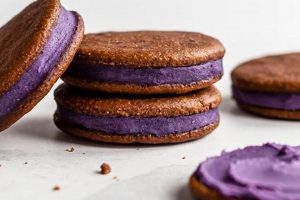
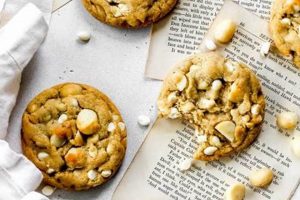
These food items represent a specific subset of plant-based desserts, characterized by the absence of both animal products and heat processing above a certain temperature threshold, typically around 118F (48C). Ingredients commonly include nuts, seeds, dates, and other dried fruits, bound together using natural sweeteners and often flavored with spices or cocoa. A prime example would be a treat comprised of blended cashews, dates, and cacao, formed into a disk and refrigerated to firm.
The appeal of this type of confection lies in several factors. Proponents suggest that maintaining the integrity of enzymes and nutrients through raw preparation methods offers health advantages. Furthermore, the ethical considerations of veganism, combined with the perceived purity of unprocessed ingredients, contribute to their popularity. The historical context reveals a growing trend in conscious consumption and a desire for minimally processed food options. They cater to individuals seeking alternatives to conventional baked goods due to dietary restrictions or lifestyle choices.
The following discussion will delve into ingredient selection, preparation techniques, nutritional aspects, and potential challenges associated with producing such items, aiming to provide a detailed understanding of their unique characteristics and considerations.
Production Tips for Raw Vegan Cookies
Achieving optimal results when creating these treats requires attention to detail throughout the ingredient selection and preparation processes. The following guidance offers practical suggestions for enhancing texture, flavor, and overall quality.
Tip 1: Hydrate Ingredients Adequately: Soaking nuts and seeds prior to use softens their texture and facilitates blending. The duration of soaking varies depending on the ingredient; generally, 4-8 hours is recommended for cashews, while almonds may require up to 12 hours. Discard the soaking water before processing.
Tip 2: Employ High-Quality Blenders and Food Processors: Achieving a smooth, consistent texture is crucial. High-powered blending equipment is essential for effectively processing nuts and dates into a cohesive dough. Lower-powered equipment may result in a grainy or uneven consistency.
Tip 3: Utilize Natural Sweeteners Strategically: Dates, maple syrup, and agave nectar are common sweeteners. Consider the glycemic index of each sweetener and adjust quantities to manage sweetness levels appropriately. Dates also contribute to the binding properties of the mixture.
Tip 4: Incorporate Binding Agents Judiciously: While dates often provide sufficient binding, ingredients like chia seeds or ground flax seeds can further enhance cohesion. When using chia or flax, combine them with a small amount of water and allow them to gel before adding them to the main mixture.
Tip 5: Balance Flavors Carefully: Raw cacao powder, vanilla extract, and spices such as cinnamon and nutmeg add depth and complexity. Start with small amounts and adjust to taste. Remember that flavors will intensify as the mixture chills.
Tip 6: Control Moisture Content: Excessive moisture can lead to a sticky or unmanageable dough. Ensure that dried fruits are not overly hydrated. If the mixture appears too wet, add small amounts of ground nuts or coconut flour to absorb excess moisture.
Tip 7: Refrigerate or Freeze for Optimal Texture: Chilling the dough allows the flavors to meld and the mixture to firm up. Refrigeration for at least 2 hours is recommended, while freezing for 30 minutes to an hour can expedite the setting process.
Tip 8: Practice Precision in Shaping: Use consistent measuring tools to ensure uniform size and shape. This not only enhances the aesthetic appeal but also ensures even chilling and setting.
By carefully implementing these techniques, it is possible to create delectable and visually appealing treats. Careful ingredient preparation and execution are paramount to achieve a satisfying outcome.
The subsequent sections will explore recipe development and address potential issues commonly encountered in the process.
1. Ingredient Selection

Ingredient selection is a foundational element in the creation of raw vegan cookies, directly impacting the final product’s texture, flavor, nutritional profile, and overall structural integrity. Due to the absence of baking, the raw ingredients must provide all the necessary characteristics typically achieved through heat application. For example, conventional cookie recipes rely on gluten development and egg coagulation for binding; in contrast, raw vegan recipes depend on ingredients such as dates, nuts, and seeds for these properties. The quality and type of nuts chosen, such as cashews or almonds, influence the richness and texture. Dates, acting as a natural sweetener and binder, provide moisture and contribute to the overall sweetness and chewiness. Selecting high-quality, properly stored ingredients is, therefore, paramount to achieving a desirable outcome.
The impact of ingredient selection extends to the nutritional composition. Raw ingredients retain their enzymes and nutrients, purportedly offering health benefits that are diminished during baking. However, the caloric density of nuts and seeds, which form the base of many recipes, requires careful consideration. For instance, a recipe relying heavily on cashews will be significantly higher in fat than one utilizing a greater proportion of seeds, such as sunflower or pumpkin seeds. The choice of sweetener also plays a crucial role. While dates provide fiber and minerals alongside sweetness, agave nectar, although lower on the glycemic index than some alternatives, offers little nutritional value beyond its sweetening properties. Therefore, a conscious approach to ingredient selection allows for the creation of desserts that are both palatable and nutritionally balanced.
In summary, ingredient selection in the context of raw vegan cookies is not merely a matter of preference but a critical determinant of the final product’s quality and characteristics. The absence of traditional baking processes necessitates careful consideration of each ingredient’s properties and its contribution to texture, flavor, and nutritional value. The selection process also presents challenges related to cost, availability, and the potential for allergic reactions, underscoring the importance of informed decision-making. A thorough understanding of the interplay between ingredients is essential for successfully crafting delicious and nutritious raw vegan treats.
2. Preparation Method

The preparation method for raw vegan cookies deviates significantly from traditional baking techniques, necessitating a distinct understanding of ingredient interaction and process control. Because no heat is applied, mechanical and chemical processes are manipulated to achieve desired textures and flavors. The primary method involves blending, pulsing, and combining ingredients to create a homogenous or textured mixture. Soaking nuts and seeds beforehand softens them, facilitating easier processing and improved binding. Incorrect soaking times may result in either a gritty or overly mushy consistency. Dehydration techniques, while not essential for all recipes, are sometimes employed to enhance crispness or extend shelf life. These are specific preparation steps.
The selection and implementation of specific techniques directly affect the final product. For instance, insufficient blending can result in a cookie that crumbles easily, while over-processing may lead to a dense, paste-like texture. Precision in ingredient measurement and careful monitoring during the blending process are, therefore, crucial. The order in which ingredients are added also matters; starting with softer, more malleable components like dates facilitates smoother integration. Refrigeration or freezing is a near-universal final step, solidifying the mixture and enhancing flavor development. The precise temperature and duration of chilling impact the final texture, ranging from a soft, chewy cookie to a firmer, more brittle one. Dehydration if used, can produce a crispy result, and improper monitoring may yield a product that is too tough or leathery.
In conclusion, the preparation method is an indispensable component in crafting raw vegan cookies, serving as a direct determinant of both their structural integrity and sensory attributes. Deviations from established protocols can significantly alter the final product, underscoring the need for precision and attention to detail. This focus is necessary for success. These practices enable efficient output and high satisfaction levels with this particular sweet treat.
3. Nutritional Profile

The nutritional profile of raw vegan cookies is intrinsically linked to their formulation, varying significantly depending on the selected ingredients. Unlike conventional baked goods, these items derive their caloric content primarily from nuts, seeds, and dried fruits, resulting in a higher concentration of fats, fiber, and natural sugars. The absence of refined flour and processed sugars alters the glycemic response compared to traditional cookies. For instance, a cookie primarily composed of dates and cashews will exhibit a higher sugar and fat content than one utilizing a blend of seeds, such as flax and chia, and incorporating less sweet fruits like berries. The preservation of enzymes through raw preparation methods is often cited as a benefit, although the digestive significance of these enzymes is debated within the scientific community. Therefore, evaluating the precise ingredient composition is essential for assessing the true nutritional value.
The impact of ingredient choices extends to the micronutrient content. Nuts and seeds are excellent sources of vitamins and minerals, including vitamin E, magnesium, and zinc. Dark chocolate, frequently included for flavor, provides antioxidants. However, it is crucial to note that the high caloric density of nuts can quickly lead to excessive energy intake, especially if portion sizes are not carefully controlled. Furthermore, the presence of phytates in nuts and seeds can inhibit the absorption of certain minerals; soaking these ingredients prior to preparation can mitigate this effect. Consumers with nut allergies must exercise extreme caution due to the prevalence of nuts in raw vegan cookie recipes. Thus, the nutritional benefits must be considered in the context of potential drawbacks and individual dietary needs.
In summary, the nutritional profile of raw vegan cookies is a complex interplay of ingredients, preparation methods, and portion control. While the use of whole, unprocessed foods offers potential advantages over conventional cookies, careful attention must be paid to the caloric density, macronutrient ratios, and potential allergen risks. A thorough understanding of these factors empowers consumers to make informed choices and incorporate these treats responsibly into a balanced dietary pattern. The perceived “health halo” surrounding these products should not overshadow the need for careful evaluation of their true nutritional composition.
4. Shelf Life

The shelf life of raw vegan cookies is a critical factor influencing their production, distribution, and consumption. Due to the absence of heat treatment, which typically extends the longevity of baked goods by reducing microbial activity, these items are inherently more susceptible to spoilage. Their composition, often rich in moisture and fats from nuts and seeds, provides a conducive environment for bacterial and fungal growth. Therefore, understanding the factors affecting their deterioration is essential for ensuring both product safety and consumer satisfaction. Improper storage, particularly at elevated temperatures or in humid conditions, accelerates degradation, leading to rancidity, mold formation, and undesirable changes in texture and flavor.
Several strategies can mitigate spoilage and prolong the viability of raw vegan cookies. Refrigeration is paramount, slowing down enzymatic activity and microbial proliferation. Airtight packaging, such as vacuum-sealed bags or containers, minimizes exposure to oxygen and moisture, further inhibiting degradation processes. Certain ingredients, such as natural preservatives like lemon juice or vitamin E oil, can be incorporated to delay oxidation and microbial growth. However, the effectiveness of these methods varies depending on the specific recipe and storage conditions. For example, cookies containing a high proportion of dried fruit, which possesses inherent preservative properties, may exhibit a longer shelf life compared to those relying solely on nuts and seeds. Commercially produced raw vegan cookies often undergo specialized preservation techniques, such as modified atmosphere packaging, to extend their marketability. These treatments maintain the integrity of the cookie and can extend the period that it is safe for consumption.
In conclusion, the shelf life of raw vegan cookies presents a significant consideration for producers and consumers alike. The absence of traditional baking methods necessitates careful attention to storage conditions, ingredient selection, and potential preservation techniques. While refrigeration and airtight packaging offer effective means of extending their viability, the inherent perishability of these items underscores the importance of prompt consumption and adherence to recommended storage guidelines. Understanding these challenges is fundamental to ensuring both the safety and quality of raw vegan cookies.
5. Texture Variations

The diverse textural landscape of raw vegan cookies is a direct consequence of both ingredient selection and processing methods. The absence of baking necessitates reliance on the inherent properties of raw ingredients to achieve a spectrum of textural outcomes. Hard nuts contribute to crunch, soft dates to chewiness, and fine powders to smoothness. Manipulation of these ingredients through techniques such as coarse chopping versus fine grinding, or partial versus complete blending, further determines the ultimate mouthfeel. For instance, a cookie incorporating coarsely chopped almonds will offer a distinct crunch, while one made with finely ground almond flour will possess a smoother, more delicate texture. The addition of dehydrated elements, such as coconut flakes, introduces crispness. Understanding these connections allows for precise control over the cookie’s textural profile.
Practical application of this understanding is evident in recipe development. A recipe aiming for a chewy texture might prioritize the inclusion of dates or soaked dried fruits, while one seeking a crispier outcome might emphasize dehydrated elements and minimal moisture content. The ratio of nuts to seeds also plays a significant role, with a higher nut content typically resulting in a denser, richer texture. Furthermore, the degree of processing influences the textural homogeneity. A cookie processed to a completely smooth paste will exhibit a different textural experience than one deliberately left with small chunks of nuts or seeds for added interest. The ability to predict and manipulate these textural attributes is crucial for catering to diverse consumer preferences.
The importance of texture variations cannot be overstated. Texture significantly impacts the perceived quality and desirability of raw vegan cookies. A poorly executed texture can render an otherwise flavorful cookie unappealing. Challenges lie in maintaining a balance between desired textural attributes and nutritional considerations. For example, achieving a very smooth texture might require a higher proportion of fats, potentially compromising the nutritional profile. Therefore, successful raw vegan cookie creation involves careful planning and execution to optimize texture without sacrificing nutritional value. These methods produce optimal outcomes.
6. Flavor Combinations
The effectiveness of plant-based, uncooked desserts directly correlates with strategic flavor combinations. The absence of baking necessitates a heightened reliance on the inherent flavors of raw ingredients, demanding a nuanced understanding of their interactions. In traditional baking, heat can meld disparate flavors, creating a cohesive profile; however, in raw preparations, each ingredient retains its distinct characteristics, requiring careful balancing. A poor pairing can result in a disharmonious and unpalatable outcome. For instance, combining overly bitter cacao with an already tart fruit without sufficient natural sweetener will likely produce an unpleasant experience. The understanding of how various ingredients interact to produce desired flavor profiles is, therefore, paramount in this context.
Real-world examples highlight the practical significance of this principle. The combination of dates and walnuts provides a naturally sweet and nutty foundation, complemented by the addition of spices such as cinnamon or nutmeg to create a warm, familiar flavor profile akin to traditional baked goods. In contrast, a combination of mango and lime offers a tropical and refreshing alternative. The strategic use of vanilla extract can enhance the perceived sweetness and round out other flavors. Creative combinations, such as avocado and cacao, can yield a surprisingly rich and decadent flavor, while also contributing to a smooth texture. The careful selection and calibration of these flavors are central to success. The importance of this facet can not be overemphasized.
In summary, flavor combinations are integral to the success of items in this category. The absence of baking demands a sophisticated understanding of ingredient interactions and flavor balancing to achieve a palatable and enjoyable product. Challenges arise in navigating potential flavor clashes and achieving complexity without relying on traditional baking processes. However, by applying thoughtful principles to ingredient selection and preparation, can make for delightful treats.
7. Health Implications

The consumption of raw vegan cookies presents a complex interplay of health implications, stemming directly from their unique ingredient profiles and preparation methods. The absence of baking, while preserving certain nutrients, also introduces considerations related to microbial contamination and the bioavailability of specific compounds. A primary health implication revolves around the potential for enhanced nutrient retention, as heat-sensitive vitamins and enzymes may be better preserved compared to conventionally baked counterparts. However, the high fat and sugar content, often derived from nuts, seeds, and dried fruits, can contribute to elevated caloric intake, potentially leading to weight gain if consumed in excess. Furthermore, the source and processing of raw ingredients directly affect the presence of potential contaminants, such as mycotoxins in nuts or pesticide residues in dried fruits, impacting long-term health outcomes.
Conversely, the substitution of refined flour and processed sugars with whole, plant-based ingredients can offer distinct health benefits. The higher fiber content derived from nuts, seeds, and dried fruits promotes satiety and supports digestive health. The presence of unsaturated fats from nuts and seeds contributes to cardiovascular well-being when consumed as part of a balanced diet. The antioxidant properties of raw cacao and certain fruits provide protection against cellular damage from free radicals. However, the bioavailability of certain minerals, such as iron and zinc, can be reduced by the presence of phytates in nuts and seeds. Soaking or sprouting these ingredients prior to consumption can mitigate this effect, enhancing mineral absorption. Individuals with nut allergies must exercise extreme caution, as cross-contamination during preparation is a significant concern. Thorough assessment is a must for those making changes to their diet.
In conclusion, the health implications of consuming raw vegan cookies are multifaceted, encompassing both potential benefits and risks. While the use of whole, unprocessed ingredients offers nutritional advantages, the high caloric density and potential for contamination require careful consideration. Informed consumption, characterized by moderation, awareness of potential allergens, and attention to ingredient sourcing, is essential for maximizing the health benefits and minimizing potential adverse effects. The absence of regulation around claims about raw vegan food necessitate that those making dietary decisions do so with caution. Further research is warranted to fully elucidate the long-term health impacts of regular consumption of these items.
Frequently Asked Questions
The following addresses common inquiries regarding plant-based, uncooked dessert items. The information presented aims to clarify aspects related to ingredients, preparation, storage, and nutritional value.
Question 1: What defines a “raw vegan cookie”?
A raw vegan cookie is a dessert item formulated without animal products and not subjected to heat processing above approximately 118F (48C). Ingredients typically include nuts, seeds, dried fruits, and natural sweeteners.
Question 2: How are raw vegan cookies prepared?
Preparation generally involves blending or processing ingredients until a cohesive mixture is achieved. Soaking nuts and seeds prior to blending softens them and improves texture. Refrigeration or freezing is often required to solidify the mixture.
Question 3: What are the primary ingredients used in raw vegan cookies?
Common ingredients include nuts (cashews, almonds, walnuts), seeds (sunflower, pumpkin, chia), dried fruits (dates, raisins, apricots), natural sweeteners (maple syrup, agave nectar), and flavorings (cacao powder, vanilla extract, spices).
Question 4: How should raw vegan cookies be stored?
Refrigeration is recommended to extend shelf life and prevent spoilage. Airtight containers minimize exposure to moisture and air, further preserving freshness. Freezing can also be employed for long-term storage.
Question 5: What are the potential health benefits of raw vegan cookies?
Proponents suggest that raw preparation methods preserve heat-sensitive nutrients and enzymes. The use of whole, plant-based ingredients contributes to a higher fiber content compared to traditional baked goods.
Question 6: Are there any potential drawbacks to consuming raw vegan cookies?
Raw vegan cookies can be high in calories, fat, and natural sugars due to the inclusion of nuts, seeds, and dried fruits. Potential allergen risks associated with nuts and seeds should be considered. Careful ingredient sourcing is necessary to minimize the risk of microbial contamination.
In summary, raw vegan cookies represent a distinct category of desserts with unique characteristics and considerations. Understanding the ingredients, preparation methods, and storage requirements is essential for both producers and consumers.
The next section will delve into recipe adaptations and modifications for diverse dietary needs.
Conclusion
This exposition has comprehensively explored the characteristics of raw vegan cookies. From ingredient selection and preparation methods to the nuances of nutritional profiles and shelf life, each aspect significantly impacts the final product. A thorough understanding of these elements is crucial for those involved in their creation, distribution, and consumption.
The pursuit of alternative dietary options, such as raw vegan cookies, necessitates informed decision-making. Continued research and responsible application of knowledge are paramount to ensuring both the quality and safety of these specialized food items. Careful consideration of dietary needs and potential health implications remains the responsibility of the consumer.