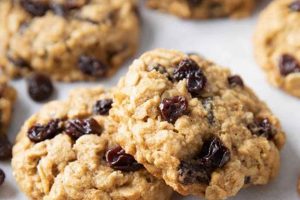
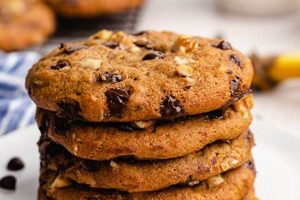
These baked goods are a plant-based alternative to traditional chocolate chip cookies. They exclude all animal products, such as butter, eggs, and dairy milk. The typical ingredients are often replaced with items like plant-based butter alternatives, flaxseed meal or applesauce as binders, and non-dairy chocolate chips.
The rise in popularity of these treats is linked to increasing awareness of ethical and environmental concerns surrounding animal agriculture, along with a growing interest in plant-based diets. These options offer individuals with dietary restrictions, allergies, or ethical considerations a way to enjoy a classic dessert. Historically, adapting baking recipes to exclude animal products has presented challenges, but advancements in plant-based ingredients have significantly improved the quality and taste of these items.
The following sections will delve into specific aspects, including ingredient selection, baking techniques, nutritional information, and commercial availability. This article will provide a comprehensive overview for those interested in understanding, baking, or consuming these increasingly common treats.
Baking Advice
Achieving optimal results when creating plant-based baked goods requires careful attention to ingredient selection and technique. The following tips address key aspects of successfully replicating the taste and texture of conventional recipes.
Tip 1: Ingredient Substitution is Crucial. Replace butter with plant-based butter alternatives or refined coconut oil, ensuring the fat content closely matches that of dairy butter. For eggs, utilize flaxseed meal mixed with water (1 tablespoon flaxseed meal + 3 tablespoons water = 1 egg replacement) or applesauce to provide binding and moisture.
Tip 2: Choose Quality Chocolate. Select dark chocolate chips that are explicitly labeled as dairy-free to avoid hidden milk solids. Look for brands certified as vegan.
Tip 3: Control Dough Consistency. Plant-based doughs can sometimes be drier than traditional doughs. Add a small amount of plant-based milk (almond, soy, oat) to achieve a soft, pliable consistency.
Tip 4: Avoid Over-Mixing. Over-mixing can lead to a tough product. Mix the wet and dry ingredients until just combined. Some streaks of flour are acceptable.
Tip 5: Chill the Dough. Chilling the dough for at least 30 minutes helps prevent excessive spreading during baking and improves the texture. Longer chilling times (up to 24 hours) can enhance flavor development.
Tip 6: Monitor Baking Time. Plant-based versions may bake slightly faster than their traditional counterparts. Begin checking for doneness a few minutes before the recipe’s suggested baking time.
Tip 7: Cooling is Essential. Allow the baked items to cool completely on a wire rack. This prevents them from becoming soggy and allows them to firm up properly.
Adhering to these guidelines will significantly improve the likelihood of achieving desirable results: baked goods that are indistinguishable in taste and texture from their non-plant-based counterparts.
The subsequent sections will explore further refinements in these recipes, including gluten-free variations and techniques for enhancing flavor profiles.
1. Ingredient Substitution

The creation of palatable baked goods without animal products necessitates deliberate ingredient substitution. This process involves identifying the functional roles of traditional ingredients, such as butter and eggs, and then selecting plant-based alternatives that replicate those functions. Incorrect substitution can lead to undesirable outcomes in texture, flavor, and structure, rendering the final product unappetizing. For instance, substituting coconut oil for butter without considering its higher fat content can result in cookies that are excessively greasy and prone to spreading.
Effective substitution requires an understanding of the properties of various plant-based ingredients. Applesauce or mashed banana can provide moisture and binding, albeit potentially affecting the flavor profile. Flaxseed meal mixed with water mimics the binding properties of eggs, contributing to the cookie’s structure. Plant-based butter alternatives aim to replicate the richness and texture of dairy butter, although their performance can vary significantly depending on the brand and fat composition. Careful selection and precise measurement are critical to achieving a result comparable to traditional recipes.
Mastery of ingredient substitution is paramount for successful vegan baking. The selection of appropriate replacements directly affects the quality and appeal of plant-based baked goods. Though challenges exist in perfectly replicating traditional textures and flavors, informed choices and experimental adjustments ultimately facilitate the production of acceptable and even exceptional plant-based cookies. As plant-based ingredients become more advanced and readily available, the reliance on careful substitution will become easier.
2. Moisture Balance

Maintaining appropriate moisture levels is critical for the success of a plant-based baked product. Unlike conventional recipes that rely on eggs and dairy for moisture and emulsification, plant-based baking requires careful manipulation of ingredients to achieve a similar result. Insufficient moisture results in dry, crumbly cookies, while excessive moisture can lead to flat, greasy textures.
- Role of Egg Replacers
Egg replacers, such as flaxseed meal, applesauce, or mashed banana, contribute moisture and binding properties. However, these substitutes also introduce their own distinct flavors and textures. Overuse of applesauce, for instance, can result in a cakey texture and overly sweet taste. Precise measurements and careful consideration of flavor profiles are necessary to balance moisture without compromising overall quality.
- Impact of Plant-Based Fats
The type of fat used significantly affects moisture retention. Plant-based butter alternatives often contain varying degrees of water. The water content influences the cookie’s spread during baking and its final texture. Understanding the composition of the chosen plant-based butter is essential for adjusting liquid ratios within the recipe. Solid fats, like coconut oil, can also contribute to dryness if not balanced with adequate liquid.
- Flour Hydration Considerations
Different types of flour absorb varying amounts of liquid. All-purpose flour behaves differently from whole wheat or gluten-free flour blends. When using alternative flours, it is often necessary to adjust the liquid content to achieve the desired dough consistency. Gluten-free flours, in particular, tend to absorb more moisture, potentially leading to a drier product if not adequately hydrated.
- Ambient Humidity Effects
Environmental factors, such as ambient humidity, can impact the final outcome. In humid climates, flour tends to absorb more moisture from the air, potentially affecting dough consistency. Adjustments to liquid ratios may be necessary to compensate for these fluctuations. Similarly, dry climates can cause dough to dry out more quickly, requiring adjustments to prevent a crumbly texture.
Achieving moisture balance is essential for palatable plant-based baked goods. Careful consideration of egg replacers, fat types, flour hydration, and environmental factors will result in the desired texture and prevent common pitfalls. Mastering these aspects ensures the creation of enjoyable plant-based cookies, that rival conventional counterparts in both taste and texture.
3. Chocolate Selection
The choice of chocolate is paramount in formulating high-quality plant-based baked goods. Given the inherent exclusion of dairy-based ingredients, careful consideration must be given to the type, composition, and sourcing of chocolate used to ensure both ethical standards and desirable flavor profiles are maintained in the final product.
- Dairy-Free Certification
A primary concern is the verification of dairy absence in the chocolate. Products explicitly labeled “dairy-free” or certified vegan provide assurance that cross-contamination during manufacturing has been minimized. Checking ingredient lists for hidden dairy components, such as whey or casein, is essential. Failure to do so compromises the integrity of the plant-based nature of the finished cookie.
- Cocoa Content and Flavor Intensity
The percentage of cocoa solids directly impacts the intensity and complexity of the chocolate flavor. Higher cocoa percentages offer a more bitter and robust taste, which may require adjustments to the recipe’s sweetness level. Conversely, lower cocoa percentages result in a milder, sweeter flavor. The selection depends on the desired flavor profile and intended consumer preference. Experimentation with varying cocoa contents allows for fine-tuning the sensory experience.
- Sourcing and Ethical Considerations
Ethical sourcing practices are increasingly relevant to consumers. Choosing chocolate from companies that prioritize fair labor practices, sustainable farming methods, and transparent supply chains aligns with the values often associated with plant-based diets. Certifications such as Fair Trade or Rainforest Alliance provide assurance of responsible sourcing. Transparency in sourcing contributes to the overall ethical value proposition of the baked goods.
- Form and Integration
The form of chocolate, whether chips, chunks, or chopped bars, influences its distribution and melting behavior within the cookie dough. Chocolate chips maintain their shape during baking, providing distinct pockets of chocolate. Chunks and chopped bars melt more readily, creating a more marbled effect. The choice of form affects the texture and visual appeal of the finished product. Adjusting the size and quantity of chocolate elements allows for customization of the cookie’s aesthetic and textural qualities.
Chocolate selection significantly influences the sensory and ethical aspects of plant-based baked goods. From ensuring dairy-free status to considering cocoa content, ethical sourcing, and form, a holistic approach to chocolate selection is vital for producing appealing and responsible vegan choc chip cookies. Attentive manufacturers achieve alignment between taste preferences and ethical considerations, creating products that cater to consumer demands for both quality and principles.
4. Dough Consistency

Dough consistency is a critical determinant of the final texture and overall palatability of plant-based baked goods. In the specific instance of vegan chocolate chip cookies, the absence of traditional binding agents, such as eggs and dairy butter, necessitates precise management of dough characteristics. Inadequate attention to dough consistency can manifest as excessively flat cookies, overly crumbly structures, or undesirable textural anomalies. For example, a dough that is too wet, lacking the structural support typically provided by eggs, will spread excessively during baking, resulting in thin, crisp cookies lacking the soft, chewy interior often desired.
Achieving optimal dough consistency in the plant-based context often involves employing alternative binding agents and adjusting the ratios of wet to dry ingredients. Flaxseed meal or chia seeds, when hydrated, provide binding properties similar to eggs, contributing to dough cohesion and preventing excessive spread. The type and amount of fat used also play a significant role. Plant-based butter alternatives, coconut oil, and other oils impact the dough’s viscosity and spreadability. Understanding the interaction between these ingredients is essential for controlling the dough’s final characteristics. Real-world examples include recipes that call for chilling the dough for an extended period. Chilling allows the fats to solidify, which prevents excessive spreading during baking, resulting in a thicker, chewier cookie. Similarly, carefully measuring wet ingredients and incorporating them gradually prevents over-hydration, a common pitfall that leads to flat, greasy cookies.
In summary, dough consistency represents a pivotal factor in the successful production of plant-based chocolate chip cookies. By understanding the impact of ingredient substitutions and employing techniques to manage dough hydration and structure, bakers can overcome common challenges and create cookies that meet or exceed the expectations of traditional recipes. Recognizing the practical significance of dough consistency allows for informed recipe adjustments and consistent replication of desired results, ultimately contributing to the widespread acceptance and enjoyment of these plant-based treats.
5. Baking Temperature

The regulation of baking temperature constitutes a critical control point in the production of acceptable plant-based chocolate chip cookies. This parameter exerts a direct influence on the cookie’s texture, spread, color, and overall structural integrity. Deviations from optimal temperatures can lead to undesirable outcomes, such as burnt edges, undercooked centers, or excessive flatness, ultimately compromising the quality of the finished product.
- Enzyme Activity and Starch Gelatinization
At lower baking temperatures, enzymatic activity within the dough persists longer, potentially leading to excessive spread as fats melt before the structure sets. Conversely, higher temperatures rapidly denature enzymes and initiate starch gelatinization, contributing to a quicker set and a potentially cakier texture. Precise temperature control is necessary to balance these competing processes and achieve the desired chewiness.
- Maillard Reaction and Caramelization
The Maillard reaction, responsible for the browning and development of complex flavors, is highly temperature-dependent. Insufficient heat inhibits this reaction, resulting in pale, under-flavored cookies. Excessive heat, however, can lead to over-browning and the formation of bitter compounds. A moderately high, consistent temperature optimizes the Maillard reaction without compromising the integrity of the plant-based ingredients.
- Fat Melting Point and Dough Spread
The type of fat used significantly impacts dough spread at different temperatures. Plant-based butter alternatives, coconut oil, and other vegetable oils have varying melting points. Baking at temperatures above the fat’s melting point encourages greater spread. Adjustments to the baking temperature, in conjunction with alterations to the fat content or type, can be strategically employed to control the cookie’s final shape and thickness.
- Moisture Evaporation and Texture
Baking temperature affects the rate of moisture evaporation from the dough. Rapid evaporation at high temperatures can result in a drier, crisper cookie. Slower evaporation at lower temperatures promotes a chewier texture. Precise control over the baking temperature allows for the manipulation of moisture content and, consequently, the final texture of the vegan chocolate chip cookie.
The interplay between these factors underscores the importance of meticulous temperature management. In vegan chocolate chip cookie production, achieving a harmonious balance between enzyme activity, the Maillard reaction, fat melting, and moisture evaporation requires careful calibration of the baking temperature. This precision enables the creation of plant-based cookies that possess the desired texture, flavor, and appearance, meeting the standards of both culinary excellence and dietary inclusivity.
6. Cooling Process

The cooling process significantly influences the final texture and structural integrity of plant-based chocolate chip cookies. Post-baking, the internal structure of the cookie remains unstable; fats are still molten, and starches have not fully set. Premature handling or consumption can result in a fragile cookie that crumbles easily or lacks the desired chewiness. For instance, attempting to remove a still-warm cookie from a baking sheet often leads to breakage, highlighting the importance of allowing sufficient time for solidification.
Proper cooling facilitates the gradual setting of fats and the completion of starch gelatinization. As the cookie cools, the plant-based butter or oil solidifies, providing structural support and preventing excessive spread. The starches continue to absorb moisture and firm up, contributing to the cookie’s chewy texture. In practice, this means allowing the cookies to cool on the baking sheet for a short period before transferring them to a wire rack for complete cooling. Rushing this process compromises the structural integrity, resulting in a less satisfying product. Conversely, prolonged cooling on the baking sheet can lead to condensation, creating a soggy bottom.
The cooling process represents a crucial, often overlooked, step in vegan chocolate chip cookie production. Allowing for gradual cooling ensures that the cookie’s internal structure stabilizes, resulting in optimal texture and preventing structural failures. Understanding the cause-and-effect relationship between cooling and cookie quality empowers bakers to consistently produce desirable results, while neglecting this process introduces an element of unpredictability, negatively impacting the overall quality and enjoyment of the final baked product.
7. Storage Methods

Effective storage techniques are essential for preserving the quality and extending the shelf life of plant-based chocolate chip cookies. Unlike their conventional counterparts, vegan versions often lack preservatives found in animal products, potentially rendering them more susceptible to changes in texture and flavor during storage. Appropriate storage protocols mitigate these effects, ensuring optimal enjoyment over an extended period.
- Airtight Containers
The use of airtight containers is paramount in preventing staling. Exposure to air causes the cookies to dry out, resulting in a hard, crumbly texture. Airtight containers, such as resealable plastic bags or containers with tight-fitting lids, minimize air exposure and maintain the cookies’ moisture content. Examples include storing cookies in a single layer in a plastic container or wrapping them individually before placing them in a larger container.
- Temperature Control
Maintaining a consistent temperature is crucial for preventing changes in texture and flavor. Storing cookies at room temperature (approximately 20-25C or 68-77F) is generally recommended. Avoid storing cookies in direct sunlight or near heat sources, as elevated temperatures can cause the fats to melt, leading to a greasy texture. Refrigeration is generally not advised, as it can cause the cookies to dry out and become hard; however, for extended storage exceeding one week, freezing can be effective if done correctly.
- Freezing Techniques
Freezing can significantly extend the shelf life of these baked goods, but requires proper technique to avoid degradation in quality. Wrapping cookies individually in plastic wrap before placing them in a freezer-safe bag or container minimizes freezer burn. Thawing should occur gradually at room temperature to prevent moisture condensation and textural changes. Cookies can typically be frozen for up to three months without significant loss of quality.
- Ingredient Sensitivity Considerations
Certain plant-based ingredients can affect storage duration. For example, cookies made with applesauce may have a shorter shelf life due to the higher moisture content, which can promote mold growth. Cookies containing nuts should be stored carefully to prevent them from becoming rancid. Understanding the specific properties of the ingredients used in the recipe enables more informed decisions about storage protocols and expected shelf life.
Adherence to these storage guidelines ensures that plant-based chocolate chip cookies retain their intended texture, flavor, and overall quality for an extended period. By minimizing air exposure, maintaining stable temperatures, and considering the properties of individual ingredients, consumers can maximize their enjoyment of these baked goods while minimizing waste. Effective storage is not merely a matter of convenience but an integral component of preserving the sensory and nutritional value of the finished product.
Frequently Asked Questions
The following addresses common inquiries and misconceptions regarding plant-based chocolate chip cookies. It aims to provide clear, factual answers to enhance understanding and dispel potential concerns.
Question 1: Are plant-based chocolate chip cookies inherently healthier than traditional versions?
The nutritional profile varies depending on the specific ingredients used. While eliminating animal products often reduces saturated fat and cholesterol, the substitution ingredients may contain higher levels of sugar or processed fats. A careful comparison of nutritional labels is necessary to assess the relative health benefits.
Question 2: Do plant-based ingredients significantly alter the taste and texture of these baked goods?
Taste and texture are affected by the specific substitutions. Advances in plant-based ingredients have minimized differences. However, subtle variations in flavor and texture can occur depending on the type and quality of substitutes used. These are not necessarily detrimental, and can be equally satisfying, though some may find differences noticeable.
Question 3: Are plant-based chocolate chip cookies suitable for individuals with allergies?
Suitability for allergy sufferers depends on the specific ingredients. While excluding dairy and eggs, these recipes may incorporate common allergens like nuts, soy, or gluten. Thorough scrutiny of the ingredient list is crucial for individuals with known allergies.
Question 4: Are all commercially available plant-based chocolate chips truly dairy-free?
Not all commercially available chocolate chips marketed as “dairy-free” are entirely free from trace amounts of dairy. Cross-contamination during manufacturing is a possibility. Seeking certified vegan options minimizes this risk, as these products undergo stricter testing protocols.
Question 5: What is the typical shelf life of plant-based chocolate chip cookies compared to traditional versions?
Shelf life can be similar, but depends heavily on the recipe and storage. Due to the absence of certain preservatives, vegan versions may, in some cases, have a slightly shorter shelf life if not stored properly. Employing airtight containers and proper temperature control prolongs freshness in both types.
Question 6: Can plant-based chocolate chip cookies be successfully adapted for gluten-free diets?
Adapting recipes for gluten-free diets is achievable, but requires careful selection of gluten-free flour blends. The absence of gluten affects the dough’s structure and elasticity, necessitating adjustments to liquid ratios and baking times. Experimentation may be required to achieve the desired texture.
Plant-based chocolate chip cookies offer a palatable alternative for individuals seeking to avoid animal products. Understanding the nuances of ingredient substitution, potential allergens, and storage requirements allows for informed consumption and optimal enjoyment.
The following section presents a comparative analysis of various commercially available options, evaluating their ingredients, nutritional profiles, and consumer ratings.
Vegan Choc Chip Cookies
This exploration has illuminated the multifaceted nature of these plant-based treats. From the intricacies of ingredient substitution and moisture balance to the critical roles of baking temperature and storage methods, the creation of acceptable versions requires diligence. Ethical considerations surrounding chocolate sourcing and allergen awareness further underscore the need for informed decision-making in both production and consumption.
The continued advancement of plant-based ingredients and evolving consumer preferences suggest a promising future for these products. The potential to refine recipes, improve nutritional profiles, and enhance accessibility signifies an ongoing evolution. Whether driven by ethical convictions, dietary requirements, or mere curiosity, individuals can approach these treats with a comprehensive understanding of their composition and characteristics, fostering a more informed and discerning perspective on their role in a shifting culinary landscape.