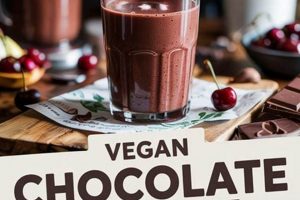
A dairy-free version of a classic warm beverage from a popular coffee chain involves modifications to the standard recipe. Specifically, the substitution of dairy-based milk with plant-based alternatives such as soy, almond, coconut, or oat milk is required. The standard mocha sauce used in the conventional preparation may or may not be dairy-free, necessitating clarification or a request for alternative ingredients. To ensure it is appropriate for those avoiding animal products, a customer must specify that they want a non-dairy milk substitute and confirm the ingredients of the mocha sauce, or request that it be left out entirely.
The availability of such a beverage caters to a growing segment of the population with dietary restrictions, ethical considerations, or personal preferences. This adaptation allows individuals to partake in a widely enjoyed treat without compromising their values or well-being. The historical context involves the increasing demand for plant-based options in the food and beverage industry, leading major corporations like Starbucks to expand their menus accordingly to meet consumer needs and promote inclusivity.
The following will explore the specific ordering process, available plant-based milk options, potential modifications to customize the drink, and ingredient considerations to ensure the beverage aligns with a vegan lifestyle.
Tips for Ordering a Vegan Hot Chocolate at Starbucks
To ensure a satisfactory and ethically sound experience, awareness of specific details regarding ingredient selection and preparation is crucial. The following tips will help customers navigate the ordering process effectively.
Tip 1: Specify Plant-Based Milk. Clearly articulate the request for a non-dairy milk alternative. Starbucks offers various options, including soy, almond, coconut, and oat milk. Clearly stating the preference avoids potential errors.
Tip 2: Inquire About Mocha Sauce Ingredients. The standard mocha sauce may contain dairy-derived ingredients. Directly inquire about its composition and request a dairy-free alternative or substitution. Some locations may offer a vegan-friendly mocha sauce or permit the use of dark chocolate powder.
Tip 3: Consider Alternative Sweeteners. While sugar is generally vegan, individuals may prefer alternative sweeteners for health or personal reasons. Options such as stevia or agave nectar can be requested, ensuring the desired sweetness level without dairy.
Tip 4: Omit Whipped Cream. Traditional whipped cream contains dairy and is not suitable for vegan consumption. Explicitly request the exclusion of whipped cream from the beverage.
Tip 5: Confirm Ingredient Lists. Before consumption, verify the ingredient list of all components used in the drink preparation. This precaution minimizes the risk of unintentional consumption of animal-derived products.
Tip 6: Check for Seasonal Variations. Seasonal offerings or promotions may introduce new ingredients. Confirm that any additional components align with vegan dietary guidelines before ordering.
By implementing these guidelines, individuals can confidently order a beverage that meets their dietary requirements. These proactive measures help ensure an enjoyable and ethical consumption experience.
The concluding sections will summarize these details and reiterate the importance of informed ordering practices.
1. Dairy-free Milk Options

Dairy-free milk options are integral to achieving a plant-based version of a hot chocolate at Starbucks, transforming a traditionally dairy-laden beverage into one suitable for individuals adhering to vegan diets or those with lactose intolerance.
- Soy Milk Availability
Soy milk represents a readily available and frequently chosen plant-based alternative. Historically, it was often the primary non-dairy option offered. Its relatively neutral flavor profile allows it to blend seamlessly into the hot chocolate, providing a creamy texture comparable to dairy milk. However, concerns about soy allergies or individual preferences may prompt exploration of other alternatives.
- Almond Milk Characteristics
Almond milk provides a lower-calorie alternative with a slightly nutty flavor, which can complement the chocolate profile of the drink. Its thinner consistency, compared to soy or dairy milk, may result in a less rich texture. Starbucks often offers almond milk as a standard non-dairy option, catering to the widespread demand for lower-calorie and nut-based alternatives.
- Coconut Milk Considerations
Coconut milk imparts a distinct coconut flavor, altering the overall taste of the beverage. Its higher fat content contributes to a creamier texture, potentially enhancing the richness of the hot chocolate. While offering a unique flavor dimension, it may not appeal to individuals who dislike the taste of coconut. Its availability can vary across Starbucks locations.
- Oat Milk Benefits
Oat milk possesses a naturally sweet flavor and a creamy texture, closely mimicking the characteristics of dairy milk. This makes it a popular choice for those seeking a non-dairy option with a similar mouthfeel and taste. Its production is often considered more environmentally sustainable than almond or soy milk, appealing to environmentally conscious consumers. Oat milk availability has increased significantly in recent years across Starbucks locations.
The choice of dairy-free milk fundamentally alters the sensory experience and nutritional profile of the beverage. The selection should align with individual preferences, dietary requirements, and ethical considerations, ensuring a personalized and satisfactory hot chocolate experience. Further factors, such as sugar content and additional ingredients, can also be tailored to personal preferences within the options available.
2. Mocha sauce verification

The necessity of verifying the ingredients of mocha sauce is paramount when pursuing a dairy-free hot chocolate from Starbucks. Standard formulations may contain dairy-derived components, rendering the beverage unsuitable for those adhering to a vegan lifestyle. Ensuring the absence of such ingredients directly affects the drink’s compliance with dietary restrictions.
- Potential Dairy Ingredients
Conventional mocha sauces often include dairy in the form of milk solids, whey, or butterfat. These components contribute to the sauce’s creamy texture and rich flavor. Their presence necessitates careful scrutiny to avoid unintentional consumption of animal products. Starbucks uses various suppliers and recipes, thus, verification needs to happen at the point of purchase.
- Availability of Vegan Alternatives
Some Starbucks locations may offer a dairy-free mocha sauce variant or be amenable to substituting the standard sauce with dark chocolate powder or syrup. The existence of these alternatives hinges on regional availability, store policy, and ingredient inventory. Proactive inquiry is essential to ascertain the presence of a vegan-compliant option.
- Communication with Baristas
Direct communication with the barista is crucial for clarifying ingredient information. Baristas can access ingredient lists and provide details regarding the composition of the mocha sauce. Clear and concise questioning minimizes the risk of miscommunication and ensures accurate information dissemination.
- Impact on Drink Customization
The determination of mocha sauce’s vegan status directly influences drink customization. If a dairy-free alternative is unavailable, customers may opt to exclude the sauce entirely, modify the beverage with other vegan-friendly flavorings, or select a different drink altogether. Mocha sauce verification dictates the range of customization options.
These considerations regarding mocha sauce underscore the importance of active participation in the ordering process. Ingredient awareness, coupled with effective communication, empowers individuals to secure a hot chocolate that aligns with their dietary preferences and ethical principles. This careful attention to detail is necessary in mainstream food establishments where ingredients may not always be explicitly labelled or transparent.
3. Whipped cream omission

The act of omitting whipped cream is a necessary step in achieving a truly dairy-free hot chocolate at Starbucks. Standard whipped cream formulations contain dairy products, specifically cream, thereby precluding their inclusion in vegan diets. The absence of this topping transforms a conventionally dairy-containing beverage into a viable option for individuals avoiding animal-derived ingredients.
For example, a customer orders a hot chocolate and explicitly requests almond milk as a substitute for dairy milk. However, if the default preparation includes a dollop of standard whipped cream, the beverage remains unsuitable for a vegan consumer. The omission becomes the critical factor that determines the beverage’s compliance. Without this step, all other modifications are rendered ineffective. It is a pivotal point in the ordering process to ensure the drink aligns with ethical and dietary constraints. Consider a scenario where a patron neglects to specify “no whipped cream.” Despite the dairy-free milk substitution, the drink is rendered non-vegan due to the added whipped topping.
In conclusion, the omission of whipped cream is not merely an optional alteration but an essential requirement for creating a dairy-free hot chocolate at Starbucks. This consideration directly impacts the dietary suitability of the beverage, affecting individuals adhering to vegan diets or those with dairy sensitivities. Its proper execution is paramount, underlining the significance of clear communication and attentive order processing.
4. Sweetener alternatives

The selection of sweetener alternatives plays a significant role in tailoring a hot chocolate from Starbucks to align with vegan principles and individual dietary preferences. While standard sugar is generally considered vegan, the choice of alternative sweeteners introduces considerations related to both health and personal taste. These alternatives contribute to the customization process, allowing consumers to refine the beverage according to their specific needs.
- Refined Sugar Considerations
Although typically vegan, refined white sugar can sometimes involve the use of bone char in its processing, a byproduct of animal bones. This practice renders such sugar unsuitable for strict vegans. While many sugar suppliers are moving away from bone char filtration, uncertainty necessitates investigation or the selection of certified vegan sugar sources. Some establishments may opt for less processed cane sugar to avoid this ethical ambiguity.
- Liquid Sweeteners: Agave and Maple Syrup
Agave nectar and maple syrup represent plant-derived liquid sweeteners that provide viable vegan options. Agave, derived from the agave plant, offers a high level of sweetness and a neutral flavor profile. Maple syrup, produced from the sap of maple trees, imparts a distinct flavor that complements the chocolate taste. The choice between these liquids depends on the desired level of sweetness and the preferred taste nuances.
- Artificial Sweeteners: Stevia and Erythritol
Stevia, a natural sweetener extracted from the Stevia rebaudiana plant, and erythritol, a sugar alcohol produced by fermentation, offer zero-calorie alternatives for individuals seeking to reduce sugar intake. These sweeteners provide sweetness without significantly impacting blood sugar levels. However, their unique flavor profiles, which may differ from sugar, should be considered when customizing the hot chocolate.
- Considerations for Additives and Processing
Beyond the primary sweetener itself, additives or processing methods associated with these alternatives warrant examination. Some sweeteners may contain anti-caking agents or preservatives, which should be assessed for vegan compliance. Certified vegan products offer assurance that the entire production process adheres to vegan standards, minimizing the risk of inadvertently consuming animal-derived ingredients.
The selection of a sweetener alternative impacts not only the flavor and sweetness of the hot chocolate but also its ethical alignment with vegan principles. Careful consideration of the source, processing methods, and potential additives ensures a fully compliant beverage that caters to individual preferences. This level of customization transforms a standard menu item into a personalized indulgence that aligns with specific dietary and ethical values.
5. Ingredient confirmation

Ingredient confirmation constitutes a fundamental component in the pursuit of a dairy-free hot chocolate from Starbucks. The potential presence of non-vegan ingredients within seemingly plant-based beverages necessitates rigorous verification. Without proactively confirming the specific components of the drink, especially concerning elements like mocha sauce and seemingly innocuous additions, the beverage’s alignment with vegan principles remains uncertain. This practice underscores the necessity for informed consumerism within mainstream food establishments.
A practical illustration lies in a situation where a customer requests soy milk for a hot chocolate. The barista, operating under the assumption that all other components are dairy-free, proceeds with the standard preparation, which includes mocha sauce containing dairy derivatives. Without explicit confirmation of the mocha sauce ingredients, the customer unknowingly consumes a non-vegan beverage. Another example occurs with seasonal offerings. A limited-time hot chocolate variation may include additions like caramel drizzle, which frequently contains dairy. Unless the customer inquires specifically about the caramel’s ingredients, the intended dietary adherence is compromised.
In summation, ingredient confirmation serves as a critical safeguard in securing a genuinely vegan hot chocolate from Starbucks. It mitigates the risk of unintentional consumption of animal-derived products through undisclosed ingredients or standard operational practices. This proactive approach underscores the need for informed decision-making and effective communication between consumers and service providers to achieve dietary compliance and uphold ethical choices within the constraints of conventional food service environments. The responsibility rests with the consumer to ensure adherence to their dietary requirements.
6. Seasonal checks
Seasonal checks are critical in maintaining the vegan integrity of a hot chocolate purchased from Starbucks. Menu variations introduced during specific times of the year often incorporate new ingredients or modifications to existing recipes, potentially compromising the dairy-free status of what would otherwise be a vegan-friendly beverage. Diligence in scrutinizing these seasonal offerings is necessary to avoid inadvertent consumption of animal products.
- Limited-Time Ingredients
Seasonal promotions frequently feature limited-time ingredients such as flavored syrups, toppings, or inclusions that are not part of the standard menu. These additions may contain dairy or other animal-derived substances not typically present in the conventional hot chocolate recipe. Investigation into the composition of these elements is essential for ensuring compliance with vegan guidelines. For instance, a peppermint mocha offered during the holiday season may include a peppermint syrup containing dairy derivatives.
- Recipe Alterations
Seasonal menu changes can involve alterations to the base recipe of the hot chocolate itself. The standard mocha sauce or milk alternatives may be substituted with variations that include dairy or other non-vegan ingredients. Subtle recipe modifications, often undocumented or not immediately apparent, necessitate direct inquiry to the barista or a review of the updated ingredient lists. A pumpkin spice hot chocolate, for instance, may contain dairy-based pumpkin spice flavoring, even when prepared with non-dairy milk.
- Topping Variations
Seasonal beverages frequently showcase unique toppings beyond the standard whipped cream. These toppings, such as festive sprinkles, chocolate shavings, or flavored drizzles, may contain dairy or animal-derived gelatin. Confirming the composition of all toppings is essential, as these seemingly minor additions can compromise the vegan status of the entire beverage. Caramel drizzle, often containing dairy, is a frequent example.
- Regional Differences
The composition of seasonal offerings can vary across different geographic regions or store locations. A seasonal hot chocolate available in one region may have a different ingredient list than the same beverage offered elsewhere. This regional variability underscores the importance of verifying ingredients at each point of purchase, even if the customer has previously confirmed the vegan status of a similar beverage in another location. Starbucks stores in different countries, for example, may use different suppliers for their mocha sauce.
These factors emphasize the necessity of proactive engagement with baristas and careful review of ingredient information, particularly during seasonal promotional periods. The vegan status of a hot chocolate at Starbucks is not static but rather subject to change based on these temporal variations. Therefore, repeated verification is essential for consumers adhering to a plant-based diet to ensure their beverage aligns with their dietary requirements. The increased complexity introduced by seasonal offerings necessitates a heightened level of vigilance.
7. Customization requests

The ability to modify a standard menu item through specific customization requests is fundamental to obtaining a dairy-free hot chocolate at Starbucks. The standard preparation of this beverage often includes ingredients incompatible with a vegan diet, necessitating active intervention to ensure compliance with dietary restrictions.
- Milk Substitution Specificity
Requesting a plant-based milk alternative is a primary customization. Specifying a preference from available options, such as soy, almond, coconut, or oat milk, is essential, as the default preparation involves dairy milk. Without this specification, the beverage will invariably contain animal-derived products. The customer must clearly state the desired milk substitute to the barista.
- Ingredient Exclusion Clarity
Explicitly requesting the omission of non-vegan ingredients is crucial. Standard whipped cream, a common topping, contains dairy and must be excluded. Similarly, if the vegan status of the mocha sauce is uncertain, requesting its removal or substitution with a dairy-free alternative is necessary. Clarity in these exclusions prevents the unintentional consumption of animal products. An example would be a clear statement of no whipped cream and please confirm the mocha sauce is dairy-free, or omit it.
- Sweetener Selection Precision
While standard refined sugar is generally vegan, individuals may prefer alternative sweeteners. Requesting agave nectar, maple syrup, stevia, or erythritol allows for dietary control and accommodates personal preferences. Specifying the desired sweetener ensures the beverage aligns with both vegan principles and individual taste profiles. The available options at specific locations will vary.
- Temperature and Strength Adjustments
Customization requests extend beyond ingredient selection to encompass temperature and strength adjustments. Requesting a lower temperature setting or adjusting the amount of chocolate syrup allows for a personalized drinking experience that caters to individual sensitivity or taste. These modifications, while not directly related to veganism, contribute to overall customer satisfaction and beverage optimization. For example, someone might request a “kids’ temperature” hot chocolate, even with the vegan milk.
These customization options demonstrate the adaptability of the standard hot chocolate recipe at Starbucks to accommodate vegan dietary restrictions. The effectiveness of these modifications hinges on clear communication and a thorough understanding of ingredient composition. Informed consumers actively engage in the customization process to ensure their beverage aligns with their ethical and dietary choices.
Frequently Asked Questions
This section addresses common inquiries regarding the availability and composition of a vegan hot chocolate at Starbucks.
Question 1: Is standard Starbucks hot chocolate vegan?
The standard Starbucks hot chocolate is not vegan. It contains dairy milk and often includes whipped cream, which is also dairy-based. The mocha sauce used in the standard recipe may also contain dairy-derived ingredients.
Question 2: What modifications are required to make a Starbucks hot chocolate vegan?
To make a Starbucks hot chocolate vegan, one must request non-dairy milk (soy, almond, coconut, or oat), specify no whipped cream, and confirm the vegan status of the mocha sauce or request its omission.
Question 3: Are all plant-based milk options at Starbucks suitable for vegans?
Yes, soy, almond, coconut, and oat milk available at Starbucks are generally considered vegan-friendly alternatives to dairy milk. However, individual sensitivities or concerns regarding specific production practices may warrant further investigation.
Question 4: How can one determine if the mocha sauce at a specific Starbucks location is vegan?
The most reliable method is to directly inquire with the barista regarding the ingredients of the mocha sauce. Staff can typically access ingredient information to confirm the absence of dairy or other animal-derived products.
Question 5: Are seasonal hot chocolate offerings at Starbucks vegan-friendly?
Seasonal hot chocolate offerings often incorporate additional ingredients that may not be vegan. It is crucial to verify the ingredient list of all components in seasonal beverages to ensure they align with vegan dietary guidelines.
Question 6: Can the sweetener used in a Starbucks hot chocolate impact its vegan status?
While standard refined sugar is generally considered vegan, certain processing methods may involve bone char. Individuals concerned about this practice can request alternative sweeteners, such as agave nectar or maple syrup, to mitigate this potential issue.
In summary, achieving a vegan hot chocolate at Starbucks requires active participation in the ordering process, including specific requests and ingredient verification.
The concluding section will provide a summary of key takeaways and reinforce the importance of informed decision-making.
Hot Chocolate Vegan Starbucks
The preceding examination has elucidated the complexities involved in securing a dairy-free rendition of a common beverage. Factors such as milk substitution, mocha sauce composition, whipped cream exclusion, and sweetener choices significantly influence the ultimate suitability for vegan consumption. Navigating these variables requires diligence and informed communication with service personnel.
Given the potential for hidden ingredients and variations in regional and seasonal offerings, consumers must remain vigilant in their pursuit of ethical and dietary compliance. The availability of “hot chocolate vegan starbucks” necessitates a commitment to proactive engagement, ingredient verification, and informed decision-making. Only through such diligence can consumers ensure their choices align with their values.