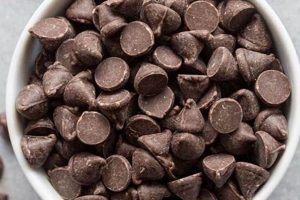
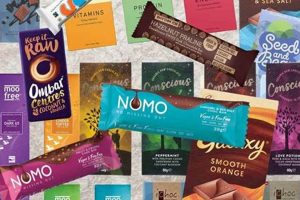
These are a plant-based alternative to traditional dairy-containing morsels, designed to replicate the creamy sweetness of conventional milk chocolate. They typically utilize ingredients like cocoa butter, cocoa solids, and plant-based milk alternatives such as rice, oat, coconut, or cashew to achieve a similar flavor and texture profile. Common applications include baking cookies, brownies, and other desserts where the distinctive taste of sweet chocolate is desired.
The development of this product addresses a growing demand for inclusive confectionery options, catering to individuals following vegan diets, those with lactose intolerance, or those seeking to reduce their consumption of animal products. Its rise in popularity is linked to increasing awareness of ethical and environmental concerns related to dairy farming, alongside advances in plant-based food technology that allow for convincing replication of traditional flavors and textures.
The following sections will delve into the specific ingredients, manufacturing processes, nutritional information, and market availability of these innovative baking components, providing a complete overview for consumers and culinary professionals alike.
Tips for Working with Vegan Milk Chocolate Chips
Achieving optimal results when incorporating these products into recipes requires consideration of their unique characteristics. The following tips offer guidance for successful usage.
Tip 1: Understand Ingredient Variations: Plant-based milk alternatives impart different flavor and texture profiles. Coconut-based options may contribute a subtle coconut taste, while oat-based versions can offer a smoother, creamier texture. Consider these nuances when selecting based on intended recipe flavor.
Tip 2: Adjust Baking Times: Certain plant-based fats have different melting points than dairy butter. Monitor baked goods closely and adjust baking times accordingly to prevent over-baking or dryness. A toothpick test is a reliable indicator of doneness.
Tip 3: Tempering Considerations: If using these morsels for dipping or coating, be mindful of their melting and solidifying properties. Some may not temper as predictably as traditional chocolate. Experiment with small batches to determine the best tempering method for the specific brand.
Tip 4: Storage Practices: Store them in a cool, dry place away from direct sunlight. Temperature fluctuations can cause bloom (a white or grayish coating) to form, which, although harmless, can affect the appearance and potentially the texture.
Tip 5: Recipe Adaptation: In some cases, minor recipe adjustments may be necessary to compensate for the lower fat content of certain plant-based ingredients. Adding a small amount of neutral oil (such as canola or sunflower) can help maintain moisture and richness in baked goods.
Tip 6: Check for Additives: Scrutinize ingredient lists for added stabilizers, emulsifiers, or artificial flavors, especially if adhering to strict dietary guidelines. Opt for products with minimal and recognizable ingredients whenever possible.
By understanding the specific properties of plant-based chocolates, bakers can achieve consistently delicious and visually appealing results. Careful attention to ingredient selection, baking times, and storage practices ensures optimal performance.
The subsequent sections will examine specific applications of these products in various desserts and confections, providing detailed recipe examples and troubleshooting advice.
1. Ingredients
The composition of vegan milk chocolate chips dictates their flavor, texture, and suitability for various applications. Careful ingredient selection is crucial in replicating the sensory experience of traditional milk chocolate while adhering to plant-based dietary restrictions. The following aspects highlight the critical role of individual components.
- Cocoa Solids
Cocoa solids provide the foundational chocolate flavor. The percentage of cocoa solids used influences the intensity and bitterness of the final product. Higher percentages yield a darker, more intense flavor, while lower percentages result in a milder, sweeter taste. Different cocoa bean varieties also contribute unique flavor notes, impacting the overall profile of the vegan chocolate.
- Cocoa Butter
Cocoa butter is the fat component derived from cocoa beans, contributing to the smooth mouthfeel and characteristic melt of chocolate. In vegan formulations, it is crucial for replicating the textural qualities of dairy-based milk chocolate. Sourcing and processing methods can affect its flavor neutrality and impact the overall taste.
- Plant-Based Milk Alternatives
The type of plant-based milk alternative employed (e.g., rice, oat, coconut, cashew) profoundly influences the final product’s flavor and texture. Each alternative imparts distinct characteristics; for instance, coconut milk may lend a subtle coconut flavor, while oat milk contributes a creamy texture. The choice of milk alternative directly impacts the product’s ability to mimic the sensory properties of dairy milk chocolate.
- Sweeteners
Sweeteners contribute to the overall sweetness and influence the texture and melting properties. Common sweeteners include cane sugar, beet sugar, and alternative sweeteners like stevia or erythritol. The type and quantity of sweetener used affects the final product’s glycemic index and perceived sweetness, catering to diverse consumer preferences and dietary requirements.
These components synergistically define the attributes of vegan milk chocolate chips. The specific selection and ratios of ingredients determine the product’s ability to replicate the taste and texture of conventional dairy-based counterparts while adhering to vegan principles. Understanding these interconnected roles facilitates informed consumer choices and effective application in culinary endeavors.
2. Production

The production of plant-based milk chocolate chips involves a meticulous process designed to replicate the characteristics of traditional dairy-based chocolate. The selection of raw materialscocoa beans, plant-based milk alternatives, and sweetenersis paramount, directly influencing the final product’s flavor profile and textural properties. The process begins with the careful sourcing and processing of cocoa beans, which undergo cleaning, roasting, and grinding to extract cocoa mass and cocoa butter. Simultaneously, the plant-based milk alternative, whether it be rice, oat, coconut, or another base, undergoes specific processing to ensure optimal emulsification and flavor integration within the final product.
A critical stage involves combining the cocoa mass, cocoa butter, plant-based milk alternative, and sweetener in precise ratios. This mixture is then subjected to conching, a process involving extended mixing and agitation at controlled temperatures. Conching refines the particle size of the ingredients, enhances flavor development, and contributes to the smooth mouthfeel characteristic of high-quality chocolate. Tempering follows conching, a heat treatment process that stabilizes the cocoa butter crystals, ensuring a glossy appearance, a crisp snap, and resistance to bloom (the formation of white streaks on the surface). Real-world examples include the use of specialized equipment designed for small-batch production, allowing for precise control over each stage. Careful monitoring of temperature and humidity is also essential to prevent defects and ensure consistent product quality.
The success of producing acceptable vegan milk chocolate chips hinges on overcoming challenges such as achieving proper emulsification between the plant-based milk and the cocoa butter, and replicating the creamy texture associated with dairy milk chocolate. The selection of appropriate emulsifiers and the careful optimization of process parameters are key to addressing these issues. As demand for plant-based alternatives continues to rise, advancements in production techniques and ingredient technology will further refine the quality and consistency of vegan milk chocolate chips, bridging the gap between consumer expectations and the capabilities of plant-based confectionery.
3. Taste
The flavor profile of vegan milk chocolate chips is a critical determinant of their market acceptance and culinary utility. Unlike traditional milk chocolate, which derives its characteristic taste from dairy-based components, these plant-based alternatives rely on a combination of cocoa solids, cocoa butter, sweeteners, and, most importantly, plant-based milk substitutes to replicate the desired taste sensation. The selection of each ingredient significantly impacts the final flavor, creating a spectrum of taste experiences ranging from subtly sweet and creamy to intensely rich and chocolatey. For instance, the utilization of coconut milk powder can impart a distinct tropical note, while oat milk powder may contribute a more neutral, slightly grainy texture. These variations necessitate careful consideration by manufacturers to achieve a taste that is both appealing to consumers and reminiscent of conventional milk chocolate.
The perceived “Taste” is not solely determined by the ingredients themselves, but also by the production processes employed. Conching, a process involving prolonged mixing and grinding of the chocolate mass, plays a crucial role in refining the particle size and developing the flavor. Inadequate conching can result in a gritty texture and an underdeveloped flavor profile, rendering the product less palatable. Similarly, tempering, the process of controlling the crystallization of cocoa butter, affects the snap, gloss, and melt-in-the-mouth feel of the chocolate, all of which contribute to the overall sensory experience. Real-world examples demonstrate that vegan milk chocolate chips produced with meticulous conching and tempering processes consistently receive higher ratings for taste and texture compared to those produced with less refined methods. Furthermore, manufacturers often incorporate natural flavorings, such as vanilla extract or sea salt, to enhance the taste and balance the sweetness.
Ultimately, the success of vegan milk chocolate chips hinges on their ability to deliver a satisfying and pleasurable taste experience that aligns with consumer expectations. Challenges remain in replicating the precise creaminess and subtle nuances of dairy milk chocolate using plant-based ingredients. However, ongoing advancements in food technology and ingredient sourcing are continuously improving the taste profiles of these alternatives. Understanding the intricate interplay between ingredients, production processes, and sensory perception is paramount in creating plant-based chocolate that meets the demands of a growing and increasingly discerning consumer base, driving further innovation in this sector.
4. Applications
The utility of these chocolate pieces spans a broad spectrum of culinary creations, largely mirroring the applications of their dairy-containing counterparts. Their primary function is as an ingredient in baked goods, providing sweet chocolate notes and textural contrast in cookies, muffins, brownies, and cakes. Their presence contributes to the overall flavor profile, influencing sweetness, richness, and the characteristic chocolate experience. For example, adding them to a standard chocolate chip cookie recipe converts it into a vegan offering without significantly altering the baking process, demonstrating their functional equivalence.
Beyond baking, these items are frequently employed in confectionery, serving as components in trail mixes, snack bars, and homemade candies. Their structural integrity allows them to maintain their shape during production and storage, providing a consistent and visually appealing element in the final product. Their use as a decorative topping for desserts like ice cream, puddings, and parfaits further highlights their versatility. Moreover, the controlled melting properties of some formulations enable their use in chocolate fountains or as a coating for fruits and nuts, showcasing the adaptability of these plant-based options. Certain manufacturers specialize in creating large-format versions intended for direct consumption, showcasing their potential as a standalone treat.
In summary, the applications of vegan milk chocolate chips are extensive, ranging from traditional baking to innovative confectionery creations. Their ability to seamlessly integrate into existing recipes and culinary techniques underscores their practicality and importance in catering to evolving consumer preferences and dietary needs. The ongoing refinement of plant-based chocolate formulations promises to further expand their application possibilities, solidifying their role as a mainstream ingredient in both home kitchens and professional culinary environments. The future success of these items relies on their ability to maintain functional equivalence to traditional options while delivering a satisfying and ethically conscious consumer experience.
5. Availability

The presence of plant-based milk chocolate chips in the consumer marketplace is directly correlated with growing awareness of veganism, lactose intolerance, and ethical sourcing. Increased consumer demand has spurred manufacturers and retailers to expand their offerings, resulting in greater accessibility of these products. The ease with which consumers can find and purchase them significantly impacts their adoption and integration into everyday diets and recipes. Supermarkets, specialty food stores, and online retailers constitute the primary channels for distribution.
The consequences of limited Availability include restricted consumer choice and potential barriers to adopting plant-based diets. Conversely, widespread Availability not only caters to existing demand but also encourages experimentation and increased consumption. For instance, the expansion of plant-based sections in mainstream grocery stores often includes multiple brands and varieties of these chocolate products, signaling a normalization of vegan alternatives. Online platforms further enhance accessibility, particularly for consumers in regions with limited brick-and-mortar options. However, disparities in pricing and geographic distribution remain challenges, potentially limiting access for lower-income individuals or those in underserved areas.
Ultimately, the ongoing expansion of these product’s availability reflects a broader trend towards inclusivity and dietary diversification. Addressing the remaining barriers through optimized supply chains, competitive pricing, and targeted marketing efforts will be crucial in solidifying their position as a mainstream confectionery ingredient. Ensuring widespread access is essential for promoting plant-based diets and supporting informed consumer choices.
Frequently Asked Questions
The following addresses common inquiries regarding the composition, usage, and characteristics of vegan milk chocolate chips. It aims to provide factual and objective information for consumers and culinary professionals.
Question 1: What ingredients typically comprise “vegan milk chocolate chips”?
Common components encompass cocoa solids, cocoa butter, a plant-based milk alternative (such as rice, oat, or coconut milk), and a sweetener like cane sugar. Specific formulations may vary, and ingredient lists should be reviewed for details.
Question 2: How does the taste of “vegan milk chocolate chips” compare to traditional milk chocolate chips?
The taste profile differs depending on the type of plant-based milk alternative used. Some alternatives may impart a slight flavor (e.g., coconut), while others offer a more neutral taste. The overall sweetness and richness are often comparable to conventional milk chocolate.
Question 3: Are there any specific baking considerations when using “vegan milk chocolate chips”?
Plant-based fats may exhibit different melting points compared to dairy butter. Monitoring baking times and temperatures is advisable to prevent over-baking or dryness. Minor recipe adjustments may be necessary to maintain moisture.
Question 4: Are “vegan milk chocolate chips” suitable for individuals with allergies?
Individuals with allergies should carefully examine ingredient lists. Common allergens found in some formulations include soy, nuts (e.g., cashews), and coconut. Products manufactured in facilities that also process allergens may pose a risk of cross-contamination.
Question 5: What is the shelf life of “vegan milk chocolate chips”?
The shelf life generally aligns with that of traditional chocolate chips. Proper storage in a cool, dry place away from direct sunlight is essential to maintain quality. Refer to the product packaging for specific expiration dates.
Question 6: Where can “vegan milk chocolate chips” be purchased?
These items are typically available at supermarkets, specialty food stores, and online retailers. Availability may vary depending on geographic location and retailer selection.
These answers offer a concise overview of essential considerations. Further research and product-specific information are encouraged for informed decision-making.
The subsequent section will explore specific product brands and their unique characteristics, aiding in selection based on individual preferences and culinary needs.
Conclusion
The preceding discussion has provided a comprehensive examination of plant-based milk chocolate chips, encompassing their composition, production, applications, availability, and frequently asked questions. The information presented underscores the importance of understanding ingredient variations, baking considerations, and potential allergen risks when utilizing these products. The analysis has revealed a growing market presence driven by consumer demand for inclusive confectionery options.
Continued advancements in plant-based food technology and ingredient sourcing are anticipated to further refine the quality and accessibility of alternatives to dairy-based chocolate. Consumers and culinary professionals are encouraged to remain informed about the evolving landscape of these items to make informed decisions aligned with their dietary needs and ethical considerations. The future of plant-based confectionery depends on the commitment to innovation and transparency within the food industry.