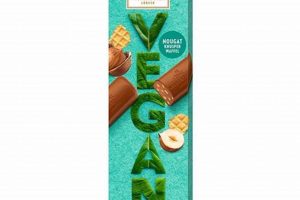
The subject represents a specific category of confectionery products crafted without any animal-derived ingredients, appealing to individuals adhering to vegan dietary principles. As an example, dark confections made using cocoa, unrefined sweeteners like coconut sugar, and plant-based milk alternatives such as cashew or almond butter fall under this classification.
These items hold significance for those seeking ethical and environmentally conscious food choices. The development and availability of such products demonstrate a response to growing consumer demand for cruelty-free options within the food industry. Historically, vegan alternatives to traditional chocolate have been limited; however, increased awareness and innovation have resulted in improved quality and wider accessibility.
The following sections will delve deeper into aspects such as ingredient sourcing, production processes, nutritional profiles, and market trends related to this growing segment of the confectionery market. Further discussion will also address potential health benefits, comparisons to traditional chocolate, and considerations for consumers when selecting suitable products.
Selecting Plant-Based Confections
The subsequent guidelines offer points to consider when evaluating and purchasing confectionery items suitable for vegan dietary needs. Attention to these details can ensure alignment with personal preferences and dietary requirements.
Tip 1: Ingredient Verification: Examine the ingredient list meticulously. Confirm the absence of dairy derivatives (whey, casein), honey, and animal-derived emulsifiers (e.g., gelatin, confectioner’s glaze). Examples: Look for plant-based alternatives to milk fat, such as cocoa butter or nut butters.
Tip 2: Cocoa Sourcing: Investigate the source of the cocoa beans. Seek out certifications indicating ethical and sustainable farming practices, which address concerns regarding labor exploitation and environmental impact. Examples: Fair Trade, Rainforest Alliance certifications can offer assurance.
Tip 3: Sweetener Type: Be mindful of the sweetener used. Refined sugar may be processed using animal bone char in some regions. Opt for products that specify vegan-friendly sweeteners such as coconut sugar, maple syrup, or agave nectar. Examples: Check for statements like “cane sugar processed without bone char.”
Tip 4: Production Practices: Inquire about the manufacturer’s production practices to ascertain whether shared equipment is used with non-vegan products, which might result in cross-contamination. Examples: Contact the manufacturer directly or look for statements addressing allergen and cross-contamination risks.
Tip 5: Fat Content and Type: Evaluate the fat content and the source of fats. While cocoa butter is a common vegan fat source, other vegetable oils may be present. Consider the overall nutritional profile in relation to dietary goals. Examples: Be aware of the saturated fat content and the ratio of saturated to unsaturated fats.
Tip 6: Certifications and Labels: Look for reputable vegan certifications on the packaging. These certifications provide an independent verification of the product’s adherence to vegan standards. Examples: The Vegan Action logo or the Certified Vegan logo.
Tip 7: Allergen Information: Pay close attention to allergen warnings, especially if there are known allergies to nuts, soy, or other ingredients commonly used in plant-based alternatives. Examples: Products may contain or be processed in a facility that also processes nuts.
These guidelines assist in making informed choices that align with ethical and dietary considerations when choosing plant-based confectionery options. Through careful consideration, one can ensure alignment of product selection with individual preferences.
The following segment will delve into a comprehensive comparison between this class of confectionery and traditional counterparts.
1. Plant-based ingredients

Plant-based ingredients form the foundational and defining characteristic of Hu vegan chocolate. The absence of animal-derived components is not merely a superficial attribute but rather the core principle upon which the product is conceived and manufactured. The selection of specific plant-based ingredients directly influences the final product’s flavor profile, texture, and nutritional composition. For instance, the substitution of dairy milk with alternatives such as cashew butter or coconut milk necessitates careful consideration of fat content, sweetness levels, and emulsification properties to replicate the desired sensory experience of conventional chocolate. Without plant-based ingredients, the product could not be accurately classified or marketed as vegan chocolate; the use of any animal products would fundamentally alter its designation and target consumer base.
The specific plant-based ingredients chosen can also significantly impact the product’s environmental footprint and ethical standing. The sourcing of cocoa beans, as previously mentioned, represents a critical aspect of responsible production. Further examples include the choice of sweeteners; some manufacturers opt for unrefined options like maple syrup or coconut sugar, citing concerns about the potential use of bone char in the processing of refined cane sugar. In the case of Hu, the brand emphasizes a commitment to simple, recognizable plant-based ingredients, avoiding artificial additives and preservatives. This commitment directly affects the sourcing decisions and manufacturing processes, as only suppliers meeting these strict criteria can be utilized.
In summary, the deliberate selection and utilization of plant-based ingredients are inextricable from the concept of Hu vegan chocolate. This emphasis not only caters to a specific dietary preference but also reflects broader values related to ethical sourcing, environmental sustainability, and consumer health. The success of such products hinges on a transparent and consistent commitment to these principles, thereby fostering trust and credibility among its target market.
2. Ethical cocoa sourcing

Ethical cocoa sourcing forms a critical and inseparable component of the concept and production of Hu vegan chocolate. The demand for cocoa, a primary ingredient, has historically been associated with issues such as child labor, deforestation, and unfair wages for farmers in cocoa-producing regions. Therefore, for a product to align with the values typically associated with veganism environmental sustainability, fair labor practices, and minimizing harm ethical sourcing of cocoa is not merely an optional attribute, but a fundamental requirement. The absence of ethical sourcing directly undermines the product’s credibility and inherent value proposition, as it perpetuates practices directly contradictory to the ethical principles it aims to uphold. For example, a company claiming to produce ethical vegan chocolate cannot source cocoa from farms known to employ child labor, regardless of whether the finished product contains animal-derived ingredients.
Several organizations and certifications exist to promote ethical cocoa sourcing, including Fair Trade, Rainforest Alliance, and UTZ Certified. These certifications aim to ensure that cocoa farmers receive fair prices for their crops, work in safe conditions, and that sustainable farming practices are employed to protect the environment. For instance, Fair Trade certification guarantees a minimum price for cocoa beans, providing farmers with a stable income and empowering them to invest in their communities. Similarly, Rainforest Alliance certification focuses on promoting biodiversity conservation and sustainable agricultural practices. Hu vegan chocolate, as an example, often emphasizes its commitment to using ethically sourced cocoa, highlighting its alignment with broader consumer concerns regarding responsible sourcing and social impact.
In conclusion, ethical cocoa sourcing is not merely a beneficial addition to Hu vegan chocolate, but an intrinsic element that defines its ethical and moral standing. This commitment addresses critical issues within the cocoa supply chain, supports farmers, and promotes environmental sustainability. A conscious understanding of ethical sourcing provides consumers with the ability to make informed purchasing decisions, ensuring that their consumption habits actively contribute to positive change within the global food system. The challenges remain in ensuring complete supply chain transparency and accountability, but emphasizing ethical sourcing remains a significant step in promoting responsible and sustainable food production.
3. Refined sugar alternatives
The incorporation of refined sugar alternatives constitutes a key characteristic of Hu vegan chocolate. This is driven by multiple factors. Firstly, the processing of refined cane sugar often involves the use of bone char, derived from animal bones, for decolorization. This process, while not resulting in bone char being present in the final product, renders refined cane sugar unsuitable for strict vegan diets. Secondly, many consumers of vegan products also demonstrate a preference for less processed and more natural ingredients, including sweeteners. The selection of alternative sweeteners directly impacts the flavor profile, texture, and nutritional composition of the confectionery item. For example, the use of coconut sugar imparts a distinct caramel-like note, while maple syrup can introduce a more pronounced sweetness and liquid consistency. The choice is therefore a deliberate decision aligning with both dietary requirements and intended sensory qualities.
Alternatives commonly employed include coconut sugar, maple syrup, date sugar, and stevia. Each alternative presents advantages and disadvantages. Coconut sugar, derived from the sap of coconut palm flowers, offers a lower glycemic index compared to refined sugar. Maple syrup, obtained from the sap of maple trees, contributes distinct flavor characteristics and varying degrees of sweetness depending on the grade. Date sugar, made from dehydrated dates, provides a source of fiber but may also impact the texture due to its crystalline structure. Stevia, a natural sweetener derived from the Stevia rebaudiana plant, offers a calorie-free option but can impart a slightly bitter aftertaste if not used judiciously. The formulation process necessitates adjustments to account for the unique properties of each sweetener, influencing the overall composition and potentially necessitating modifications to other ingredients to achieve the desired consistency and taste.
The practical significance of understanding the use of refined sugar alternatives in Hu vegan chocolate lies in enabling informed consumer choices. Knowledge of the sweeteners employed and their respective characteristics allows individuals to select products that align with their specific dietary needs, preferences, and health goals. This also promotes greater transparency and accountability within the food industry, as manufacturers are compelled to clearly disclose the ingredients utilized and their sourcing. The challenges that remain involve achieving a balance between taste, texture, cost, and nutritional value when utilizing alternative sweeteners, and ensuring that these alternatives are sourced sustainably and ethically.
4. Minimal processing

The principle of minimal processing is intrinsically linked to the production and perception of Hu vegan chocolate. This approach emphasizes the reduction of manufacturing interventions, aiming to retain the inherent qualities and nutritional integrity of the constituent ingredients. The cause-and-effect relationship is direct: reduced processing minimizes the alteration of raw materials, resulting in a final product that more closely resembles its natural origins. This is particularly relevant for a product targeting health-conscious consumers who often associate minimally processed foods with improved nutritional value and reduced exposure to artificial additives. A key aspect of Hu’s brand identity is its commitment to avoiding refined ingredients, artificial sweeteners, and emulsifiers, all of which necessitate more complex processing methods. For example, instead of using refined sugar, which undergoes extensive processing, Hu utilizes unrefined coconut sugar or maple syrup, which are subjected to less intensive treatment.
The importance of minimal processing for Hu vegan chocolate stems from its impact on flavor, texture, and overall product appeal. By reducing the use of additives and harsh processing techniques, the natural flavors of the cocoa, nuts, and other ingredients are allowed to shine through. This can result in a more complex and nuanced flavor profile that is distinct from conventionally processed chocolate. Furthermore, minimal processing can preserve valuable nutrients and antioxidants present in the raw ingredients, contributing to a healthier final product. The company’s focus on using whole, recognizable ingredients reflects this philosophy. The practical application of minimal processing is evident in Hu’s product formulations, which prioritize simplicity and transparency. The brand actively avoids artificial flavors, preservatives, and emulsifiers, opting instead for natural alternatives and simple processing methods that maintain the integrity of the ingredients.
In summary, minimal processing is not merely a production technique for Hu vegan chocolate but a core tenet that defines its brand identity and value proposition. By prioritizing simplicity and transparency, Hu seeks to deliver a product that is both delicious and aligned with the health and ethical concerns of its target consumers. Challenges remain in maintaining consistency and scalability while adhering to strict minimal processing standards, but the company’s continued success suggests that this approach resonates strongly with a growing segment of the market. The emphasis on minimal processing also connects to the broader trend of consumer demand for healthier, more sustainable, and more transparent food products, underscoring the importance of this principle in shaping the future of the food industry.
5. Nutritional considerations

Nutritional considerations are paramount when evaluating Hu vegan chocolate, influencing consumer choices and product formulations. The absence of animal products necessitates careful attention to nutrient profiles, ensuring adequate intake of essential vitamins and minerals often found in dairy-based chocolates. Furthermore, the choice of ingredients, such as coconut sugar or maple syrup, affects the glycemic index and overall sugar content, impacting blood sugar levels. The cause-and-effect relationship is evident: ingredient selection directly determines the nutritional value and potential health implications of the final product. The nutritional content must be a key component in this type of chocolate. For example, the presence of nuts or seeds can contribute beneficial fats and protein, while a high cocoa content provides antioxidants.
Real-life examples illustrate the practical significance of these nutritional considerations. A consumer with diabetes must be mindful of the sugar content and glycemic index, opting for products with lower sugar levels and ingredients that do not cause rapid blood sugar spikes. Conversely, an athlete might prioritize products with higher calorie and fat content to support energy expenditure. The understanding of nutritional information is crucial for individuals with allergies or intolerances, as plant-based chocolates may contain allergens such as nuts, soy, or gluten. Furthermore, the presence of specific nutrients, such as iron and zinc, is particularly important for vegan diets, where these nutrients may be less readily available from other sources. A proper understanding of nutrients can affect overall health.
In conclusion, nutritional considerations are integral to the evaluation and enjoyment of Hu vegan chocolate. These considerations influence product formulations, enabling informed consumer choices that align with individual dietary needs and health goals. The primary challenge is balancing taste and texture with optimal nutritional content while avoiding misleading health claims. The adherence to this tenet is a vital factor in establishing trust and credibility among consumers seeking both a vegan-friendly and health-conscious treat. Addressing the needs of this audience creates a connection between consumer and product.
Frequently Asked Questions Regarding Hu Vegan Chocolate
The following section addresses common inquiries and misconceptions regarding the composition, sourcing, and consumption of Hu vegan chocolate. The information provided aims to offer clarity and facilitate informed consumer choices.
Question 1: What distinguishes Hu vegan chocolate from conventional chocolate?
Hu vegan chocolate excludes all animal-derived ingredients, such as dairy milk and butterfat, commonly found in conventional chocolate. Plant-based alternatives, including cashew butter or oat milk, are utilized to achieve a similar texture and flavor profile.
Question 2: Is the cocoa used in Hu vegan chocolate ethically sourced?
Hu emphasizes the use of ethically sourced cocoa beans. Independent certifications, such as Fair Trade or Rainforest Alliance, indicate adherence to responsible labor practices and environmental sustainability within the cocoa supply chain. Verification of specific certifications is recommended on product packaging.
Question 3: What type of sweeteners are employed in Hu vegan chocolate?
Refined cane sugar, which may involve bone char filtration, is typically avoided. Alternative sweeteners, including coconut sugar, maple syrup, or date sugar, are commonly used to provide sweetness while adhering to vegan principles. Ingredient lists should be carefully examined to confirm the specific sweetener utilized.
Question 4: Does Hu vegan chocolate contain common allergens?
The potential presence of allergens, such as nuts, soy, or gluten, varies depending on the specific product formulation. Ingredient lists and allergen warnings should be carefully reviewed prior to consumption, particularly by individuals with known allergies or sensitivities.
Question 5: Is Hu vegan chocolate suitable for individuals with diabetes?
The suitability of Hu vegan chocolate for individuals with diabetes depends on factors such as portion size, glycemic index, and individual blood sugar response. Consulting with a healthcare professional or registered dietitian is recommended for personalized dietary guidance.
Question 6: How should Hu vegan chocolate be stored to maintain its quality?
Optimal storage conditions involve maintaining a cool, dry environment away from direct sunlight and strong odors. Proper storage helps prevent melting, blooming (the formation of white coating), and flavor degradation, thereby preserving the product’s quality and taste.
In summation, Hu vegan chocolate presents a plant-based alternative to traditional confectionery. Scrutiny of ingredients, sourcing practices, and nutritional information remains crucial for discerning consumers.
The succeeding section will explore current market trends and consumer preferences shaping the trajectory of the vegan chocolate industry.
Conclusion
This examination of hu vegan chocolate reveals a confluence of dietary preference, ethical sourcing, and nutritional awareness. The defining characteristics lie in the exclusion of animal-derived ingredients, the emphasis on responsible cocoa acquisition, the utilization of alternative sweeteners, and the commitment to minimal processing. These factors collectively determine the product’s positioning within the confectionery market and influence its appeal to a specific consumer demographic.
Continued scrutiny of ingredient sourcing, manufacturing practices, and nutritional profiles remains paramount for both producers and consumers. The future trajectory of this product category hinges on transparent communication, sustainable practices, and a dedication to meeting the evolving demands of a discerning marketplace. Ongoing research and development will likely shape future innovations and further refine the nutritional and ethical attributes of this specialized confectionery.