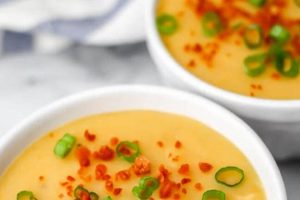
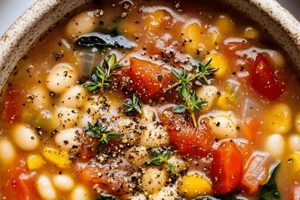
The focus of this discussion is a specific culinary preparation: plant-based potato soup created efficiently using a pressure cooking appliance. This method allows for the rapid softening of potatoes and infusion of flavors, resulting in a creamy and comforting soup free from animal products.
The significance of this approach lies in its ability to deliver a nutritious and satisfying meal quickly. Benefits include time savings, ease of preparation, and suitability for individuals adhering to vegan dietary guidelines. Historically, pressure cooking has been employed to reduce cooking times, and the application to plant-based recipes reflects a growing interest in both efficiency and ethical food choices.
The following sections will delve into specific ingredient considerations, optimal cooking parameters, and potential variations to enhance the flavor profile of this versatile and accessible dish.
Enhancing Vegan Potato Soup in a Pressure Cooker
The following guidance aims to optimize the preparation of plant-based potato soup utilizing a pressure cooking appliance, ensuring both flavor and efficiency.
Tip 1: Potato Selection: Opt for starchy potato varieties such as Russet or Yukon Gold. These potatoes yield a creamier texture when cooked and blended, contributing to the overall richness of the soup.
Tip 2: Aromatics Base: Sauting aromatics, such as onions, garlic, and celery, in the pressure cooker before adding the potatoes deepens the flavor profile. Ensure these vegetables are softened before proceeding.
Tip 3: Broth Quality: Employ a high-quality vegetable broth as the liquid base. A flavorful broth significantly enhances the overall taste of the soup. Consider using homemade broth or a low-sodium option to control the salt content.
Tip 4: Pressure Cooking Time: Adjust pressure cooking time based on the potato size and the specific pressure cooking appliance. Generally, 8-10 minutes at high pressure followed by a natural pressure release is sufficient for appropriately sized potato chunks.
Tip 5: Creaminess Enhancement: Achieve a creamy texture by blending a portion or all of the soup after pressure cooking. Use an immersion blender directly in the pot or transfer the soup to a conventional blender for a smoother consistency. Exercise caution when blending hot liquids.
Tip 6: Nutritional Yeast Addition: Incorporating nutritional yeast provides a cheesy, umami flavor, enhancing the savory aspects of the soup and contributing to its nutritional value. Add it after pressure cooking and blending.
Tip 7: Garnish Considerations: Enhance the presentation and flavor by garnishing with fresh herbs such as chives, parsley, or dill. Other garnish options include crispy fried onions or a swirl of plant-based cream.
Employing these techniques promotes a flavorful and efficient method for creating a satisfying plant-based potato soup.
The subsequent sections will explore various recipe modifications and serving suggestions for plant-based potato soup created using a pressure cooking method.
1. Potato Variety Selection

The choice of potato varietal is a critical determinant in the final texture and overall palatability of plant-based potato soup prepared via pressure cooking. Different potato types possess varying starch content and structural characteristics, directly influencing the soup’s creaminess, consistency, and flavor profile when subjected to pressure cooking and subsequent blending.
- Starch Content and Texture Development
High-starch potatoes, such as Russets, release a significant amount of starch during pressure cooking. This starch contributes to a naturally thicker and creamier texture when blended. Conversely, low-starch potatoes, like red potatoes, tend to retain their shape and result in a thinner, less creamy soup. The selection should align with the desired texture outcome.
- Flavor Profile and Sweetness
Different potato varieties exhibit unique flavor nuances. Yukon Gold potatoes, for instance, possess a slightly buttery and sweet flavor that enhances the overall taste of the soup. Russets, while primarily providing starch, offer a more neutral flavor base, allowing other ingredients to dominate the profile. The chosen potato should complement the intended flavor scheme of the soup.
- Cooking Time and Structural Integrity
Varieties with higher moisture content and denser structures may require slightly longer pressure cooking times to achieve optimal tenderness. Failure to adjust cooking time can result in undercooked potatoes that resist blending or overcooked potatoes that become mushy and break down excessively. Understanding the cooking characteristics of the selected potato is essential for consistent results.
- Blending Characteristics and Final Consistency
The ease with which a potato variety blends into a smooth consistency is paramount in achieving a desirable final product. High-starch potatoes typically blend more readily than waxy varieties. Blending resistance can result in a soup with a chunky or grainy texture. Experimentation and experience refine the selection process.
In conclusion, the appropriate selection of a potato variety tailored to the pressure cooking method significantly impacts the texture, flavor, and consistency of the resulting plant-based potato soup. Consideration of starch content, inherent flavor, and cooking properties ensures a superior culinary outcome.
2. Liquid Base Quality

The quality of the liquid base is paramount in determining the overall flavor and character of plant-based potato soup created using a pressure cooking appliance. The liquid not only facilitates the cooking process but also infuses the potatoes and other ingredients with essential flavors. Careful selection is, therefore, crucial.
- Flavor Infusion and Depth
A well-chosen liquid base contributes significantly to the soup’s flavor depth. Vegetable broth, for instance, can range from mild to robust, influencing the final taste profile. Using a broth with complex flavors, such as those derived from roasted vegetables or added herbs and spices, enhances the overall sensory experience. The choice should complement the other ingredients and desired flavor outcome.
- Nutritional Considerations
The liquid base can contribute to the soup’s nutritional value. Opting for a low-sodium broth or one enriched with vitamins and minerals provides added health benefits. Homemade vegetable broth allows for greater control over ingredients and nutrient content. Consideration of these factors is essential for health-conscious consumers.
- Texture and Consistency
The liquid base plays a role in achieving the desired soup consistency. A broth with higher viscosity, due to added starches or pureed vegetables, will result in a thicker soup. Conversely, a thinner broth will yield a lighter texture. The liquid’s inherent properties and potential additions should align with the intended consistency.
- Ingredient Compatibility and Harmony
The liquid base should harmonize with the other ingredients in the soup. Using a broth with conflicting flavors can detract from the overall taste. A neutral or complementary broth allows the other ingredients, such as potatoes, herbs, and spices, to shine. Careful consideration of flavor pairings is crucial for a balanced and harmonious final product.
In summary, the quality of the liquid base exerts a substantial influence on the flavor, nutritional value, and texture of plant-based potato soup prepared in a pressure cooking appliance. Attentive selection, focusing on flavor infusion, nutritional content, consistency, and ingredient compatibility, is essential for optimizing the culinary result.
3. Pressure Cooking Time

Pressure cooking time is a critical variable in the successful preparation of plant-based potato soup utilizing a pressure cooking appliance. Precise calibration of this parameter ensures optimal potato texture and flavor integration, directly influencing the soup’s final quality.
- Potato Variety and Cooking Duration
Different potato cultivars exhibit varying cooking times under pressure. Starchy potatoes, such as Russets, require shorter durations compared to waxier varieties like red potatoes. Inadequate cooking results in undercooked, firm potatoes, while excessive cooking leads to mushiness and disintegration, negatively impacting texture. Selection of an appropriate cooking time based on potato type is therefore paramount.
- Cube Size and Heat Penetration
The dimensions of the potato cubes directly influence heat penetration and cooking speed. Smaller cubes cook more rapidly than larger ones. Uniform sizing promotes even cooking, preventing some pieces from being overcooked while others remain undercooked. Consistent cube size is essential for textural homogeneity within the soup.
- Liquid Volume and Pressure Build-Up
Sufficient liquid volume is necessary for generating adequate steam pressure within the appliance. Insufficient liquid can lead to scorching and incomplete cooking. However, excessive liquid may dilute the flavor of the soup. Optimizing the liquid-to-solid ratio is essential for efficient pressure build-up and flavor concentration.
- Altitude Adjustments and Boiling Point
At higher altitudes, the boiling point of water decreases, necessitating adjustments to pressure cooking time. Increased cooking time is required to compensate for the reduced boiling temperature. Failure to account for altitude can result in undercooked potatoes. Knowledge of altitude-related adjustments is crucial for consistent results in diverse geographic locations.
In summary, precise management of pressure cooking time, taking into account potato variety, cube size, liquid volume, and altitude adjustments, is fundamental to achieving optimal texture and flavor in plant-based potato soup prepared in a pressure cooking device. Each of these elements contributes to a successful culinary outcome, underscoring the significance of careful parameter control.
4. Blending Consistency
Blending consistency is a critical determinant of the final sensory experience of plant-based potato soup prepared via pressure cooking. This characteristic, directly influenced by potato variety, cooking time, and blending technique, governs the soup’s perceived texture and overall palatability. An inadequate blending process can result in a grainy or lumpy texture, detracting from the intended creamy and smooth mouthfeel. Conversely, over-blending can lead to an overly viscous or gluey consistency, similarly compromising the sensory experience. Proper blending achieves a balance, creating a velvety texture that enhances the perception of flavor and richness. For example, if Yukon Gold potatoes are pressure-cooked for an appropriate time and then carefully blended with an immersion blender, the resulting soup typically exhibits a desirable creamy consistency. However, using Russet potatoes and over-blending could produce a pasty result.
Achieving the optimal blending consistency involves considering several interconnected factors. The initial potato variety dictates the inherent potential for creaminess; starchy potatoes generally blend more smoothly than waxy types. Accurate pressure cooking time ensures the potatoes are sufficiently softened for efficient blending. The choice of blending equipmentimmersion blender versus countertop blenderalso influences the outcome. An immersion blender allows for direct blending within the pressure cooking pot, reducing cleanup, but may require more technique to achieve uniform smoothness. A countertop blender offers greater power for achieving an ultra-smooth texture but necessitates transferring the hot soup, requiring caution. Furthermore, the gradual addition of liquid during the blending process allows for fine-tuning of the final consistency. A thicker soup can be thinned by adding more broth, while a thinner soup can be thickened by blending in a small amount of additional cooked potato or plant-based cream.
In conclusion, blending consistency represents a pivotal aspect of plant-based potato soup creation utilizing a pressure cooking appliance. Its impact on texture and palatability underscores the importance of careful technique and ingredient selection. Challenges related to over-blending or under-blending can be mitigated through thoughtful practice and an understanding of the interplay between potato variety, cooking parameters, and blending methods. Mastery of this element contributes significantly to the production of a high-quality, satisfying, and aesthetically pleasing culinary outcome, aligning with the broader objective of efficient and flavorful plant-based meal preparation.
5. Flavor Enhancements

Flavor enhancements constitute a critical element in the preparation of plant-based potato soup using a pressure cooking appliance. These additions serve to amplify the inherent flavors of the core ingredients, compensate for the absence of animal-derived fats, and contribute complexity to the overall sensory experience. Careful selection and application of flavor enhancers are essential for achieving a palatable and satisfying final product.
- Herbal Infusions
The strategic incorporation of fresh or dried herbs introduces aromatic complexity and depth of flavor. Thyme, rosemary, and chives are examples of herbs that complement the potato’s natural taste. These herbs can be added directly to the pressure cooker during the cooking process, allowing their essential oils to infuse the soup. Alternatively, fresh herbs can be used as a garnish, providing a burst of flavor and visual appeal immediately before serving. The specific herb selection should align with the desired flavor profile of the soup; for example, dill pairs well with lemon notes, while smoked paprika benefits from oregano.
- Spices and Seasonings
Spices and seasonings provide a foundation of savory and umami flavors, crucial in compensating for the lack of animal-derived components typically found in non-vegan potato soup. Smoked paprika, garlic powder, onion powder, and white pepper contribute depth and complexity. Nutritional yeast, often used in vegan cuisine, offers a cheesy flavor note. The timing of spice addition is critical; some spices, like garlic powder, benefit from being sauted with the aromatics before pressure cooking, while others, such as smoked paprika, retain their potency when added after. The appropriate ratio of spices to the other ingredients must be carefully considered to avoid overpowering the soup.
- Acidity Adjustments
The addition of acidic elements balances the richness of the potatoes and brightens the overall flavor profile. Lemon juice, apple cider vinegar, or a splash of white wine can be incorporated after pressure cooking. These acidic additions enhance the perception of other flavors and prevent the soup from tasting bland or heavy. The amount of acidity must be carefully controlled to avoid sourness; a small amount is generally sufficient to achieve the desired effect. For instance, a tablespoon of lemon juice added just before serving can significantly elevate the soup’s overall palatability.
- Umami Boosters
Umami, the fifth basic taste, contributes a savory and satisfying depth of flavor. Ingredients like soy sauce, miso paste, or mushroom powder can be used to enhance the umami notes in the soup. These additions work synergistically with the other flavor components to create a more complex and complete taste profile. Miso paste, in particular, introduces a salty and fermented flavor that can mimic the richness of animal-derived broths. The addition of umami boosters should be carefully measured to avoid overpowering the other flavors.
These multifaceted flavor enhancements, when judiciously applied, elevate plant-based potato soup prepared with a pressure cooking appliance from a simple dish to a complex and satisfying culinary experience. The interplay of herbal infusions, spices, acidity adjustments, and umami boosters underscores the importance of thoughtful seasoning in achieving a nuanced and flavorful result. The strategic application enhances the sensory characteristics and overcomes inherent limitations.
Frequently Asked Questions
This section addresses common inquiries regarding the preparation of plant-based potato soup utilizing a pressure cooking appliance. The information provided aims to clarify procedural aspects and optimize the culinary outcome.
Question 1: Can all potato varieties be used effectively in a pressure cooking context?
Certain potato varieties exhibit superior performance in pressure cooking applications. Starchy potatoes, such as Russets or Yukon Golds, yield a creamier texture upon blending, while waxy potatoes, like red potatoes, tend to retain their shape and produce a less viscous soup. Selection of an appropriate potato type is essential for achieving the desired consistency.
Question 2: What is the optimal liquid-to-potato ratio for pressure cooking plant-based potato soup?
A general guideline recommends using a liquid-to-potato ratio of approximately 1:1 by volume. This ensures adequate moisture for pressure build-up without diluting the soup’s flavor. Adjustments may be necessary based on the specific pressure cooking appliance and potato variety.
Question 3: Is it necessary to release pressure naturally after pressure cooking the soup?
A natural pressure release is generally recommended, particularly when preparing soups. This method minimizes the risk of starchy liquid sputtering through the pressure release valve. However, a quick release may be employed with caution, ensuring appropriate safety measures are implemented.
Question 4: What are suitable vegan substitutes for dairy-based cream in this recipe?
Plant-based cream alternatives include cashew cream, coconut cream (use the solid portion from a refrigerated can), or blended silken tofu. These substitutes provide richness and creaminess without animal-derived ingredients. The selection should align with individual dietary preferences and flavor considerations.
Question 5: How can the flavor profile of the soup be enhanced without relying on animal products?
Flavor enhancement can be achieved through the strategic use of herbs, spices, and umami-rich ingredients. Nutritional yeast provides a cheesy flavor, while smoked paprika adds depth. A high-quality vegetable broth forms a flavorful base. Experimentation with various seasonings is encouraged to tailor the soup to individual tastes.
Question 6: What is the recommended storage duration for prepared vegan potato soup?
Properly stored vegan potato soup can typically be refrigerated for up to three days. Ensure the soup is cooled completely before transferring it to an airtight container. Freezing is also an option for longer storage, although the texture may change slightly upon thawing.
In summary, successful preparation of this dish hinges on appropriate ingredient selection, adherence to recommended ratios, and careful attention to cooking parameters.
The following section will provide serving suggestions and variations.
Conclusion
This exploration has detailed the critical elements involved in preparing plant-based potato soup via pressure cooking. Emphasis has been placed on potato selection, liquid base quality, precise cooking time, optimal blending, and thoughtful flavor enhancements. Attending to these aspects fosters a higher probability of achieving a desirable culinary outcome.
The information provided equips individuals with a foundational understanding of the considerations necessary for crafting a satisfying and efficient plant-based meal. Continued experimentation and refinement of techniques, based on individual preferences and available resources, will further enhance the preparation of potato soup utilizing a pressure cooking appliance.