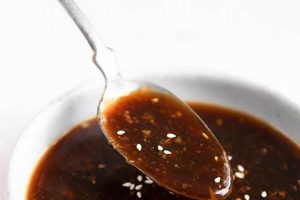
The formulation of a condiment mimicking Worcestershire sauce, but adhering to vegan dietary restrictions, involves substituting traditional ingredients like anchovies with plant-based alternatives. A typical preparation replaces fish-derived umami with ingredients such as soy sauce, tamarind paste, or mushroom-based concentrates to achieve a similar savory depth.
The appeal of this adaptation lies in its ability to provide a familiar flavor profile for individuals avoiding animal products, thereby broadening culinary options. Its development reflects a growing demand for inclusive food products and aligns with ethical considerations surrounding animal welfare and sustainability. Historically, condiments like Worcestershire sauce have relied on animal products for their distinctive tastes, making this vegan version a significant departure from conventional methods.
Subsequent sections will delve into specific component selection, common preparation methodologies, and variations that allow for customization to individual flavor preferences. This includes an exploration of sourcing ingredients, balancing tastes for optimal results, and addressing potential challenges during the creation process.
Tips for Vegan Worcestershire Sauce Recipe Success
Achieving optimal flavor when creating a plant-based Worcestershire sauce substitute requires careful consideration of ingredient selection and preparation techniques. The following guidelines aim to enhance the final product’s taste and consistency.
Tip 1: Prioritize Umami-Rich Ingredients: To replicate the savory depth traditionally derived from anchovies, incorporate ingredients such as soy sauce, tamari, miso paste, or mushroom powder. Experiment with different combinations to achieve the desired level of umami.
Tip 2: Balance Acidity and Sweetness: The characteristic tang of Worcestershire sauce comes from vinegar and tamarind. Adjust the ratio of these ingredients to balance the overall acidity. Counteract this with a touch of sweetness from molasses, maple syrup, or brown sugar.
Tip 3: Incorporate Spices for Complexity: A blend of spices adds depth and complexity. Common additions include ground cloves, garlic powder, onion powder, cinnamon, and chili flakes. Adjust the quantities to suit individual preferences.
Tip 4: Utilize a High-Quality Base: The base liquid, typically vinegar, significantly impacts the final flavor. Apple cider vinegar or white vinegar are suitable options. Consider the flavor profile of each vinegar when making a selection.
Tip 5: Simmer for Optimal Flavor Infusion: Slow simmering allows the flavors to meld and intensify. A gentle simmer for at least 30 minutes is recommended, but longer simmering can further enhance the depth of flavor.
Tip 6: Adjust Consistency with a Thickening Agent: If a thicker consistency is desired, a small amount of cornstarch slurry or tapioca starch can be added during the simmering process. Add sparingly to avoid excessive thickening.
Tip 7: Allow for Proper Aging: Like the traditional sauce, the plant-based version benefits from aging. Store in an airtight container in the refrigerator for at least one week to allow the flavors to fully develop and harmonize.
Refinement of the base liquid, sweetness, umami, and spices is essential for achieving a successful vegan Worcestershire sauce alternative. Aging enables optimal flavor melding.
Following sections will examine ingredient substitutions in detail, covering optimal storage protocols, and common challenges during the sauce-making process.
1. Umami ingredient selection

The selection of umami-rich components constitutes a foundational step in crafting a palatable plant-based Worcestershire sauce. Traditional recipes utilize anchovies as the primary source of this savory taste; therefore, vegan formulations necessitate alternative sources to emulate this critical flavor profile. The choice of replacement directly affects the overall character of the final product. For instance, incorporating shiitake mushrooms provides an earthy, deep savoriness, while using a concentrated vegetable broth may impart a lighter, more subtle umami. Different options create inherently different finished products.
Commonly employed ingredients include soy sauce, tamari, miso paste, seaweed (such as nori or kombu), mushroom powder, and nutritional yeast. The concentration and combination of these elements determine the intensity and complexity of the umami taste. Soy sauce and tamari provide a readily available and potent source, while miso paste adds a fermented depth. Seaweed contributes a distinctive oceanic flavor, and mushroom powder offers an earthy undertone. The strategic blending of multiple umami ingredients often yields a more nuanced and balanced flavor than relying on a single source. The correct selection is fundamental.
Ultimately, achieving a satisfactory substitute necessitates a deliberate approach to umami sourcing. Selection directly impacts taste. Therefore, experimentation with ingredient combinations and concentrations is essential to tailoring the vegan Worcestershire sauce to specific palates. Understanding the unique flavor contributions of each component allows for precise control over the final product, leading to a more successful and versatile condiment. The selection process defines the character of the sauce.
2. Sweetness level adjustment

Sweetness level adjustment constitutes a critical step in the formulation of plant-based Worcestershire sauce. Traditional recipes derive sweetness from molasses or corn syrup, counterbalancing the acidity of vinegar and the intense savoriness of ingredients such as anchovies. In vegan adaptations, the sweetness serves the same fundamental purpose: to moderate the sharper flavor elements and create a balanced profile. A deficiency in sweetness results in an overly acidic and potentially unpalatable sauce. Conversely, excessive sweetness can mask the other complex flavors and render the final product cloying. The adjustment is a balance to avoid an unpleasant product.
Sources of sweetness in a vegan recipe include molasses, maple syrup, brown sugar, date syrup, and even small amounts of agave nectar. The choice of sweetener influences the overall flavor. Molasses offers a deep, rich caramel note, complementing umami flavors effectively. Maple syrup provides a lighter, more delicate sweetness. Brown sugar contributes a subtle molasses-like taste. Date syrup offers a unique fruity undertone. The appropriate level of sweetness and the selection of its source depend significantly on the other components of the recipe. The type of sweetner can play a big role for the whole mixture of vegan sauce.
Precise calibration of sweetness ensures that the sauce exhibits a harmonious blend of flavors, enhancing its versatility as a condiment. Under adjusted components might lead to undesired results. Careful adjustment for balance in sweetness level, acidity and savoriness is a must.
3. Acidity balance

Acidity balance in a plant-based Worcestershire sauce formulation directly influences its overall palatability and culinary versatility. The characteristic tang of traditional Worcestershire sauce originates from the acetic acid present in vinegar, which serves to counter the richness of other ingredients and provide a sharp, cleansing effect on the palate. In a vegan adaptation, maintaining this crucial acidity necessitates a careful selection of ingredients and an understanding of their respective pH levels. An imbalance, either toward excessive acidity or insufficient tartness, compromises the sauce’s ability to function effectively as a flavor enhancer. For instance, a vegan version relying heavily on sweet or umami components without adequate acidic counterpoints would likely taste heavy and lack the refreshing bite characteristic of Worcestershire sauce.
Achieving the optimal acidity balance involves strategically combining ingredients such as vinegar (apple cider, white, or balsamic), tamarind paste, and citrus juice (lemon or lime). Each of these elements contributes a unique dimension of acidity, allowing for nuanced control over the final flavor profile. The type of vinegar used significantly affects the taste; apple cider vinegar offers a milder, slightly sweet tang, while white vinegar provides a sharper, more assertive acidity. Tamarind paste contributes both acidity and a distinctive fruity-sour note, while citrus juice adds brightness and complexity. A common mistake involves over-relying on a single acidic element, leading to a one-dimensional taste. Successful formulations often incorporate a blend of acidic sources to achieve a more balanced and complex flavor profile. In the case that the sauce is too acidic, a small amount of maple syrup could be used.
The practical significance of understanding acidity balance extends beyond simple taste considerations. Acidity also plays a role in the sauce’s shelf stability, inhibiting microbial growth and extending its lifespan. Furthermore, acidity interacts with other flavor components, influencing their perceived intensity and complexity. By carefully manipulating the acidic elements, the sauce’s flavor and shelf life are enhanced to provide the characteristic Worcestershire taste from plant based ingredients. In conclusion, effective manipulation of the sour components results in a more versatile and lasting product.
4. Spice profile complexity

The creation of a compelling vegan Worcestershire sauce necessitates a complex spice profile to compensate for the absence of traditional animal-derived umami. Unlike its conventional counterpart, which relies on the inherent savoriness of anchovies, the vegan version requires a carefully constructed tapestry of spices to achieve a similar depth and richness. A simplistic spice blend results in a flat, uninspired sauce, failing to replicate the nuanced flavor of authentic Worcestershire. Thus, spice complexity acts as a critical determinant of the sauce’s overall success, influencing its ability to enhance a wide range of culinary applications. For example, a blend consisting solely of garlic powder and onion powder lacks the aromatic and pungent dimensions required to mimic the full sensory experience of the original, while a more elaborate combination offers a more nuanced flavor.
To achieve the requisite complexity, vegan Worcestershire recipes often incorporate a diverse array of spices, each contributing unique flavor notes. Common additions include ground cloves for warmth, cinnamon for subtle sweetness, chili flakes for a touch of heat, ginger for aromatic pungency, and allspice for a complex blend of flavors. The precise proportions of these spices are critical; an overabundance of any single spice can overwhelm the other flavors, while an insufficient quantity can result in an unbalanced profile. The spices must harmonically function for desired outcome. Many chefs will create a specific proportion to get a precise flavor profile. This involves experimentation and precise proportioning to create a stable and well-defined spice profile.
In conclusion, spice profile complexity stands as a cornerstone of successful vegan Worcestershire sauce. The strategic layering of diverse spices is essential to replicating the depth and richness absent due to the lack of animal products. Understanding and manipulating the interplay of various spice notes allows for the creation of a versatile and satisfying condiment, capable of enriching a wide range of dishes. This meticulous approach ensures the vegan alternative captures the essence of traditional Worcestershire sauce, offering a flavorful and ethical substitute. Without the complexity of different spices, the vegan sauce will not be complete.
5. Simmering duration

Simmering duration significantly impacts the flavor development and overall quality of a vegan Worcestershire sauce recipe. The application of heat over an extended period facilitates the melding of diverse ingredients, allowing flavors to deepen and harmonize. Insufficient simmering results in a sauce where individual components remain distinct and lack cohesion, failing to achieve the complex profile characteristic of Worcestershire sauce. Conversely, excessive simmering can lead to undesirable reductions in volume, concentrated flavors that are overly intense, and potential burning or scorching of the sauce. A precise duration of simmering is therefore critical to optimize the final product.
The simmering process promotes chemical reactions, such as the Maillard reaction and caramelization, which contribute to the savory and slightly sweet notes inherent in Worcestershire sauce. These reactions occur more readily with prolonged exposure to moderate heat, allowing sugars and amino acids to interact and form complex flavor compounds. Additionally, simmering allows the spices to fully infuse the liquid base, extracting their essential oils and aromatic compounds. For instance, cloves, cinnamon, and chili flakes require sufficient simmering time to release their flavor profiles and integrate seamlessly into the sauce. A typical vegan Worcestershire sauce recipe might call for simmering for at least 30 minutes, with some recipes extending this duration to an hour or more, depending on the desired intensity of flavor and viscosity.
In conclusion, the duration of simmering represents a crucial variable in the successful execution of a vegan Worcestershire sauce recipe. It directly affects flavor development, ingredient integration, and overall sauce quality. While precise timing depends on specific ingredients and desired outcomes, careful attention to the simmering process ensures a balanced, flavorful, and nuanced plant-based alternative to traditional Worcestershire sauce. The control of simmering duration can be the main point for excellent vegan sauce.
6. Proper flavor aging

Proper flavor aging is an indispensable process in the successful creation of a vegan Worcestershire sauce. Unlike freshly prepared sauces where individual flavor notes may be distinct and disjointed, aging allows for the gradual melding and harmonization of these elements. The passage of time facilitates chemical reactions and molecular interactions that refine and deepen the overall taste profile. This transformation is particularly crucial in vegan formulations, which rely on plant-based ingredients to replicate the complex umami traditionally derived from anchovies. Insufficient aging results in a sauce that lacks depth and complexity, failing to emulate the nuanced character of authentic Worcestershire sauce. For instance, a newly made batch may exhibit a strong, unintegrated flavor of vinegar or soy sauce, which diminishes with time as the flavors coalesce.
The aging process typically involves storing the prepared sauce in an airtight container within a refrigerated environment for a period ranging from one week to several months. During this time, enzymatic activity and non-enzymatic browning contribute to the development of more complex flavor compounds. The cold temperature retards spoilage and promotes slow, controlled reactions. A practical example involves comparing a vegan Worcestershire sauce tasted immediately after preparation to the same sauce tasted after two weeks of aging. The aged sauce will exhibit a smoother, more balanced flavor, with individual ingredients less pronounced and a more integrated overall taste. Furthermore, longer aging periods can lead to the development of subtle, tertiary flavor notes that enhance the sauce’s complexity. The extended aging in a cooled environment gives the plant-based ingredients chance to be blended.
In summary, proper flavor aging represents a critical step in achieving a high-quality vegan Worcestershire sauce. It is not merely a passive waiting period but an active process of flavor refinement and integration. This process enables the plant-based ingredients to meld and develop a balanced profile and shelf-stable condition. Ignoring this step compromises the taste. The practical significance lies in the creation of a more satisfying and versatile condiment that faithfully replicates the traditional Worcestershire sauce flavor, enhancing its culinary applications. It is a component to be considered if a plant-based alternative is desired.
Frequently Asked Questions
This section addresses common inquiries and misconceptions surrounding the preparation and utilization of plant-based Worcestershire sauce.
Question 1: What distinguishes a vegan Worcestershire sauce recipe from a traditional one?
The primary distinction lies in the substitution of anchovies, a key ingredient in traditional Worcestershire sauce, with plant-derived umami sources. These include soy sauce, tamari, miso, mushroom extracts, or seaweed, to achieve a comparable savory depth.
Question 2: Can a vegan Worcestershire sauce recipe truly replicate the flavor of its traditional counterpart?
While an exact replication is challenging due to the unique flavor profile of anchovies, a carefully crafted vegan recipe, utilizing a balanced blend of umami, sweet, acidic, and spicy components, can approximate the flavor profile closely.
Question 3: What are the primary challenges in developing a successful vegan Worcestershire sauce recipe?
The main challenges involve sourcing suitable umami ingredients that provide sufficient depth of flavor, balancing the acidity and sweetness to achieve a harmonious profile, and replicating the complex spice notes that contribute to the overall character of the sauce.
Question 4: How does the shelf life of a vegan Worcestershire sauce recipe compare to traditional Worcestershire sauce?
The shelf life can be comparable, provided that the vegan sauce is prepared using proper sanitation and storage techniques. The acidity of the vinegar and the presence of preservatives contribute to its longevity. Refrigeration after opening is essential.
Question 5: Are there specific dishes for which a vegan Worcestershire sauce recipe is particularly well-suited?
A vegan Worcestershire sauce can be used in any dish where traditional Worcestershire sauce is typically employed, including marinades, stews, soups, dressings, and dips. It serves as a versatile flavor enhancer for both vegetarian and non-vegetarian cuisine.
Question 6: What are the best practices for storing a homemade vegan Worcestershire sauce recipe?
The sauce should be stored in an airtight container, preferably glass, in the refrigerator. Proper storage minimizes the risk of spoilage and helps to maintain the flavor quality over time.
The key takeaways emphasize that a well-executed recipe hinges on careful ingredient selection and proper storage to achieve desired taste and longevity.
The next section will provide example recipes to apply these general tips.
Conclusion
The exploration of the “vegan worchestire sauce recipe” reveals its potential as a viable alternative to the traditional condiment. Successful execution hinges on strategic ingredient selection, precise flavor balancing, and proper aging techniques. The absence of anchovies necessitates innovative use of plant-based umami sources, while maintaining the characteristic tang and spice complexity is crucial for achieving a satisfying result. Proper sanitation and storage are also necessary.
As demand for plant-based options continues to grow, the refinement and wider adoption of the vegan Worcestershire sauce recipe offers significant implications for both culinary professionals and home cooks. Its accessibility allows a broader audience to experience the distinct flavor profile in an ethical and sustainable manner. Continued experimentation and recipe refinement will ensure plant-based alternatives become more mainstream.