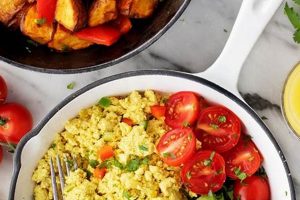
The ability to prepare and store plant-based breakfast wraps for future consumption using freezing techniques is a strategy applicable to individuals seeking convenient, readily available meals. This approach involves assembling a combination of cooked plant-based ingredients within a tortilla, followed by freezing for preservation and later reheating.
This method offers several advantages, including time savings during busy mornings, portion control for dietary management, and the reduction of food waste by preserving prepared meals. Historically, freezing has been used as a reliable method for extending the shelf life of various food products, and its application to prepared meals like breakfast wraps facilitates a streamlined food management system.
The subsequent sections will detail optimal ingredient selection, preparation guidelines, freezing techniques, reheating recommendations, and storage considerations for maximizing the quality and longevity of these convenient, pre-made meals.
Optimizing Plant-Based Breakfast Wrap Storage
The following guidelines aim to enhance the quality and longevity of pre-prepared, plant-based breakfast wraps intended for freezer storage.
Tip 1: Ingredient Selection. Prioritize low-moisture ingredients. Excess moisture contributes to ice crystal formation, which can negatively impact texture upon thawing. Consider using pre-cooked, drained vegetables and omitting high-water content items like raw tomatoes.
Tip 2: Cooling Procedures. Allow all cooked ingredients to cool completely prior to assembling the wrap. Warm ingredients generate condensation within the wrap, increasing the likelihood of freezer burn and textural degradation.
Tip 3: Layering Technique. Strategically layer ingredients to prevent sogginess. Place less absorbent components, such as plant-based sausage or scrambled tofu, closest to the tortilla. Position more absorbent ingredients, like spinach or roasted vegetables, in the center.
Tip 4: Wrapping Method. Employ a tight wrapping technique to minimize air pockets within the wrap. Air exposure contributes to freezer burn. Fold in the sides of the tortilla before rolling tightly from the bottom up.
Tip 5: Individual Wrapping. Wrap each breakfast wrap individually in plastic wrap. This creates a barrier against moisture loss and prevents the wraps from sticking together during freezing.
Tip 6: Secondary Packaging. Place the individually wrapped breakfast wraps into a freezer-safe bag or container. This provides an additional layer of protection against freezer burn and helps maintain shape during storage.
Tip 7: Labeling and Dating. Clearly label each package with the contents and date of preparation. This ensures proper inventory management and prevents consumption beyond the recommended storage period.
Tip 8: Optimal Storage Duration. While safe indefinitely, plant-based breakfast wraps stored in the freezer are best consumed within 1-2 months for optimal quality. Extended storage can result in textural changes and flavor degradation.
Adhering to these guidelines ensures the preservation of flavor and texture, resulting in a more palatable and convenient breakfast option.
The subsequent section will address thawing and reheating recommendations for these stored plant-based breakfast wraps.
1. Preparation Technique

Preparation technique significantly influences the success of plant-based breakfast wraps intended for freezer storage. Proper execution minimizes degradation during freezing and reheating, ensuring a palatable and convenient meal.
- Ingredient Pre-treatment
Pre-treatment involves cooking or otherwise preparing ingredients before assembly. Sauting vegetables reduces moisture content, preventing a soggy wrap after thawing. Seasoning components during preparation ensures even flavor distribution throughout the final product, as flavors may become muted during freezing. Inadequate pre-treatment leads to textural and flavor deficiencies.
- Layering and Assembly Order
The order in which ingredients are layered impacts the final product. Placing moisture-absorbing components, such as tofu scramble, directly against the tortilla can mitigate sogginess. Distributing ingredients evenly ensures consistent flavor and texture throughout the wrap. Improper layering results in uneven heating and potential textural imbalances upon reheating.
- Wrapping and Sealing
The tightness of the wrap directly correlates with freezer burn prevention. A tightly rolled wrap minimizes air pockets, reducing moisture loss and ice crystal formation. Securely folding in the ends prevents filling leakage during thawing and reheating. Inadequate wrapping compromises the wrap’s integrity, leading to textural degradation and potential loss of flavor.
- Cooling Before Freezing
Allowing the assembled wrap to cool completely before freezing is crucial. Warm wraps introduce condensation, which subsequently freezes into ice crystals. These ice crystals damage the tortilla and filling, resulting in a soggy and less appealing product upon reheating. Insufficient cooling degrades the overall quality and texture of the breakfast wrap.
These preparation techniques are not isolated steps but rather a cohesive process. Diligence in each phase contributes to the overall success of storing plant-based breakfast wraps in the freezer, ultimately resulting in a convenient and high-quality meal option.
2. Ingredient Moisture

The moisture content of ingredients used in plant-based breakfast wraps significantly impacts their suitability for freezer storage. Excess moisture contributes to ice crystal formation, textural degradation, and potential flavor loss upon thawing and reheating. Managing ingredient moisture is therefore paramount for preserving quality.
- Ice Crystal Formation
Water, a primary constituent of many plant-based ingredients, expands when frozen. This expansion leads to the formation of ice crystals that rupture cell walls within the food matrix. In breakfast wraps, this manifests as a mushy or waterlogged texture after reheating. For instance, high-moisture vegetables like raw tomatoes or un-drained cooked spinach exacerbate this effect, negatively impacting the wrap’s structural integrity.
- Tortilla Degradation
Tortillas, the structural component of wraps, are particularly susceptible to moisture-induced degradation. Excess moisture from fillings saturates the tortilla, leading to a gummy or sticky texture upon thawing and reheating. This can also result in the tortilla tearing easily. Utilizing drier fillings, such as properly drained and sauted vegetables, minimizes this issue, preserving the tortilla’s desirable texture and pliability.
- Flavor Dilution
High moisture content can dilute the flavors of other ingredients within the wrap. As water freezes and thaws, it leaches soluble flavor compounds, resulting in a less intense and less defined taste profile. For example, a plant-based cheese alternative with high moisture will release water upon thawing, diluting its cheesy flavor and potentially impacting the overall taste of the wrap. Using ingredients with concentrated flavors and lower moisture helps maintain taste integrity.
- Microbial Growth Potential
While freezing inhibits microbial growth, thawing provides an opportunity for microorganisms to proliferate if moisture is present. Elevated moisture levels create a favorable environment for bacteria and mold, potentially compromising food safety. Proper ingredient preparation, including thorough cooking and drainage of excess water, minimizes this risk, extending the safe storage and consumption window for plant-based breakfast wraps.
Controlling ingredient moisture is a critical factor in producing freezable plant-based breakfast wraps that retain desirable textural and flavor characteristics. Careful consideration of ingredient selection and preparation methods is essential to mitigate the negative effects of moisture during the freezing, thawing, and reheating processes. The successful management of moisture directly contributes to a higher-quality, more palatable, and safer final product.
3. Freezing Speed
The rate at which plant-based breakfast wraps are frozen directly influences ice crystal formation, a primary determinant of final product texture. Slow freezing promotes the development of larger ice crystals, which rupture cell walls within the ingredients. This cellular damage results in a mushy or waterlogged consistency upon thawing, degrading the wrap’s overall palatability. In contrast, rapid freezing minimizes ice crystal size, preserving the cellular structure of the ingredients and maintaining a more desirable texture. For instance, placing freshly assembled wraps directly into a deep freezer set at a low temperature facilitates quicker freezing, reducing ice crystal size compared to freezing in a less efficient freezer compartment.
Effective freezing speed hinges on several factors including freezer temperature, airflow, and packaging. A consistently low freezer temperature (ideally at or below 0F/-18C) provides the necessary thermal gradient for rapid heat extraction. Adequate airflow ensures uniform cooling throughout the freezer, preventing temperature variations that could lead to uneven freezing. Packaging the wraps individually in airtight, freezer-safe materials minimizes air exposure and facilitates faster heat transfer. Failing to properly manage these elements can significantly extend the freezing time, promoting larger ice crystal formation and negatively impacting the wrap’s final texture. Practical application involves utilizing blast freezers for commercial scale production and ensuring home freezers are not overcrowded to maintain airflow and freezing efficiency.
In summary, optimizing freezing speed is crucial for preserving the quality of plant-based breakfast wraps intended for freezer storage. While rapid freezing presents logistical challenges in some settings, the resulting improvement in texture and overall product quality justifies the effort. Ignoring the importance of freezing speed leads to a compromised final product, detracting from the convenience and appeal of pre-prepared, plant-based meals. Further research into innovative freezing technologies could offer even greater improvements in texture preservation for a broader range of frozen foods.
4. Packaging Integrity

Packaging integrity serves as a crucial factor in preserving the quality and extending the shelf life of plant-based breakfast wraps intended for freezer storage. The packaging acts as a barrier against environmental factors that can degrade the product during freezing and subsequent thawing.
- Moisture Barrier Protection
Freezer burn, a common form of food degradation, arises from sublimation, where ice crystals on the food’s surface evaporate directly into the freezer’s air. Adequate packaging creates a barrier, minimizing moisture loss and preventing freezer burn. Vacuum-sealed bags or tightly wrapped plastic effectively reduce air exposure, preserving the wrap’s texture and flavor. Conversely, porous or improperly sealed packaging allows moisture migration, leading to dehydration and textural damage.
- Air Exposure Mitigation
Exposure to air within the freezer can accelerate oxidation, leading to off-flavors and discoloration. Effective packaging minimizes air contact, slowing down oxidation processes. Multi-layered packaging, such as a plastic wrap followed by a freezer bag, provides enhanced protection against air infiltration. Insufficient packaging, exemplified by a single layer of loosely fitted plastic wrap, exposes the wrap to oxygen, resulting in undesirable changes in taste and appearance.
- Physical Protection During Storage
The packaging safeguards the breakfast wrap from physical damage during storage and handling. Rigid containers prevent crushing or deformation, maintaining the wrap’s shape and preventing ingredient displacement. Flexible packaging, while offering less structural support, must be durable enough to withstand freezer temperatures without cracking or tearing. Inadequate physical protection can lead to structural damage, negatively affecting the wrap’s presentation and potentially compromising its integrity.
- Prevention of Odor Absorption
Freezers often contain various food items, and improperly packaged breakfast wraps can absorb odors from surrounding products. Odor-proof packaging materials, such as specialized freezer bags, prevent the transfer of unwanted aromas, maintaining the intended flavor profile of the wrap. Standard plastic bags, while offering some protection, may not completely block odor penetration, particularly during prolonged storage. The resulting odor absorption can significantly detract from the wrap’s palatability.
The integrity of the packaging directly correlates with the overall quality and longevity of plant-based breakfast wraps stored in the freezer. Selecting appropriate packaging materials and employing proper sealing techniques are essential for preserving flavor, texture, and overall product appeal, ensuring a convenient and enjoyable meal option.
5. Storage Temperature

Maintaining an appropriate storage temperature is paramount to preserving the quality and safety of plant-based breakfast wraps intended for long-term freezer storage. Fluctuations in temperature, or storage above the recommended threshold, induce several undesirable effects, directly compromising the product. The ideal storage temperature for minimizing degradation is consistently at or below 0F (-18C). This temperature effectively halts enzymatic activity and significantly slows microbial growth, key factors in food spoilage. For instance, storing wraps at temperatures closer to 32F (0C) allows residual enzymatic processes to continue, albeit at a reduced rate, potentially leading to off-flavors or textural changes over an extended storage period. Similarly, repeated temperature variations, such as those occurring during freezer defrost cycles, promote ice crystal recrystallization, further damaging cellular structures within the food matrix.
The impact of inadequate storage temperature extends beyond mere textural alterations. Improperly stored wraps present an increased risk of microbial contamination, even within a freezer environment. While freezing inhibits most microbial activity, certain psychrophilic organisms can still proliferate, albeit slowly, at temperatures slightly above 0F. Thawing and refreezing cycles create further opportunities for microbial growth, potentially rendering the wraps unsafe for consumption. Moreover, elevated storage temperatures can accelerate lipid oxidation in plant-based fats, leading to rancidity and a noticeable decline in flavor quality. A practical example involves comparing wraps stored at a consistent 0F with those stored in a freezer frequently subjected to manual defrosting; the latter will invariably exhibit poorer taste and texture characteristics after a comparable storage duration.
In conclusion, maintaining a stable and sufficiently low storage temperature is not merely a best practice, but a necessity for ensuring the safety, palatability, and nutritional integrity of plant-based breakfast wraps stored in the freezer. The cumulative effects of temperature fluctuations and inadequate freezing temperatures significantly diminish product quality and increase the risk of spoilage or contamination. Awareness and diligent adherence to recommended storage guidelines are essential for consumers and food producers seeking to leverage the convenience and benefits of freezer storage for these prepared meals. Future innovations in freezer technology and packaging materials may offer enhanced temperature stability and further extend the shelf life of frozen plant-based products.
6. Thawing Method
The thawing method employed for plant-based breakfast wraps retrieved from freezer storage significantly influences the final product’s texture, flavor, and overall palatability. Improper thawing can negate the benefits of careful preparation and freezing, leading to a suboptimal eating experience. Selecting an appropriate technique is therefore critical.
- Refrigeration Thawing
Refrigeration thawing involves transferring the frozen wrap to a refrigerator (typically 40F or 4C) for a prolonged period, allowing it to thaw gradually. This method minimizes temperature shock and promotes more even thawing, reducing the likelihood of textural degradation. For example, a wrap placed in the refrigerator overnight will thaw slowly, preserving its structural integrity and preventing excessive moisture loss. This approach is particularly suitable when planning ahead is possible. The extended thaw time, however, may be a limiting factor for individuals seeking a quicker meal option.
- Microwave Thawing
Microwave thawing utilizes microwave energy to rapidly thaw the wrap. This method offers speed and convenience but can also lead to uneven heating, potentially causing some areas to become overcooked while others remain frozen. Using the microwave’s defrost setting and rotating the wrap frequently can mitigate this issue. For instance, a wrap microwaved on high power without rotation may develop hot spots and a rubbery texture. Careful monitoring is crucial to prevent textural damage. This approach is often preferred for its speed, but requires vigilant oversight to maintain acceptable quality.
- Direct Heating from Frozen
Direct heating involves cooking the wrap directly from its frozen state, typically in an oven or skillet. This method bypasses the thawing process altogether, saving time and effort. However, it requires careful attention to cooking time and temperature to ensure the wrap is heated thoroughly without burning the exterior. For instance, baking a frozen wrap at a low temperature for an extended period allows the filling to heat evenly. This technique minimizes textural changes associated with thawing but may require a longer overall cooking time. The suitability of this method depends on the specific cooking appliance and the wrap’s composition.
- Room Temperature Thawing (Discouraged)
Thawing at room temperature is generally discouraged due to the increased risk of microbial growth. As the wrap thaws at ambient temperature, it spends a significant amount of time within the temperature danger zone (40F – 140F or 4C – 60C), promoting bacterial proliferation. This poses a potential food safety hazard. While convenient, this method compromises food safety and is not recommended. The potential health risks outweigh the perceived time savings.
The optimal thawing method for plant-based breakfast wraps depends on individual preferences, time constraints, and available equipment. Prioritizing food safety and minimizing textural degradation are key considerations when selecting a thawing technique. Refrigeration thawing offers the best balance of quality and safety, while microwave thawing provides speed and convenience. Direct heating from frozen can be a viable option with careful temperature control. Room temperature thawing should be avoided due to the elevated risk of bacterial contamination. Ultimately, the chosen method will directly impact the eating experience, influencing both the flavor and texture of the final product.
7. Reheating Options
Reheating options constitute a critical consideration within the context of plant-based breakfast wraps stored in a freezer. The inherent purpose of freezing prepared meals, including these wraps, centers on convenience, presupposing an efficient and effective method for restoring the food to a palatable state. Inadequate reheating techniques can negate the advantages gained through careful ingredient selection, preparation, and freezing protocols. The success of a plant-based breakfast wrap freezer strategy is directly contingent on the availability of suitable and practical reheating methods. For example, a wrap meticulously prepared and properly frozen will yield a disappointing outcome if reheated improperly, resulting in uneven heating, textural degradation, or diminished flavor. The selection of the reheating method must align with the intended use case, considering factors such as available equipment, time constraints, and desired quality.
Reheating options for plant-based breakfast wraps typically encompass microwave heating, oven baking, skillet heating, and toaster oven heating. Each method presents distinct advantages and disadvantages in terms of speed, convenience, and preservation of texture. Microwave heating offers the fastest reheating time, but can frequently result in uneven heating and a softened tortilla. Oven baking yields more uniform heating and a crispier tortilla but requires a longer reheating duration. Skillet heating allows for direct control over browning and crispness, but necessitates active monitoring to prevent burning. Toaster oven heating offers a balance between oven baking and skillet heating, providing quicker heating than a conventional oven while still allowing for controlled browning. The choice between these options relies on the consumer’s specific needs and preferences. Understanding the thermal properties of plant-based ingredients is also crucial. For example, plant-based cheeses may melt differently than dairy cheeses, necessitating adjustments to reheating times and temperatures.
In conclusion, the selection of appropriate reheating options is integral to the overall effectiveness of a plant-based breakfast wrap freezer system. The reheating method serves as the final step in the process, determining the ultimate quality and convenience of the prepared meal. Optimizing reheating techniques is thus essential for maximizing the benefits of frozen, plant-based breakfast wraps, ensuring a satisfying and efficient meal solution. Future research could explore innovative reheating methods that further enhance the quality and convenience of these prepared meals. Overcoming the challenges associated with maintaining texture and flavor during reheating remains a key area for improvement in the realm of frozen, plant-based convenience foods.
Frequently Asked Questions
This section addresses common inquiries and concerns regarding the preparation, storage, and reheating of plant-based breakfast wraps for freezer storage.
Question 1: Is the freezer life of plant-based breakfast wraps comparable to those containing animal products?
The longevity of plant-based breakfast wraps in the freezer is generally equivalent to or slightly longer than that of wraps containing animal products, assuming proper storage conditions. Plant-based ingredients often exhibit reduced rates of degradation compared to animal-derived components, particularly concerning lipid oxidation and microbial growth. However, texture changes may still occur over extended storage periods.
Question 2: What constitutes optimal freezer packaging for preventing freezer burn on plant-based breakfast wraps?
Optimal packaging involves a two-tiered approach. Individual wraps should be tightly encased in plastic wrap to minimize air exposure. Subsequently, these wrapped units must be placed within a freezer-safe, airtight bag or container. Vacuum sealing represents a superior alternative when available, further reducing the risk of freezer burn.
Question 3: Are specific plant-based ingredients inherently unsuitable for inclusion in freezable breakfast wraps?
High-moisture content ingredients, such as raw tomatoes or cucumbers, are generally disfavored due to their propensity to develop an undesirable texture upon thawing. Ingredients with a high water activity tend to form large ice crystals, disrupting cellular structures and leading to a mushy or waterlogged consistency. Prior cooking and drainage of excess water is recommended for applicable ingredients.
Question 4: What is the recommended thawing procedure to minimize textural degradation in plant-based breakfast wraps?
Refrigeration thawing is the preferred method, allowing for gradual temperature equilibration and minimizing the formation of large ice crystals. Microwave thawing can be employed for expediency, but requires careful monitoring to prevent uneven heating and localized overcooking. Room temperature thawing is discouraged due to food safety concerns related to bacterial proliferation.
Question 5: How does the reheating method affect the final quality of a previously frozen plant-based breakfast wrap?
Oven reheating generally yields the most satisfactory results, promoting even heating and crisping of the tortilla. Skillet reheating provides similar results but demands more active attention to prevent burning. Microwave reheating is the least desirable option, often resulting in a softened tortilla and unevenly heated filling. Direct heating from frozen is possible but necessitates meticulous control of cooking time and temperature.
Question 6: Does freezing affect the nutritional content of plant-based breakfast wraps?
Freezing generally has a minimal impact on the macronutrient content (proteins, carbohydrates, fats) of plant-based breakfast wraps. However, certain water-soluble vitamins, such as Vitamin C, may experience a slight reduction due to ice crystal formation and cellular damage. The extent of vitamin loss is typically minor and does not significantly diminish the overall nutritional value of the wrap.
These FAQs offer guidance for optimizing the preparation, storage, and consumption of plant-based breakfast wraps from the freezer.
The subsequent section will explore advanced techniques for enhancing the flavor and texture of frozen plant-based breakfast wraps.
Vegan Breakfast Burrito Freezer
This discourse has systematically examined the intricacies of plant-based breakfast wrap preparation, storage, and reheating within a freezer environment. Key factors influencing product quality, including ingredient selection, freezing speed, packaging integrity, storage temperature, thawing method, and reheating options, were thoroughly analyzed. Understanding these variables is critical for maximizing the convenience and palatability of prepared plant-based meals.
Continued adherence to established best practices, coupled with ongoing exploration of innovative freezing and reheating technologies, will further refine the processes surrounding frozen plant-based breakfast wraps. Diligence in applying these principles ensures the delivery of a convenient, nutritious, and palatable dietary option.