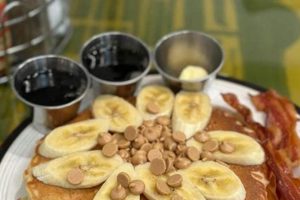
A plant-based morning meal designed to provide a substantial amount of protein is the central focus. Examples include tofu scrambles, protein-rich smoothies incorporating plant-based protein powders, and oatmeal fortified with nuts, seeds, and legumes. These options deviate from traditional breakfast fare, emphasizing nutritional content suitable for individuals adhering to a vegan diet.
Prioritizing protein intake at the start of the day offers numerous physiological advantages. Increased satiety can aid in weight management and reduce subsequent snacking. Furthermore, sufficient protein consumption supports muscle maintenance, essential for overall health and metabolic function. Historically, vegan diets have sometimes been perceived as lacking in adequate protein; therefore, creative meal planning is crucial to address this concern and ensure nutritional completeness.
The subsequent sections will explore a range of specific recipes and strategies for maximizing protein content in plant-based morning meals. Practical tips on ingredient selection, preparation techniques, and nutritional considerations will be presented to facilitate the incorporation of these ideas into daily routines.
Strategies for High-Protein Vegan Morning Meals
Optimizing the protein content of plant-based morning meals requires careful consideration of ingredients and preparation methods. The following strategies provide practical guidance for individuals seeking to increase protein intake within a vegan dietary framework.
Tip 1: Incorporate Legumes. Beans, lentils, and chickpeas are excellent sources of plant-based protein. Consider adding them to breakfast burritos, scrambles, or blending them into smoothies for a creamy texture and increased protein density.
Tip 2: Utilize Tofu and Tempeh. These soy-based products are complete proteins, meaning they contain all nine essential amino acids. Tofu scrambles can mimic the texture of eggs, while tempeh bacon provides a savory and protein-rich alternative to traditional breakfast meats.
Tip 3: Integrate Protein Powders. Plant-based protein powders derived from sources such as pea, brown rice, or soy can be seamlessly added to smoothies, oatmeal, or baked goods to significantly increase protein content. Select powders with minimal added sugars and artificial ingredients.
Tip 4: Leverage Nuts and Seeds. Chia seeds, flax seeds, hemp seeds, almonds, and walnuts are not only rich in healthy fats but also contribute to protein intake. Sprinkle them on top of oatmeal, yogurt alternatives, or incorporate them into homemade granola.
Tip 5: Prioritize Whole Grains. Opt for whole grains like quinoa, oats, and whole-wheat bread over refined grains. While providing carbohydrates, they also offer a modest amount of protein and fiber, contributing to overall satiety.
Tip 6: Explore Nutritional Yeast. This deactivated yeast provides a cheesy flavor and a source of B vitamins and protein. Sprinkle it on tofu scrambles or breakfast bowls for added flavor and nutritional value.
Sustained energy levels, improved muscle maintenance, and enhanced satiety are among the benefits achievable through strategic protein consumption in the morning. Thoughtful meal planning can mitigate potential protein deficiencies often associated with a vegan diet.
The subsequent section will provide specific recipe examples that embody these principles, offering a practical demonstration of how to create delicious and protein-rich vegan morning meals.
1. Legume Incorporation

The strategic incorporation of legumesbeans, lentils, peas, and chickpeasdirectly contributes to the protein density of plant-based morning meals. These ingredients serve as cost-effective and nutrient-rich protein sources, addressing a primary concern in vegan dietary planning. Their inclusion mitigates potential protein deficiencies and supports muscle maintenance. For instance, adding black beans to a tofu scramble significantly boosts the protein content of an otherwise low-protein dish.
Legumes are not only protein-rich but also provide complex carbohydrates and fiber, which promote satiety and regulate blood sugar levels. This can be particularly beneficial in a breakfast context, where sustained energy is often desired. Consider lentil pancakes seasoned with savory spices, or blended white beans to create a creamy breakfast spread. These alternatives illustrate the adaptability and nutritional advantages of legumes within the framework of plant-based morning meals. This makes them an important part of a high protein vegan breakfast.
Integrating legumes into morning meals presents logistical considerations. Pre-cooked or canned legumes offer convenience, while soaking and cooking dried legumes allows for greater control over sodium content and texture. Overcoming the perception of legumes as primarily lunch or dinner foods requires culinary creativity and an awareness of their versatility. Ultimately, prioritizing legume inclusion enhances the nutritional profile and protein adequacy of vegan breakfasts.
2. Tofu Versatility
Tofu, a soybean-derived food product, occupies a prominent position within the landscape of plant-based morning meals characterized by elevated protein levels. Its inherent adaptability, manifesting in both flavor absorption and textural modification, renders it an indispensable ingredient for individuals adhering to a vegan dietary framework.
- Scrambled Tofu Mimicry
Tofu, when crumbled and seasoned with turmeric, black salt (kala namak), and nutritional yeast, effectively replicates the appearance and taste of scrambled eggs. This adaptation addresses a common craving for familiar breakfast textures while concurrently delivering a significant protein payload, thereby serving as a cornerstone of high protein vegan breakfasts.
- Tofu-Based Smoothies
Silken tofu can be seamlessly integrated into breakfast smoothies, imparting a creamy consistency without compromising flavor profiles. Its neutral taste allows for the absorption of fruity or chocolatey elements, providing a hidden source of protein that enhances the nutritional value of the beverage. This use case demonstrates tofus versatility in diverse culinary applications.
- Tofu as a Breakfast Meat Substitute
Firm or extra-firm tofu can be pressed to remove excess water, marinated, and subsequently baked, pan-fried, or air-fried to create convincing substitutes for breakfast meats such as bacon or sausage. Marinades containing soy sauce, maple syrup, and smoked paprika contribute savory and umami flavors, emulating the taste and texture of animal-derived products, thus increasing options for vegan breakfast ideas high protein.
- Tofu in Breakfast Bakes and Puddings
Tofu can be incorporated into baked breakfast items such as quiches, frittatas, or puddings. Its ability to bind ingredients and provide structure contributes to the overall texture and stability of these dishes. Further, the high protein content helps make these baked goods nutritious. Its presence remains undetectable in terms of taste, expanding the possibilities for plant-based baking applications.
The multifaceted nature of tofu, as evidenced by its capacity to mimic traditional breakfast staples, serve as a covert protein enhancer in smoothies, and function as a substitute for breakfast meats, underscores its critical role in designing plant-based morning meals replete with protein. These features ensure a wider array of options when formulating a vegan breakfast ideas high protein menu.
3. Protein Powder Supplementation

The strategic use of protein powder supplementation represents a practical approach to elevate the protein content of plant-based morning meals. In scenarios where whole food sources may prove insufficient to meet individual protein requirements or when convenience is paramount, protein powders offer a concentrated and versatile solution within the domain of vegan breakfast ideas high protein.
- Enhanced Protein Density in Smoothies
Protein powders seamlessly integrate into breakfast smoothies, augmenting protein levels without significantly altering taste or texture. A scoop of pea, brown rice, or soy protein powder can transform a fruit-based smoothie into a substantial, protein-rich meal replacement. Individuals with heightened protein needs, such as athletes or those engaged in rigorous physical activity, can particularly benefit from this approach. For example, a smoothie containing berries, spinach, almond milk, and a serving of plant-based protein powder provides a quick and efficient means of meeting protein goals during the morning routine.
- Fortification of Oatmeal and Porridge
Protein powders can be stirred into cooked oatmeal or porridge to increase its protein content. This transformation converts a primarily carbohydrate-based meal into a more balanced nutritional offering, promoting satiety and sustained energy release. The selection of unflavored or lightly flavored protein powders minimizes any potential disruption to the existing taste profile of the oatmeal. Consider adding a vanilla-flavored soy protein to a bowl of rolled oats with berries and nuts for a filling and nutritionally complete breakfast. This is a key ingredient in vegan breakfast ideas high protein.
- Incorporation into Baked Goods
Protein powders can be incorporated into the recipes for vegan breakfast muffins, pancakes, or waffles to augment their protein content. This strategy necessitates careful adjustments to liquid and dry ingredient ratios to maintain the desired texture and consistency of the baked goods. The utilization of protein powder in this context expands the range of available breakfast options while simultaneously enhancing their nutritional value. For example, substituting a portion of the flour in a pancake recipe with pea protein powder results in a lighter and protein-rich pancake.
- Versatile Use in Yogurt Alternatives
Protein powders can be blended into plant-based yogurt alternatives, such as soy or coconut yogurt, to create a thicker, more protein-dense breakfast option. This approach is particularly useful for individuals seeking a quick and convenient breakfast with a higher protein content. The addition of fruit, nuts, and seeds further enhances the nutritional profile and palatability of the yogurt. This is an extremely versatile method of increasing the protein content of vegan breakfast ideas high protein.
These examples demonstrate the adaptability of protein powder supplementation in augmenting plant-based morning meals. The selection of appropriate protein powders and the careful incorporation into existing recipes are essential for maximizing both nutritional benefits and palatability within the framework of vegan breakfast ideas high protein. Strategic application ensures a wider array of options for creating balanced and protein-rich plant-based breakfasts.
4. Nuts & Seeds Synergy

Nuts and seeds, when strategically combined, exhibit a synergistic effect that significantly contributes to the protein content and overall nutritional profile of plant-based morning meals. This synergy transcends the mere summation of individual nutrient contributions; rather, it involves the complementary action of different nut and seed varieties to optimize amino acid profiles, enhance nutrient absorption, and promote satiety, solidifying its significance in vegan breakfast ideas high protein.
The practical application of this synergy is evident in various breakfast recipes. For instance, a blend of chia seeds, flax seeds, and hemp seeds, incorporated into oatmeal or smoothies, delivers a complete protein source due to the diverse amino acid composition of these seeds. Furthermore, the addition of almonds or walnuts provides healthy fats and additional protein, contributing to a feeling of fullness and sustained energy levels. Consider the example of a breakfast bowl consisting of quinoa, almond milk, berries, and a topping of mixed nuts and seeds. The quinoa provides carbohydrates and a base level of protein, while the nuts and seeds amplify the protein content and add essential fatty acids and micronutrients. This combination not only satisfies immediate hunger but also supports long-term health.
Understanding the synergy between nuts and seeds enables informed decision-making in meal planning, facilitating the creation of balanced and protein-rich vegan breakfasts. However, challenges exist, including potential allergenic concerns and the relatively high caloric density of nuts and seeds. Addressing these concerns requires careful portion control and awareness of individual dietary needs. By recognizing both the benefits and limitations of nuts and seeds, individuals can effectively leverage their synergistic properties to enhance the nutritional value of plant-based morning meals, ensuring adequate protein intake and overall well-being.
5. Whole Grains Foundation
The incorporation of whole grains forms a foundational element in the development of nutritionally complete and sustained-energy vegan morning meals. While not typically protein powerhouses in isolation, whole grains contribute essential nutrients and structural complexity that complement and enhance the protein provision from other plant-based sources, thereby underpinning the success of vegan breakfast ideas high protein.
- Sustained Energy Release
Unlike refined grains, whole grains retain the bran, germ, and endosperm, resulting in a slower rate of glucose absorption. This mitigates the rapid blood sugar spikes associated with processed carbohydrates, promoting sustained energy release throughout the morning and reducing the likelihood of mid-morning energy crashes. Examples include steel-cut oats, quinoa, and whole-wheat bread. Their inclusion in vegan breakfasts supports stable energy levels essential for cognitive function and physical activity.
- Complementary Amino Acid Profiles
While individual whole grains may not provide a complete amino acid profile (containing all nine essential amino acids), their combination with other plant-based protein sources (legumes, nuts, seeds) can create a complementary amino acid pool. For instance, combining brown rice with beans or lentils yields a complete protein, ensuring that the body receives all the necessary building blocks for muscle maintenance and repair. Therefore, whole grains can and should be a key part of vegan breakfast ideas high protein.
- Fiber Content and Satiety
Whole grains are rich in dietary fiber, which contributes to feelings of fullness and satiety. This is particularly beneficial in a breakfast context, as it can help control appetite and prevent overeating later in the day. Fiber also plays a crucial role in digestive health. Examples include whole-grain toast, oatmeal, and quinoa breakfast bowls. These options promote satiety and contribute to overall well-being.
- Nutrient Density and Micronutrient Provision
Whole grains are a source of essential micronutrients, including B vitamins, iron, magnesium, and zinc. These nutrients play vital roles in energy metabolism, immune function, and overall health. Including a variety of whole grains in vegan breakfasts ensures a broader spectrum of nutrient intake, supporting optimal physiological function. For example, a breakfast featuring whole-wheat toast with avocado and seeds provides a combination of fiber, healthy fats, and essential micronutrients, contributing to a well-rounded and nutritious start to the day. Therefore, making a breakfast that contains whole grains would also contain more micronutrients.
The integration of whole grains into plant-based morning meals goes beyond the provision of carbohydrates; it establishes a nutritional foundation that supports sustained energy, optimizes protein utilization, promotes satiety, and provides essential micronutrients. This holistic approach is crucial for designing complete and satisfying vegan breakfast ideas high protein that contribute to long-term health and well-being.
Frequently Asked Questions
This section addresses common inquiries regarding the incorporation of protein into plant-based morning meals. The following questions and answers aim to clarify potential misconceptions and provide practical guidance.
Question 1: Is it possible to obtain sufficient protein from a vegan breakfast without relying on protein powders?
Yes, adequate protein intake is achievable through strategic food choices. Combining legumes, tofu, nuts, seeds, and whole grains can provide a complete amino acid profile and meet daily protein requirements. Careful meal planning is essential.
Question 2: What are the most cost-effective sources of protein for a vegan breakfast?
Legumes, such as beans and lentils, represent economical sources of plant-based protein. Tofu, especially when purchased in bulk, also provides a relatively affordable option. Home-cooked meals tend to be more cost-effective than pre-made options.
Question 3: Are there any specific considerations for individuals with allergies when planning a high-protein vegan breakfast?
Allergies to soy, nuts, or seeds necessitate careful ingredient selection. Alternatives include sunflower seeds, hemp seeds, quinoa, and specific types of legumes. Always review product labels to ensure allergen-free ingredients.
Question 4: How can the protein content of a vegan breakfast be easily calculated?
Nutritional information for various foods is readily available online and on product packaging. Utilizing a food tracking app or website can assist in calculating the protein content of meals and ensuring adequate intake.
Question 5: What is the role of essential amino acids in high-protein vegan breakfasts?
Essential amino acids, which the body cannot produce, must be obtained through diet. Consuming a variety of plant-based protein sources ensures the intake of all essential amino acids, crucial for muscle protein synthesis and overall health.
Question 6: How does the timing of protein consumption at breakfast affect satiety and weight management?
Consuming a protein-rich breakfast can promote satiety, reducing hunger and cravings later in the day. This may contribute to improved weight management and overall dietary control. Prioritizing protein intake at breakfast can lead to more stable energy levels throughout the morning.
In summary, strategic food selection, allergen awareness, and informed meal planning are key to achieving adequate protein intake from plant-based morning meals.
The next section will delve into specific recipes designed to maximize the protein content of plant-based breakfasts.
Vegan Breakfast Ideas High Protein
The preceding exploration has demonstrated the feasibility and nutritional soundness of constructing plant-based morning meals that prioritize elevated protein content. Through strategic ingredient selection, including legumes, tofu, nuts, seeds, and whole grains, individuals adhering to a vegan dietary framework can meet their protein requirements without compromising taste or convenience. Furthermore, the judicious use of protein powder supplementation offers a practical solution for those seeking to augment their protein intake. These are all key parts of vegan breakfast ideas high protein.
The information presented underscores the importance of informed meal planning and a comprehensive understanding of plant-based protein sources. The successful implementation of these strategies necessitates a commitment to culinary creativity and a willingness to explore diverse flavor combinations. Embracing these principles will empower individuals to optimize their nutritional intake, promote overall health, and effectively address potential protein deficiencies often associated with vegan diets. The continued refinement and application of these vegan breakfast ideas high protein will serve to further solidify the nutritional adequacy and long-term sustainability of plant-based eating patterns.