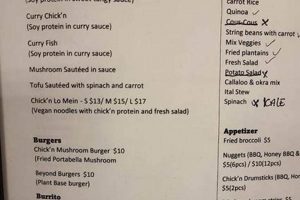
The selection of entirely plant-based dishes for a wedding celebration provides a culinary experience that excludes all animal products, including meat, dairy, eggs, and honey. A reception may feature a diverse range of appetizers, entrees, and desserts prepared using fruits, vegetables, grains, legumes, nuts, and seeds.
This conscious dietary choice aligns with ethical considerations regarding animal welfare, environmental sustainability, and potential health benefits. The increasing popularity of this approach reflects a growing awareness of these factors and the desire to celebrate a special occasion in a way that is consistent with personal values and broader societal concerns. Historically, weddings have often centered around traditional meat-heavy dishes, but evolving culinary landscapes and dietary preferences have paved the way for the wider acceptance of plant-based alternatives.
The subsequent sections will detail specific considerations for planning a successful event featuring exclusively plant-derived foods, from crafting appealing and satisfying dish options to sourcing ingredients and addressing potential guest concerns. Further, menu planning tips will address taste, visual appeal, budget, and seasonal availability of ingredients.
Essential Planning Tips
Careful planning is crucial for a successful event centered around plant-derived cuisine. These suggestions aim to facilitate a memorable and satisfying dining experience for all attendees.
Tip 1: Prioritize Flavor and Texture. Plant-based dishes should be rich in flavor and offer a variety of textures to appeal to a wide range of palates. Consider incorporating umami-rich ingredients like mushrooms and sun-dried tomatoes.
Tip 2: Embrace Seasonal Ingredients. Utilizing seasonal produce not only enhances flavor but also supports local agriculture and can reduce costs. A summer wedding might feature grilled vegetable skewers, while an autumn wedding could showcase roasted root vegetables.
Tip 3: Offer Variety and Choice. Provide a diverse selection of dishes to cater to different tastes and dietary needs. A buffet-style service or family-style platters allow guests to choose their preferred options.
Tip 4: Clearly Label All Dishes. Clearly identify all ingredients, including potential allergens, to ensure guest safety and inform dietary choices. Consider using elegant signage to enhance the presentation.
Tip 5: Partner with Experienced Caterers. Select a catering company with a proven track record in creating high-quality plant-based cuisine. Schedule a tasting to ensure the menu meets expectations.
Tip 6: Consider Wine and Beverage Pairings. Coordinate with a sommelier to select wines and beverages that complement the flavors of the dishes. Many wines are naturally vegan, but it is important to verify their production methods.
Tip 7: Pay Attention to Presentation. Visual appeal is essential. Use attractive plating techniques and garnishes to enhance the dining experience. Fresh herbs and edible flowers can add a touch of elegance.
Tip 8: Communicate with Guests in Advance. Inform guests about the plant-based nature of the meal in advance to manage expectations and address any concerns. Providing a brief explanation of the menu can also increase appreciation for the culinary choices.
By implementing these strategies, event planners can craft a sophisticated and memorable experience that celebrates the union while upholding ethical and sustainable values.
The following section will explore creative ideas for integrating unique and delightful elements.
1. Ethical Considerations

The incorporation of ethical considerations into event planning directly influences the selection of a plant-based menu. The rationale behind choosing such options often stems from a commitment to animal welfare, environmental sustainability, and personal health. Animal agriculture contributes significantly to greenhouse gas emissions, deforestation, and water pollution; consequently, a wedding featuring only plant-derived dishes mitigates these impacts. Moreover, ethical concerns regarding the treatment of animals in factory farming environments provide a strong impetus for eschewing meat, dairy, and eggs. The choice reflects a conscious effort to align celebratory events with broader ethical values, promoting a reduction in animal suffering and environmental degradation.
Real-world examples illustrate this connection. Couples committed to animal rights often select a plant-based menu as a tangible expression of their values, demonstrating a commitment that extends beyond personal dietary choices. Similarly, individuals focused on environmental conservation view this culinary choice as a practical step toward reducing their ecological footprint. The increasing availability of high-quality, innovative plant-based options further facilitates this ethical alignment, showcasing that a wedding can be both celebratory and ethically responsible. Failure to consider these ethical dimensions risks dissonance between stated values and event execution, potentially undermining the intended message.
In summary, ethical considerations constitute a fundamental component driving the adoption of completely plant-based wedding menus. The decision to forgo animal products represents a proactive stance against harmful industry practices and promotes a more sustainable and compassionate approach to celebration. While logistical challenges may arise, the ethical imperative provides a clear justification for the effort involved. The trend towards ethically-motivated culinary choices at significant events reflects a growing societal awareness and a desire for greater consistency between personal values and lifestyle practices.
2. Creative Plant-Based Cuisine

The successful execution of a completely plant-derived wedding menu hinges directly on the application of creative plant-based cuisine. This is because a simple substitution of animal products with basic vegetable alternatives often fails to provide a sufficiently satisfying or celebratory dining experience. Instead, it necessitates innovative culinary techniques and ingredient combinations to create dishes that are both flavorful and visually appealing, surpassing preconceived notions about plant-based food. The absence of animal products inherently presents a challenge, requiring chefs to employ a deeper understanding of plant-based ingredients to develop textures, flavors, and presentations that are on par with traditional wedding fare. For instance, utilizing aquafaba (chickpea brine) to create vegan meringue, or employing jackfruit to mimic the texture of pulled pork, exemplifies the creative approaches required.
Real-world examples further illustrate the importance of creativity. Weddings featuring innovative plant-based dishes, such as mushroom Wellington, cashew-based cheese boards, or elaborate vegetable terrines, are often lauded for their originality and sophisticated taste. Such instances demonstrate that excluding animal products does not necessitate a compromise in culinary excellence. Conversely, events where plant-based options are merely afterthoughts, lacking in flavor or visual appeal, are often perceived as inadequate, potentially detracting from the overall celebration. Furthermore, the integration of diverse culinary traditions such as Indian, Thai, or Mediterranean can introduce novel flavors and textures, enriching the plant-based menu and broadening its appeal. The increasing availability of specialized plant-based ingredients and culinary resources also empowers chefs to experiment and refine their creations.
In summary, creative plant-based cuisine serves as a critical component in the realization of a successful plant-based wedding menu. It is not simply about removing animal products, but rather about strategically utilizing the versatility of plant-based ingredients to craft dishes that are both satisfying and celebratory. While the development of such menus requires skill and innovation, the resulting culinary experiences can be exceptionally rewarding, demonstrating that ethically-driven dietary choices need not compromise the gastronomic experience of a wedding. The ongoing evolution of plant-based cuisine continuously expands the possibilities, allowing for ever more inventive and appealing options.
3. Seasonal Ingredient Sourcing

The implementation of a “vegan wedding menu” is intrinsically linked to the practice of seasonal ingredient sourcing. The selection of produce that is in season directly influences the flavor profile, nutritional value, and economic viability of the menu. Seasonal availability dictates which fruits, vegetables, and grains are at their peak, offering enhanced taste and requiring less intensive agricultural practices, such as artificial heating or irrigation. This connection is causal: sourcing seasonally results in dishes of superior quality, while neglecting seasonality compromises the culinary experience. The success of a plant-based reception hinges upon the availability of fresh, flavorful components, rendering seasonal sourcing a crucial element.
Real-world examples highlight the practical significance of this connection. A summer wedding in California might feature a salad with locally grown heirloom tomatoes and basil, while an autumn wedding in New England could showcase dishes highlighting squash and root vegetables. Such choices not only celebrate the local harvest but also minimize the environmental impact associated with transporting produce over long distances. Conversely, attempting to serve out-of-season ingredients typically necessitates relying on imported or greenhouse-grown produce, resulting in higher costs and diminished flavor. The integration of seasonal sourcing extends to beverages as well; for example, incorporating locally brewed seasonal beers or wines that complement the specific ingredients on the menu.
In summary, seasonal ingredient sourcing is not merely an optional consideration but a foundational aspect of a successful “vegan wedding menu.” It directly affects the quality, cost, and sustainability of the event. Challenges may arise in regions with limited growing seasons, but creative planning and resourcefulness can mitigate these limitations. By prioritizing seasonal sourcing, event planners can create a memorable and ethically sound dining experience that reflects a commitment to both culinary excellence and environmental responsibility, furthering the broader goals of a celebration aligned with conscious values.
4. Guest Satisfaction

The achievement of widespread approval among attendees is a central consideration when planning an event featuring exclusively plant-derived cuisine. Careful planning and execution are necessary to ensure that the dining experience is positively received by all individuals, irrespective of their pre-existing dietary preferences. The perceived quality of the food contributes significantly to the overall perception of the event itself.
- Menu Diversity and Appeal
The breadth and attractiveness of available dishes play a crucial role in fostering positive perceptions. A lack of variety or perceived blandness can lead to dissatisfaction, particularly among those accustomed to more conventional fare. Conversely, a well-curated selection of flavorful and visually appealing options can surprise and delight even the most skeptical diners. For example, offering a range of cuisines, from Asian-inspired stir-fries to Mediterranean-style salads, can cater to diverse palates and reduce the risk of alienating guests.
- Clear Communication and Transparency
Providing advance notice regarding the menus plant-based nature is crucial in managing expectations and addressing potential concerns. Openly communicating the rationale behind the menu choices and highlighting the anticipated benefits (e.g., sustainability, health) can foster a more receptive attitude. Furthermore, clearly labeling all dishes with ingredient information, including potential allergens, demonstrates consideration for guest safety and dietary restrictions.
- Professional Catering and Presentation
The quality of service and the visual presentation of the food significantly influence overall impression. Engaging a reputable catering company with experience in crafting high-quality plant-based cuisine ensures that the dishes are prepared and served professionally. Thoughtful plating techniques, attractive garnishes, and elegant serving arrangements contribute to a more positive dining experience. The ambiance of the event, including table settings and dcor, should complement the culinary choices and create a cohesive and appealing atmosphere.
- Addressing Dietary Needs and Preferences
Proactively addressing any dietary restrictions or preferences beyond the core plant-based framework demonstrates attentiveness and enhances the overall experience. Offering gluten-free, soy-free, or nut-free options accommodates individuals with specific allergies or sensitivities. Inquiring about guest preferences in advance allows for the inclusion of dishes that cater to a wider range of tastes. Providing a limited number of non-plant-based options, while potentially controversial, may be a pragmatic approach in certain circumstances to ensure universal comfort.
The factors identified above are interconnected, collectively influencing the success of event centered around exclusively plant-derived cuisine. While some initial hesitancy may be anticipated, implementing these strategies demonstrates a commitment to guest well-being and enhances the likelihood of a positive dining experience. The thoughtful integration of these elements is essential for ensuring a celebration that is both ethically aligned and socially fulfilling. By prioritizing guest satisfaction, the event reinforces the positive association between plant-based cuisine and celebratory occasions.
5. Budget Optimization

Effective budget optimization is a critical component in the successful implementation of a plant-based wedding menu. The perception that plant-based cuisine is inherently more expensive than conventional options is a common misconception. Careful planning and strategic decision-making can significantly mitigate costs, potentially even resulting in savings. Sourcing seasonal produce directly from local farmers markets or Community Supported Agriculture (CSA) programs often provides cost-effective alternatives to relying on wholesale distributors or supermarkets. Additionally, selecting dishes that feature less expensive plant-based protein sources, such as lentils, beans, and tofu, can reduce overall food costs compared to incorporating premium plant-based meat alternatives. Furthermore, minimizing food waste through precise portioning and creative utilization of leftovers contributes directly to cost savings. The interplay between menu planning and sourcing strategies directly impacts the financial viability of a plant-based event, emphasizing the need for proactive budgeting.
Real-world examples demonstrate the potential for cost savings. Weddings that opt for family-style service or buffet arrangements, rather than plated meals, often reduce labor costs and minimize food waste. Incorporating plant-based versions of comfort food classics, such as mac and cheese using cashew-based sauce or lasagna with lentil-based “meat,” can be more budget-friendly than attempting to replicate elaborate meat-based dishes. Furthermore, choosing to prepare certain menu items in-house, rather than outsourcing to a caterer, can provide significant cost reductions. Strategic partnerships with local bakeries or dessert shops specializing in plant-based options can offer competitive pricing for cakes and pastries. The successful management of finances often depends on thorough research, price comparison, and a willingness to explore creative solutions, highlighting the importance of adaptability in optimizing the budget. Inversely, failure to proactively manage the budget may lead to unnecessary expenses or necessitate compromises in quality and variety, impacting the overall guest experience.
In summary, efficient budget optimization is an indispensable element in realizing a plant-based wedding menu. It is not merely about minimizing spending, but rather about strategically allocating resources to maximize value and quality. While challenges may arise in identifying cost-effective ingredients and service providers, the potential benefits in terms of both financial savings and ethical alignment make it a worthwhile endeavor. The ongoing development of plant-based culinary resources and the increasing availability of affordable plant-based ingredients further facilitate budget optimization, allowing for the creation of memorable and fiscally responsible celebrations. By prioritizing thoughtful planning and strategic decision-making, event planners can ensure that budget optimization enhances, rather than hinders, the overall success of the vegan wedding menu.
Frequently Asked Questions
This section addresses common inquiries and clarifies prevailing misconceptions related to the provision of exclusively plant-based cuisine for wedding receptions.
Question 1: Is a completely plant-based wedding menu inherently more expensive than a traditional menu?
Not necessarily. Strategic planning, including seasonal sourcing and selection of cost-effective protein sources like lentils and beans, can often result in comparable or even lower overall costs.
Question 2: How can a plant-based menu cater to guests with diverse dietary preferences and potential skepticism?
Offer a wide variety of dishes representing different culinary traditions, clearly label all ingredients (including allergens), and communicate the rationale behind the menu choices in advance to manage expectations and showcase the culinary benefits.
Question 3: What are some common pitfalls to avoid when planning a menu?
Relying solely on simple substitutions, neglecting the importance of flavor and texture, failing to consider seasonal availability, and overlooking potential allergens are common mistakes that can detract from the overall experience.
Question 4: How can the risk of negative guest perceptions be minimized?
Engage a reputable caterer with expertise in plant-based cuisine, ensure high-quality presentation and service, and be prepared to address any concerns or questions guests may have regarding the menu choices.
Question 5: What role does seasonality play in the success of a menu?
Utilizing seasonal produce enhances flavor, supports local agriculture, reduces transportation costs, and often improves the nutritional value of the dishes. This contributes to a more sustainable and cost-effective event.
Question 6: How can the ethical considerations behind choosing a plant-based menu be effectively communicated to guests?
Include a brief explanation in the wedding program or on the menu itself, highlighting the positive impact on animal welfare, environmental sustainability, and personal health. This informs and educates guests, fostering a more appreciative understanding of the dietary choices.
Careful planning, clear communication, and a commitment to culinary excellence are essential for realizing a successful and well-received plant-based wedding reception.
The following section will address specific menu suggestions and examples suitable for various wedding styles and themes.
Conclusion
The preceding discussion has explored the multifaceted considerations involved in implementing a “vegan wedding menu”. Ethical implications, creative culinary approaches, seasonal sourcing strategies, guest satisfaction factors, and budget optimization techniques all contribute to the overall success or failure of such an endeavor. The informed and strategic integration of these elements ensures a memorable and ethically aligned event.
The movement towards conscious culinary choices at significant life events reflects a broader societal shift towards sustainability and ethical consumption. It is imperative that planners approach the creation of such menus with diligence, creativity, and a commitment to providing a positive and inclusive experience for all attendees. The future of wedding catering may well see plant-based options move from niche offerings to mainstream expectations, reflecting the increasing awareness of the environmental and ethical impacts of dietary choices.